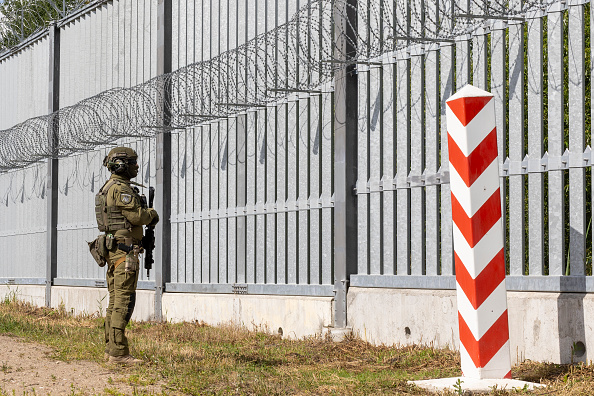
Russia and Belarus are being accused of reviving the strategy used in 2021 to provoke a migration crisis on the European Union’s eastern border, particularly the Polish-Belarusian frontier, according to Polish outlet wPolsce24.
Citing The Telegraph newspaper, the report says the number of flights from the Libyan city of Benghazi to Minsk has risen sharply in recent weeks after Russian President Vladimir Putin allegedly struck a deal with Libyan warlord Khalifa Haftar to fly migrants to the Belarusian capital.
Haftar, who controls eastern Libya and maintains close ties with the Kremlin, is believed to be orchestrating the operation to exert pressure on the European Union, which continues to fund Ukrainian resistance in its ongoing conflict with Moscow.
Putin and Belarusian leader Alexander Lukashenko are said to be encouraging the transportation of migrants from Africa to Belarus and then directing them toward the borders of Poland, Lithuania, and Latvia.
Officials in Brussels warn that the pattern of flights suggests a deliberate attempt to destabilize the EU.
“We are monitoring recent Minsk-Benghazi flights operated by Belavia Airlines,” a European Commission official told The Telegraph.
“The frequency and nature of these flights, particularly within a short timeframe, raise questions about potential coordination or facilitation of irregular migration flows,” they added.
As in 2021, the goal is reportedly to create a large-scale influx of asylum seekers to divert attention from other Russian activities, including the war in Ukraine. That earlier crisis saw thousands attempting illegal crossings into Poland, with border enforcement efforts hampered by political disputes within the country.
Russia has long supported Haftar militarily and politically, giving Moscow leverage over African migration routes to Europe.
The development comes just days before a scheduled meeting between Putin and U.S. President Donald Trump in Alaska on Aug. 15.
According to Frontex, the European Union’s border agency, a total of 5,456 illegal crossings have been detected at the bloc’s Eastern Land Border so far this year. Poland and the two Baltic countries concerned have invested heavily in considerable border protection measures to stem the flow.