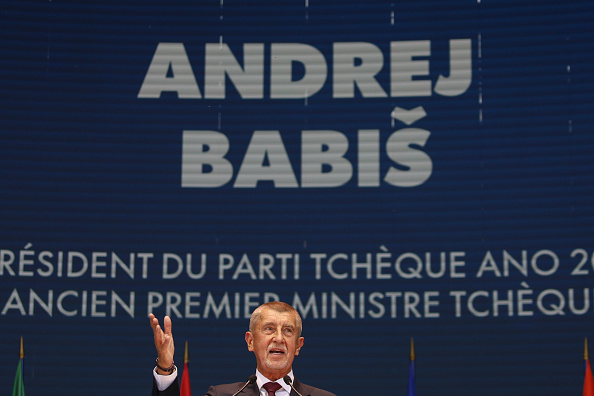
The latest STEM poll for CNN Prima News shows that former Prime Minister Andrej Babiš’s opposition ANO movement would win if elections were held today, taking 31.1 percent of the vote despite a slight decline from last week.
The SPOLU coalition, which comprises the current administration – made up of the Civic Democratic Party (ODS), the liberal-conservative TOP 09, and the Christian democratic KDU-ČSL – remains in second place with 21.3 percent, gaining slightly since the previous survey.
As reported by Echo24, the right-wing populist Freedom and Direct Democracy (SPD), led by Tomio Okamura and allied with the smaller nationalist and libertarian parties PRO, Svobodní, and Trikolora, holds third place with 13.2 percent, down marginally. The centrist-liberal Mayors and Independents (STAN) sit in fourth with 10.5 percent. The left-wing Stačilo! movement rose to 8 percent, while the centrist-progressive Pirates (Piráti) slipped to 8.1 percent.
The anti-establishment, motorists’ rights group Motoristé increased to 4.9 percent, just one-tenth of a point below the 5 percent threshold required to enter parliament. Přísaha, an anti-corruption movement led by Senator Róbert Šlachta, remains far from the threshold at 2.2 percent.
Compared to last week, SPOLU and STAN improved slightly, while ANO and SPD dipped by fractions of a percentage point. Analysts note that the Bitcoin scandal that had recently hurt SPOLU may no longer be affecting voter support.
In terms of projected seats, ANO would secure 73 mandates and SPOLU 47. SPD and its allies would take 27, STAN would win 21, while both Piráti and Stačilo! would take 16 each.
According to STEM analyst Martin Kratochvíl, it appears highly unlikely that the current governing parties and the Pirates, who left the government last year, could form another cabinet after the autumn elections.
If ANO and SPD together reached 100 seats as the polling suggests, Babiš would still need at least one more partner to form a majority in the Chamber of Deputies. The most natural addition would be the motorists’ movement, which shares with ANO and SPD a populist tone, Euroscepticism, and opposition to certain EU regulations. If it clears the electoral threshold, its MPs could provide the extra votes.
Another outside possibility is Přísaha, the small anti-corruption party led by former police officer Róbert Šlachta, which is centrist-populist and could align with ANO on law-and-order issues. Beyond that, Babiš could rely on individual defectors or independents willing to support his government without a formal coalition deal.
Babiš has framed his current platform around putting domestic needs ahead of foreign commitments, promising to halt the Czech-led initiative to buy ammunition for Ukraine and rejecting NATO’s proposed increase in defense spending, arguing that money should instead be directed toward pensions, healthcare, housing, and addressing the cost of living.
Aligning with key regional allies like Hungarian Prime Minister Viktor Orbán and Slovak premier Robert Fico, he has called for diplomatic efforts to end the war in Ukraine rather than prolonging military support. Babiš, a long-time Eurosceptic, has also taken a sovereignty-first stance toward the European Union, opposing deeper political integration and resisting the adoption of the euro under current conditions.
In energy policy, he has pledged to bring the main power company, ČEZ, fully under state control to secure supply and stabilize prices.