Irish comedy writer Graham Linehan was arrested at Heathrow Airport after stepping off a flight from Arizona, in a case that has sparked growing concern about free speech in the United Kingdom.
Linehan, best known for creating the sitcom Father Ted, was met by five armed police officers and taken into custody on arrival. The Free Speech Union, which has taken on his case, said the arrest was for three tweets posted earlier this year that were critical of trans rights activists. He has been bailed but not yet charged, with a condition that he refrain from posting on X.
In a post on his Substack, Linehan described his arrest at Heathrow Airport as proof that the United Kingdom has become hostile to free expression and is effectively “a police state run by trans activists.”
“The moment I stepped off the plane at Heathrow, five armed police officers were waiting. Not one, not two—five,” he wrote. “They escorted me to a private area and told me I was under arrest for three tweets.”
The tweets in question were posted back in April and criticized a pro-trans demonstration. He posted a photo of a congregation with the caption, “a photo you can smell,” and suggested that any “trans-identified male” entering a female-only space was committing an “abusive act” and should be “punched in the balls.”
Linehan was taken to Heathrow police station, stripped of his belongings, and placed in a small cell before being interviewed about his social media posts. “The officer conducting it asked about each of the terrible tweets in turn, with the sort of earnest intensity usually reserved for discussing something serious like… oh, I dunno—crime?” Linehan said.
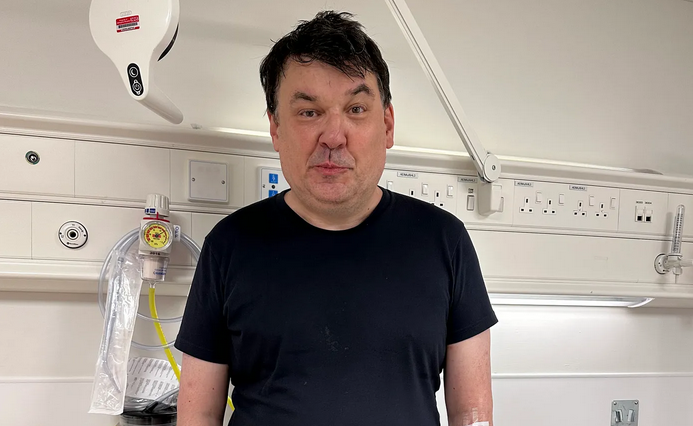
Linehan said the stress of the arrest nearly killed him. “Eventually, a nurse came to check on me and found my blood pressure was over 200—stroke territory. The stress of being arrested for jokes was literally threatening my life!”
He was taken to hospital for observation, where he wrote part of his statement.
The conditions of his bail ban him from posting on X and require him to attend a further interview in October. “I was arrested at an airport like a terrorist, locked in a cell like a criminal, taken to hospital because the stress nearly killed me, and banned from speaking online—all because I made jokes that upset some psychotic crossdressers,” he said.
.@Glinner was arrested at Heathrow yesterday when he got off a flight from Arizona because of three tweets posted earlier in the year criticising trans rights activists. The @SpeechUnion is paying for his legal defence. He's been bailed, not yet charged.https://t.co/hKq5ztgAw7
— The Free Speech Union (@SpeechUnion) September 2, 2025The Free Speech Union has taken on Linehan’s case and is funding his legal defense. In a statement, the group said: “We do not believe Graham’s arrest or the bail conditions imposed were lawful. We will be backing him all the way in his fight against these preposterous allegations and the disproportionate response from the police. Sending five armed police officers to arrest people of good character for humorous tweets isn’t just wrong, it’s dangerous.”
What the fuck has the UK become? This is totalitarianism. Utterly deplorable. https://t.co/CRl2n9rorh
— J.K. Rowling (@jk_rowling) September 2, 2025Shadow Justice Minister Robert Jenrick condemned the arrest as “ridiculous and a complete waste of police time,” pointing out that police “only respond to 1 in 5 reported shoplifting offences, but deployed 5 armed officers to arrest a comedian over three tweets.”
This is ridiculous and a complete waste of police time.
The police only respond to 1 in 5 reported shoplifting offences, but deployed 5 armed officers to arrest a comedian over three tweets.
We desperately need to end this nonsense and go after actual criminals. pic.twitter.com/PmWM0KvYDr
— Robert Jenrick (@RobertJenrick) September 2, 2025Author JK Rowling also expressed outrage, writing: “What the fuck has the UK become? This is totalitarianism. Utterly deplorable.”
Linehan and Rowling have both been long-time critics of gender ideology, and Linehan said he has endured a years-long campaign of harassment by activists.
His case is expected to reignite debates over the boundaries of free speech and policing priorities, particularly as Prime Minister Keir Starmer told U.S. President Donald Trump during his U.K. visit in July that concerns over free speech in Britain were not borne in reality.
“We have had free speech for a long time so, we’re very proud of that,” Starmer said at the time.