Former Polish Agriculture Minister Robert Telus, of the conservative Law and Justice party (PiS), is speaking out against the massive free trade agreement Mercosur deal set to pass with the European Union, warning that it will turn out to be “Nord Stream 2 for food.”
In an interview with Polish news outlet DoRzeczy.pl, Telus compared the trade deal to the Nord Stream 2 gas pipeline, which his government had warned Germany not to build years before construction began.
“I’ve often said that the Mercosur agreement is like Nord Stream 2, only for food. We said that Europe’s dependence on Russian gas is harmful, but no one listened at the time. Later, we were finally proven right. Today we are saying loudly that the agreement with Mercosur will be harmful and Europe will probably wake up to this issue one day, but then it will be too late,” the former minister said.
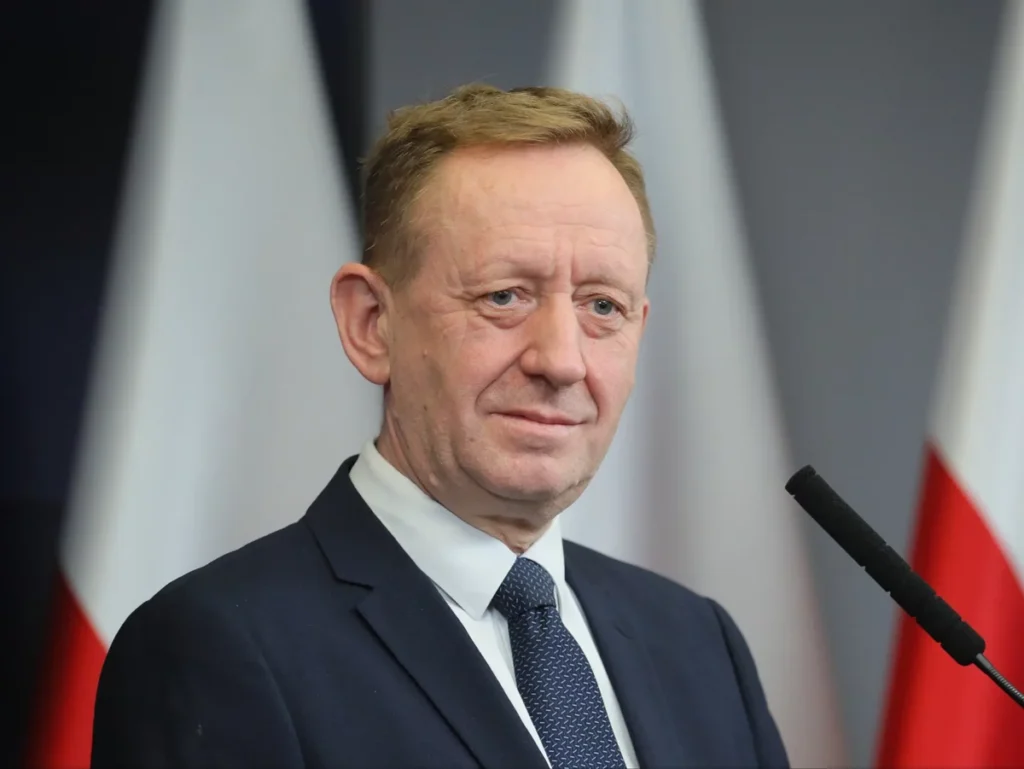
Telus said the trade agreement, which will open up Europe’s market to billions worth of South American agricultural products, is “very harmful to Polish and European farmers.”
Telus cited German media, which he says have described the deal as “cows for cars.” He explained, “This shows that the agreement will result in food products from Mercosur countries flowing to Europe, and therefore to Poland, and in return, German cars flowing to Mercosur countries.” He added that the agreement’s benefits to Germany go beyond just the automotive sector. “It’s also about the chemical industry, and this will be very harmful to all consumers.”
He elaborated on the dangers posed by the agreement to European consumers.
“Currently, over 3,600 types of pesticides are used in Mercosur countries. This will harm European and Polish consumers.”
Telus pointed out what he sees as a hypocritical aspect of the deal:
“Speaking of the German chemical industry, most of these 3,600 pesticides are withdrawn from European countries, yet they are still being produced. This means that the companies producing these pesticides will benefit by selling them to Mercosur countries.”
As noted in Remix News yesterday, European media outlets are warning that pesticides sold by companies like BASF are illegal in Europe, but are sold off to countries like Brazil. Given lax oversight in South American countries, Europeans will now be exposed to these same pesticides.
According to Telus, the Mercosur agreement specifically threatens Polish agriculture.
“The agreement disrupts European agriculture, and especially Polish agriculture, because it primarily concerns three products: poultry—Poland is the largest poultry producer—beef, and sugar. There are other products, but these three are particularly important.”
He directly accused European Commission President Ursula von der Leyen and Polish Prime Minister Donald Tusk of prioritizing German interests over Polish ones. In fact, he said he believes Tusk already made a deal with major powers in Europe, including German ones, to accept the deal in advance of his winning the prime minister position.
“European Commission President Ursula von der Leyen, who is German, wants to sign this agreement and will sign it. Unfortunately, this harms Poland and benefits Germany. I am convinced that Donald Tusk agreed long ago to implement the agreement with Mercosur,” said Telus.
When asked about Prime Minister Tusk’s claim that Poland is against the deal, Telus dismissed it as “rhetoric purely for show.”
He cited the failure to build a “blocking minority” during Poland’s recent presidency of the Council of the European Union.
“The argument for this is that Poland held the six-month presidency of the Council of the European Union, during which nothing was done. I emphasize – nothing, and I say this with full responsibility – to build a blocking minority. Initially, the French, Italians, and Poland were against it, meaning we already had 30 percent of the EU population. All it took was one more small country, and we would have had a blocked agreement,” he stated.
Telus praised President Karol Nawrocki for his opposition to the agreement, including a meeting with Italian Prime Minister Giorgia Meloni.
However, he does not have high hopes the deal can be stopped.
“It’s quite late now. Of course, I’m very pleased that President Karol Nawrocki has become involved in this matter. He also spoke about it during the election campaign, because he knows full well that the agreement with Mercosur is not in Poland’s interest… Unfortunately, Donald Tusk is pursuing German policy in Poland. As I said, I’m convinced that he agreed to implement the Mercosur agreement in his conversation with Ursula von der Leyen.”