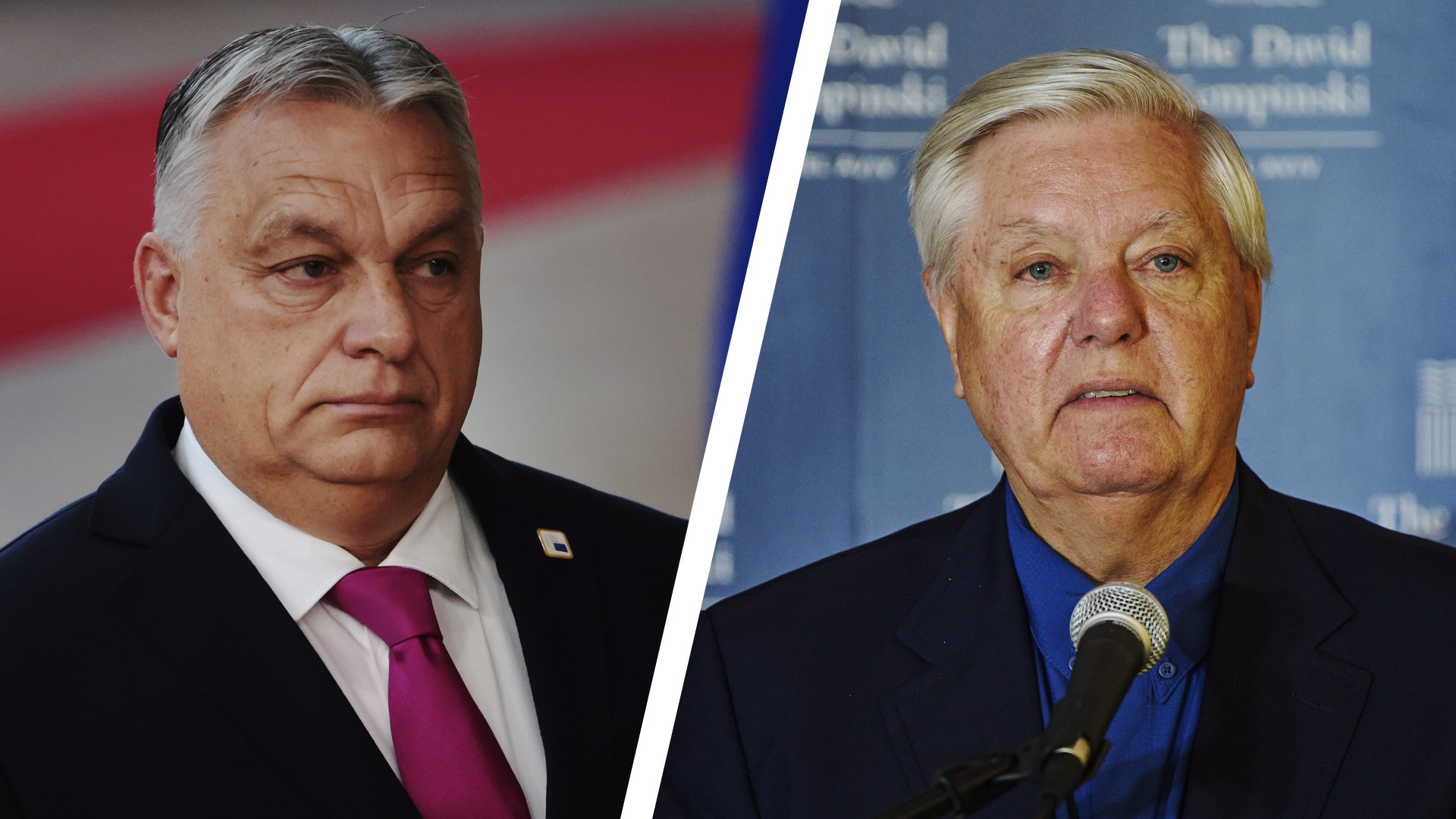
American Senator Lindsey Graham took to social media on Tuesday to go on a tirade against Hungary and Slovakia, as they both buy Russian oil.
“POTUS is right to demand that Europe stop buying Russian oil. The good news is that Europe has substantially reduced their purchases of Russian oil and gas,” he wrote in an X post.
“When it comes to buying Russian oil, it is now virtually down to Hungary and Slovakia. I hope and expect them to step up to the plate soon to help us end this bloodbath. If not, consequences should and will follow,” he added.
.@POTUS is right to demand that Europe stop buying Russian oil. The good news is that Europe has substantially reduced their purchases of Russian oil and gas.
When it comes to buying Russian oil, it is now virtually down to Hungary and Slovakia. I hope and expect them to step up…
— Lindsey Graham (@LindseyGrahamSC) September 15, 2025Graham was following up on U.S. President Trump’s comments to press on Sunday, when he claimed NATO allies are “not doing the job.”
“Europe… they’re my friends, but they’re buying oil from Russia, so we can’t be expected to be the only ones that are, you know, full bore,” he said.
Unfortunately, despite Slovakia and Hungary being by far the largest EU importers of Russian oil, and doing so directly via Ukraine, data has shown that other EU member states and NATO allies are still guilty, even if their purchases are indirect, for example, via Turkey.
And of course, this poses another issue, namely that Turkey is itself a NATO ally.
Graham notably does not mention Turkey at all. There is also the issue of the U.S. still buying ample amounts of Russian uranium, which Graham also does not mention.
“China and India are of course at this moment the two biggest importers of Russian oil, in that order, but what’s less well known is that NATO member Turkey is the third largest. Ironically, Turkey maintains the second largest military in NATO, next to the United States,” a ZeroHedge article pointed out.
So, ZH also asks why would Graham have only named Hungary and Slovakia in his post? For that matter, why wouldn’t he have also called out other EU members for their purchases, even if indirect?
For its part, Slovakia has said it will continue to meet its domestic energy needs from Russia. Slovakia, along with Hungary, has an exemption through 2027, but Slovakia shows no interest in giving up its reliance on Moscow.
“Russian gas is the most economically advantageous for us, so we prioritize it. We could buy 100% of our needs. That’s about 8 million cubic meters per day,” Michal Lalík, trading director at SPP, told Bloomberg, as reported by the Business & Human Rights Resource Centre.
Hungary has said it is working to diversify its energy supply, and in late summer 2024, despite interruptions with the Friendship pipeline through Ukraine, the country’s foreign minister told press that its gas supply was secure, “as the Turkish Stream pipeline, via Turkey, Bulgaria, and Serbia.”
Hungary has also made no secret that it hopes to benefit from the Qatar-Turkey natural gas pipeline, as well as from its Azeri gas transport contract and the start of Turkmenistan’s exports to Europe.
Again, any mention of Turkey raises the question of getting Russian oil and gas into the mix.
Last October, Remix News reported on Turkey being the largest buyer of Russian crude oil, natural gas, and coal for 2023. Meanwhile, between February 2023 and February 2024, EU imports of petroleum products from Turkey increased by 107 percent, with EU member states importing 5.16 million tons of petroleum products worth €3.1 billion.
Despite its own domestic consumption of such products barely increasing, Turkey imported twice as much oil from Russia in 2023, an amount worth €17.6 billion, handing Russia some €5.4 billion for its war chest. And EU countries are largely to thank for that.
Fast-forward to today, and not much has changed. Just yesterday, the EU Observer ran an article detailing how Russian gas and oil continues to flow to Europe through Turkey. If anything, Slovakia and Hungary are just being more honest about their own purchases.
Back in early 2024, France purchased €600 million worth of natural gas from Moscow in the first three months of the year. In just March of this year, Le Monde reported that “with its five LNG terminals, France is a major gateway for liquefied natural gas into Europe. In 2024, a third of this gas came from Russia, but it’s difficult to know how much of it simply passes through France, or is consumed domestically.”
There have been some total reversals. For example, late last year, Austria’s OMV outright cancelled its contract with Gazprom that had been set to expire only in 2040.
The exact data pertaining to who is doing business with Russia has been shifting yet constant. As Reuters has confirmed, in general, “the U.S. and European Union still import billions of euros worth of Russian energy and commodities, ranging from liquefied natural gas to enriched uranium.”
Last week, in a Truth Social post, Trump had written to NATO allies that he was “ready to ‘go’ when you are. Just say when?” regarding imposing full pressure on Russia, as well as “50 percent to 100 percent tariffs on China.”
“NATO’S commitment to WIN has been far less than 100 percent, and the purchase of Russian Oil, by some, has been shocking! It greatly weakens your negotiating position, and bargaining power, over Russia,” the president wrote.
It should be noted that Trump has also made clear he expects Zelensky to get ready to make a deal.