
One man is dead and two are in critical condition after two Turkish families battled on the streets of the troubled German city of Gelsenkirchen.
The clash began as a loud argument and then quickly escalated into a mass brawl involving knives and other weapons, resulting in the death of one 56-year-old man.
Shortly after 8:00 p.m., approximately 30 people clashed in the Bismarck district of the heavily migrant city.
According to police, this was no ordinary brawl. The members of the two families were armed with baseball bats, tasers, knives, and other dangerous weapons during the clash.
🇩🇪🔥Blood flows in Germany
1 dead and 5 seriously injured after two Turkish families battled in the streets of the city of Gelsenkirchen.
The deceased victim is a 56-year-old man who was stabbed in the heart.
2 victims remain in critical condition.
Yesterday, at 8:00 p.m.,… pic.twitter.com/bhfX4xRaX0
— Remix News & Views (@RMXnews) September 29, 2025In total, five people recorded serious injuries, including a woman. Four of them sustained life-threatening injuries due to stab wounds.
The 56-year-old deceased victim was stabbed in the heart, resulting in him later dying in the hospital.
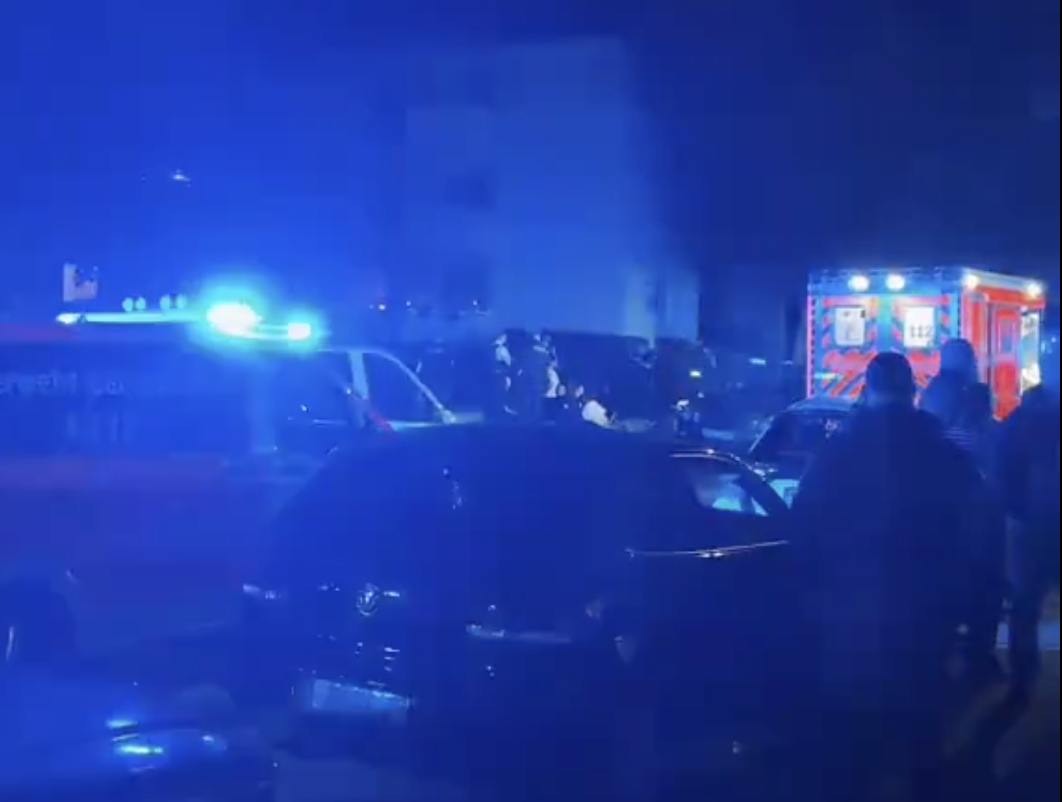
The scene became a sea of blue police lights, crime scene tape, and ambulances racing to nearby hospitals. Two individuals remain in critical condition and are fighting for their lives.
Police conducted a major operation in the area, with backup units arriving from around the Ruhr region, considered one of the troubled “rust belt” areas of Germany. In addition, a police helicopter was deployed.
Police had trouble locking down the crime scene as relatives and friends of the victims streamed into the area. Although Bild reports that rival Turkish families were involved in the incident, the paper indicated that initial reports that the incident was related to warring “clans” have not yet been confirmed by police.
The Ruhr area is located in the German state of North Rhine-Westphalia, which has been troubled by extreme clan violence in recent years. These feuds often feature dozens of perpetrators battling in the streets, as well as kidnappings, bomb attacks, and murders.
BREAKING: 🇩🇪🩸Bloodbath in Germany after mass brawl involving 100 Lebanese from two rival clan families in the city of Heiligenhaus.
Helicopters and special forces were deployed after two clans battled with machetes and knives, among other weapons, according to police.
Two… pic.twitter.com/EHytVsUi8M
— Remix News & Views (@RMXnews) June 30, 2025Six arrests have been made at the scene, including three male suspects aged 16, 29, and 52, as well as three female suspects, 25, 28, and 50.
Homicide squad officers are currently investigating and are looking for witnesses to come forward.
AfD loses Gelsenkirchen race last night
The city recently made national news due to a runoff election yesterday, Sept. 28, featuring an Alternative for Germany mayoral candidate, Norbert Emmerich, pitted against a Social Democrat (SPD) candidate. The SPD easily won with 66.9 percent of the vote, with Andrea Henze becoming the city’s new mayor. After her victory, she described the city as “unbelievably beautiful.”
The city is known for its blighted districts, growing urban decay, and growing insecurity. However, 25 percent of the population is now made up of foreigners, and many of the city’s remaining population have a foreign background. As a result, even though the AfD performed well in the first round, it had trouble securing a majority of votes.
This situation may accelerate across the country. Germany is becoming less secure, but more diverse, which means that many are turning to the AfD with their votes, but at the same time, those with a foreign background are far less likely to vote for the party.
Growing clan crime in Gelsenkirchen
In a Focus interview from two days ago, the city is described as a “hotspot for social fraud and clan crime.” The paper interviewed Police Chief Tim Frommeyer, who explained how the security situation is deteriorating.
“Gelsenkirchen has always been and continues to be a multicultural city. Nevertheless, especially in the Ruhr area, including here in Gelsenkirchen, many decisions made with good intentions have developed into real problems,” he said.
“The people of this city notice that, despite the city’s great commitment, the cityscape has changed to the detriment of the past decade. Garbage, junk properties and numerous administrative offenses are obvious,” he added.
He pointed to the high rates of crimes committed by people with foreign status.
“Depending on the field of crime, (the rate of foreigner crime) is between 34 and 58 percent. The proportion is particularly high in the case of offenses against life, namely 57.1 percent, and in the area of theft, property and forgery offenses, here the figure is 57.8 percent,” he stated.
Moreover, the growth of clan crime is alarming, as has been seen across Germany.
“In these cases, we perceive increasingly better organized structures, these are networks that have grown over a long period of time and are partly controlled by clans and extended families,” the police chief stated. “Of course, here in Gelsenkirchen we still have a problem with Turkish-Lebanese clans and the associated crimes and crime phenomena. This is about, for example, drugs, money laundering or, as you say, bodily harm crimes. We are also increasingly noticing rivalry with Syrian clans.”
However, as multiculturalism increases, so does the variety of groups competing with each other.
“As has already been said, we are not only dealing with Turkish-Lebanese clans nationwide, including in Gelsenkirchen. Syrian, but also Romanian and Bulgarian clans are now positioning themselves more and more strongly in the scene,” said Frommeyer.