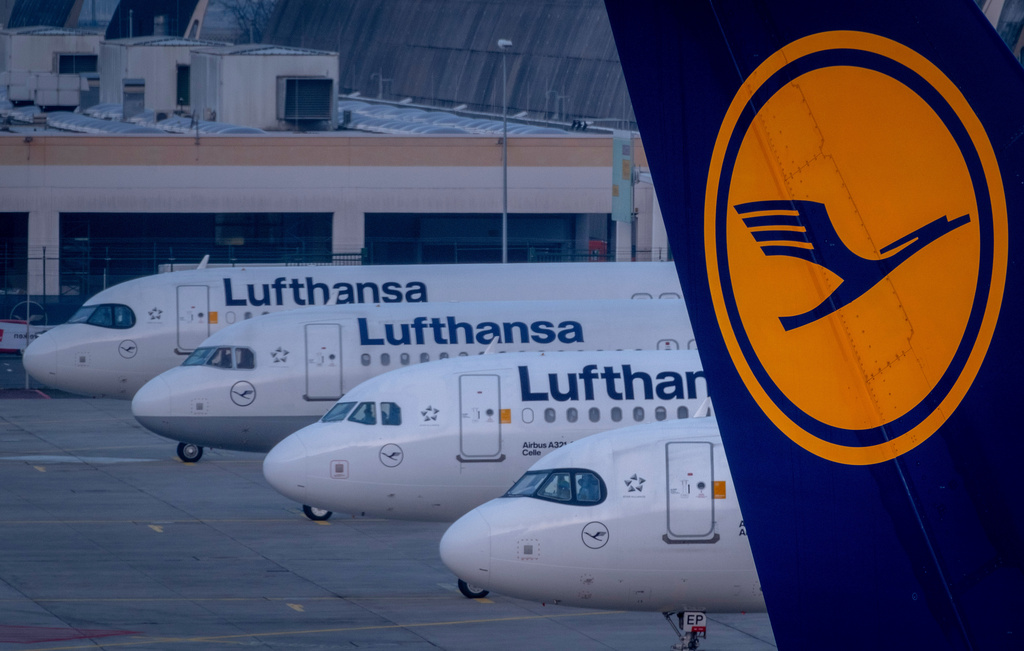
Germany’s airline industry is reeling, with the Lufthansa Group announcing on Monday that it would cut 4,000 jobs, a decision that industry leaders attribute to years of decline driven by “extremely high taxes and fees that do not exist abroad.” However, Germany’s connectivity crisis is also growing.
The job cuts come as the federal government prepares to negotiate relief measures for the aviation sector as part of the budget debate this week.
The withdrawal of services is already evident. “Germany has lost massive amounts of connectivity,” Bischof said. “If you exclude the feeder flights to the hubs in Frankfurt and Munich, we are a fifth of the level in domestic German air traffic prior to Covid… 84 percent are gone – that has consequences for the entire economy!”
Jens Bischof, Eurowings CEO and President of the Federal Association of the German Aviation Industry (BDL), warned in an interview with Welt newspaper that the lack of political relief threatens to sever the last existing flight connections for key German regions.
Bischof emphasized that the German aviation industry is struggling due to government costs that have nearly doubled since 2019.
“It’s good that the Chancellor (Friedrich Merz) is making the issue a top priority,” Bischof said, “Because we haven’t felt any relief yet. On the contrary. Taxes and fees have almost doubled since 2019 and, at €35 for an intra-German or European flight route, are higher than anywhere else in Europe.”
Bischof is not the only one complaining about the airline situation in Germany. Ryanair also plans to cut flights, and in turn, has boosted its flight connections in Hungary. In fact, Hungary’s flight business is doing so well that Budapest is outgrowing its airport and has plans to expand.
The outspoken Ryanair CEO, CEO Michael O’Leary, does not mince words either, saying last year that “Germany is run by idiots.” He added at the time that, “I don’t think the next government of Germany will be any better.”
As for Lufthansa’s leader, Bischof, his criticism may be a bit more muted, but he is still laying it on thick. He pointed out the severe disparity with neighboring countries: “This is seven times more than in Spain, for example. With an average ticket price of €66 to €110, you can calculate how much we will earn after deducting our costs – namely nothing. Airlines are currently making money primarily outside of Germany. Aviation is booming there.”
The high costs have already led to a drastic reduction in domestic German flights, which have halved since 2019. Bischof warned that without a policy change, the decline will continue.
“If nothing changes on the political side – yes,” he stated. Bischof identified several regional airports where services are at risk: “In Bremen, Dresden, Cologne/Bonn, Leipzig/Halle, Münster/Osnabrück, Nuremberg, Stuttgart – flights are on the brink everywhere.”
He underscored the economic danger this poses to local businesses: “These are strongholds of medium-sized businesses, mechanical engineering and the tech industry. These companies need direct, fast connections to the world, which have so far been ensured via feeder flights to the international hubs of Frankfurt and Munich. All of these regions are threatened with decoupling from global air traffic.”
Beyond business connectivity, the cost burden is impacting families and tourism. Bischof argued the industry has moved past a “tipping point,” stating: “The high ticket prices, which largely consist of taxes and fees, are already making families increasingly unable to afford a plane trip during the summer holidays. This is a question of social participation. After all, vacationing with the family is also a social democratic achievement.”
The economic repercussions are also visible in the tourism and trade fair sectors. “The impact on incoming tourism is already significant,” Bischof noted, adding that trade fairs are now “being moved to locations in other countries that can be more easily reached. When connections disappear, entire value chains collapse. This is a fatal development for an economic nation.”
Bischof made clear that the industry is not seeking a government bailout. “That is precisely the absurdity of this debate. We don’t want any support from the state,” he asserted. “We just don’t want to be burdened further and further by the state. Government costs now add up to €4.4 billion per year, half of which alone represents a special tax, which exists in only nine out of 31 European countries. We have the highest aviation tax in all of Europe.”
He argued that reducing the tax burden would be revenue-positive for the federal government in the long run. “We need the burden to be reduced by €2 billion so that air traffic in Germany can grow again. The resulting increases in value added are twice or three times as high.”
In a stark warning about the human cost, Bischof concluded: “The cancellation of flight connections and aircraft relocated abroad due to high location costs, which cost Germany €4 billion in added value and around 10,000 jobs. This also means: The federal government could completely abolish the aviation tax – and would ultimately emerge with a plus.”