After all the ceremony, congratulations, and even talk of Nobel Peace prizes, the reality on the ground in Gaza looks bleak.
“There will be no peace in Gaza as long as Islamists rule the strip,” Timea Hajdu headlined her article for Mandiner.
The primary concern emphasized in Hajdu’s piece is that Hamas will “derail” what she calls a “fragile peace,” with executions already well documented by the terrorist group of anyone seen as hostile to their intentions or known to have collaborated with Israel to bring about the peace deal in the first place.
Hajdu quotes Tablet’s Michael Doran, who said during a podcast: “This is clearly a message, they are indicating that they are the masters of the region, and at the same time they are sending a message to the Arab countries about what should be done with the peacekeepers.”
Accusing Hamas of stalling for time by falsely claiming they cannot find the rest of the hostages killed, Hajdu predicts that, despite fulfilling the first part of U.S. President Trump’s lauded peace plan, it will most likely go no further.
The return of all hostages, the removal of weapons, the expulsion of Hamas, respect for the security boundary, and long-term deradicalization: These are the five steps to fulfill. But they are already stuck at the first, with the second a long shot, which is, of course, vital for the third, and so on.
Hajdu is also insistent that only Israel will be able to disarm Hamas, but how can this happen without ending the ceasefire agreement?
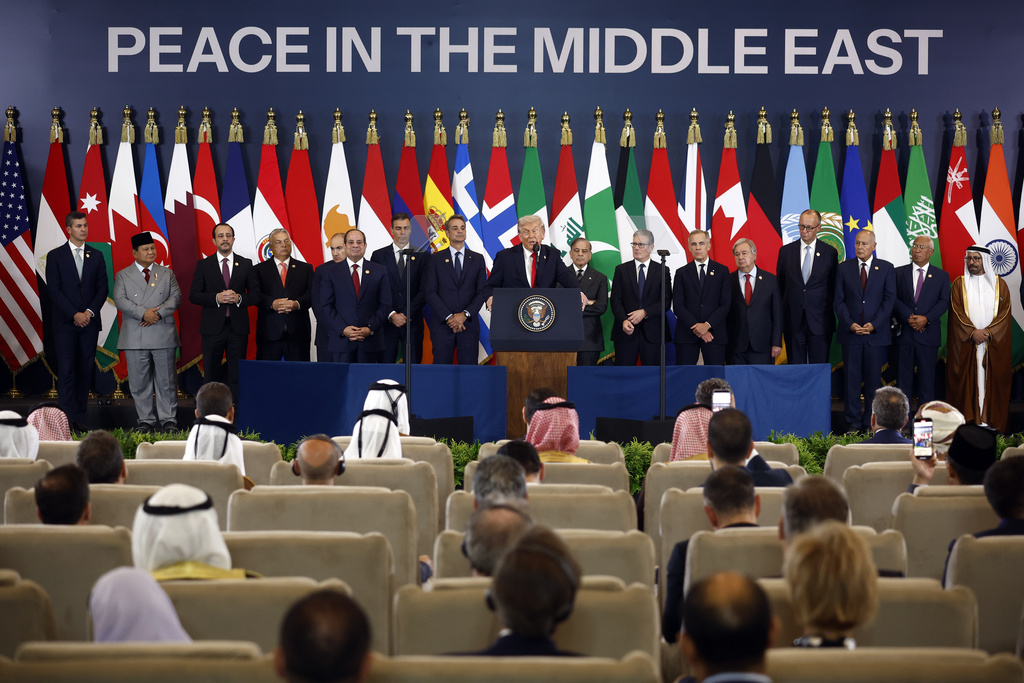
At the peace summit in Sharm el-Sheikh, Qatar, Egypt, and Turkey also signed on to support Trump’s plan, but none of them undertook the task of disarming the terrorist organization. Quoting Doran: “On paper, Arab countries support disarmament, but in practice they will do nothing to promote it.”
Or better yet, in the words of Jordan’s King Abdullah: “What is the mandate of security forces inside of Gaza? And we hope that it is peacekeeping, because if it’s peace enforcing, nobody will want to touch that,” he told BBC Panorama.
He also noted that even for the task of peacekeeping, it will take time for his country and Egypt to train local Palestinian police.
“Israel has experience with what happens when an enemy is called upon to disarm,” Hajdu reminds readers. “After the 2006 Lebanon war, UN Security Council Resolution 1701 stated that Hezbollah’s complete disarmament was necessary to bring the conflict to a permanent end. However, this did not happen, and Israel eventually had to invade Lebanon in 2024 to push back Hezbollah’s lines, and years of Mossad planning were needed to eliminate the terrorist organization’s top brass in a sting operation.”
Given these harsh realities, it is difficult to see any chance of enduring peace when the U.S. seems to think Israel must “keep the ceasefire from collapsing” and that Arab countries will somehow disarm Hamas.
Hajdu then turns to a piece in JNS by Jonathan S. Tobin, its founding editor-in-chief, who essentially laughed off Trump’s envoys for believing that Qatar and Turkey would help keep the peace. He had some particularly harsh truths regarding Qatar.
“Even Trump seems to have swallowed the Kool-Aid about Qatar’s being a good friend of the United States and a tireless worker for peace. That’s in spite of the fact that the Gulf emirate is largely responsible for enabling Hamas to start the war and also spreading Islamist propaganda via its Al Jazeera media outlet and by sponsoring and funding the Muslim Brotherhood,” he writes.
Tobin also called out Trump’s team, and specifically VP Vance, for thinking a “fantasy security team,” including Muslim and Arab countries, “but not Americans,” would take care of getting Hamas to lay down its weapons.
“Arab governments may dislike Hamas and wish to be rid of it, but the chances that any of them would actually take on that job themselves are about as close to zero as one can get.”
Tobin’s conclusion is not at all rosy, as without the voluntary disarmament of Hamas, Israel will have no choice but to eventually intervene. And all the ceremony in Egypt will be for naught.
“It is just as important to point out that the unwillingness of the Trump team to honestly address that chasm between the expectations they have encouraged and reality may be a source of real conflict between the United States and Israel,” he adds, noting that this could also lead to boosting those in the MAGA movement who are “both isolationist and hostile” to Israel.
Hajdu also rightfully points out that even without Hamas, do the people of Palestine want to live in peace with their Jewish neighbors? “Hamas may lose the leadership of Gaza, but the hatred that has been cherished for almost 80 years will not go with them,” she writes.
Citing “the most optimistic experts,” she says they view Hamas as too destroyed to ever regain power, and Israel as easily able to go in and take out any remaining terrorists. But how does this result in Trump’s “everlasting” peace?
The U.S. has been clear that action will be taken if Hamas refuses to give back the rest of the bodies and disarm. And yet, this most certainly would involve Israeli troops, not American, with Hajdu also highlighting that the IDF has already had to “take action against terrorists several times last week.”
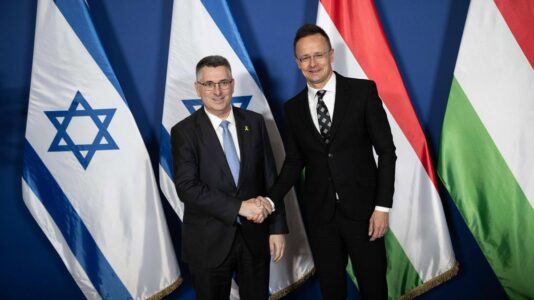
During his visit to Budapest for a Hungarian-Israeli business forum, Israeli FM Gideon Sa’ar also did not shy away from bringing up the “peace” process in Gaza, essentially confirming that Trump’s “Deal of the Century” was falling flat.
Accusing the Palestinian Authority of continuing its “pay-for-slay” policy, Sa’ar said that financial benefits are still flowing to the families of slain terrorists, in violation of the peace deal. He also laid blame on the EU for legitimizing the practice.
“The terrorists are collecting their payments from the Palestinian post office. And the PA is now making additional payments to evil terrorists released as part of the [ceasefire] deal,” he said, as quoted by The Times of Israel.
The Israeli FM also made clear that Israel will not tolerate any presence of Turkish troops on the ground in Gaza, throwing a wrench in whatever “constructive role” VP Vance had intended (or hoped) for Turkey.
“In Egypt, grand promises were made barely two weeks ago,” Hajdu writes, reminding readers of the agreement signed, meant to bring “comprehensive and lasting peace” to Gaza and ensure “friendly and mutually beneficial relations between Israel and its regional neighbors.”
As King Abdullah told the BBC: “If we don’t solve this problem, if we don’t find a future for Israelis and Palestinians and a relationship between the Arab and Muslim world and Israel, we’re doomed.”