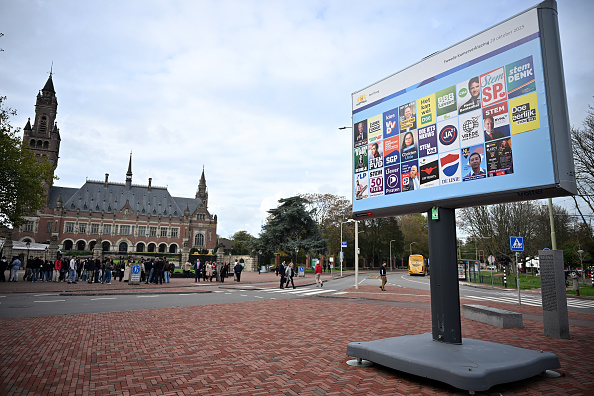
Geert Wilders’ right-wing Party for Freedom (PVV) has lost its commanding position in Dutch politics to finish tied with the liberal D66, the big winners in Thursday’s general election.
Both parties secured 26 seats, but arrived at that figure from very different starting points. The PVV reduced its parliamentary cohort by 11 seats, while D66 gained 17 seats from its last election result in 2023.
According to near-complete results, the Netherlands is facing another complex coalition process, with some form of centrist coalition the most likely.
The PVV’s support fell sharply from its previous high, dropping to around 16.8 percent of the vote. D66, led by Rob Jetten, surged by more than 10 percentage points to match Wilders’ total — the best result in the party’s history. “Millions of Dutch people today turned a page,” Jetten told supporters. “They have said goodbye to the politics of hate and division.”
De positieve krachten hebben gewonnen! Ik wil voor alle Nederlanders aan de slag, want dit is het land van ons allemaal! pic.twitter.com/Chs6T7XMcf
— Rob Jetten (@RobJetten) October 29, 2025Jetten’s “Het kan wel” (“Yes, we can”) slogan, pinched from former U.S. president Barack Obama, appeared to resonate with an electorate that turned away from both the left and the right to favor the center ground.
Wilders had urged voters to make the PVV such a dominant force in parliament that it would be impossible to sideline, but fell well short of achieving that goal. With all other major parties refusing to work with him after his party’s resignation tanked the previous center-right coalition, hopes of forming a government have quickly evaporated.
De PVV wil het voortouw bij de formatie als we de grootste zouden worden. Zolang daar geen 100% helderheid over is kan er geen verkenner van D66 aan de slag. We zullen alles doen om dit te voorkomen. #PVVOP1
— Geert Wilders (@geertwilderspvv) October 30, 2025Still, he appeared undeterred. “The PVV wants to take the lead in forming a coalition if we become the largest party,” Wilders wrote on X on Friday morning. “As long as there’s no 100 percent clarity on this, no D66 scout can get started. We will do everything we can to prevent this.”
The Christian Democrats (CDA) also staged a comeback, gaining 13 seats to reach 18, while JA21 climbed to nine, up eight. The center-right VVD slipped slightly to 22 seats, maintaining its relevance but losing ground to both D66 and the CDA.
The left-wing GroenLinks–PvdA alliance also suffered a disappointing night, dropping to 20 seats. Its leader, former EU climate commissioner Frans Timmermans, resigned soon after the results were announced, admitting, “I have not been able to convince.”
With turnout at 78.5 percent, down only slightly from 2023, the Netherlands once again faces a fragmented parliament and protracted coalition negotiations.
Despite finishing level at the top, Wilders is isolated, while D66 now appears best placed to attempt to form a centrist coalition alongside the CDA, VVD, and possibly JA21.