
Money spent on organizing public events has increased by an average of 44 percent over the past three years, according to a study by Germany’s Federal Association of Cities and Municipalities Marketing.
For many cities, and especially smaller towns and private organizers, these expenses, now at a record high, have become a serious burden, writes Polish outlet Do Rzeczy.
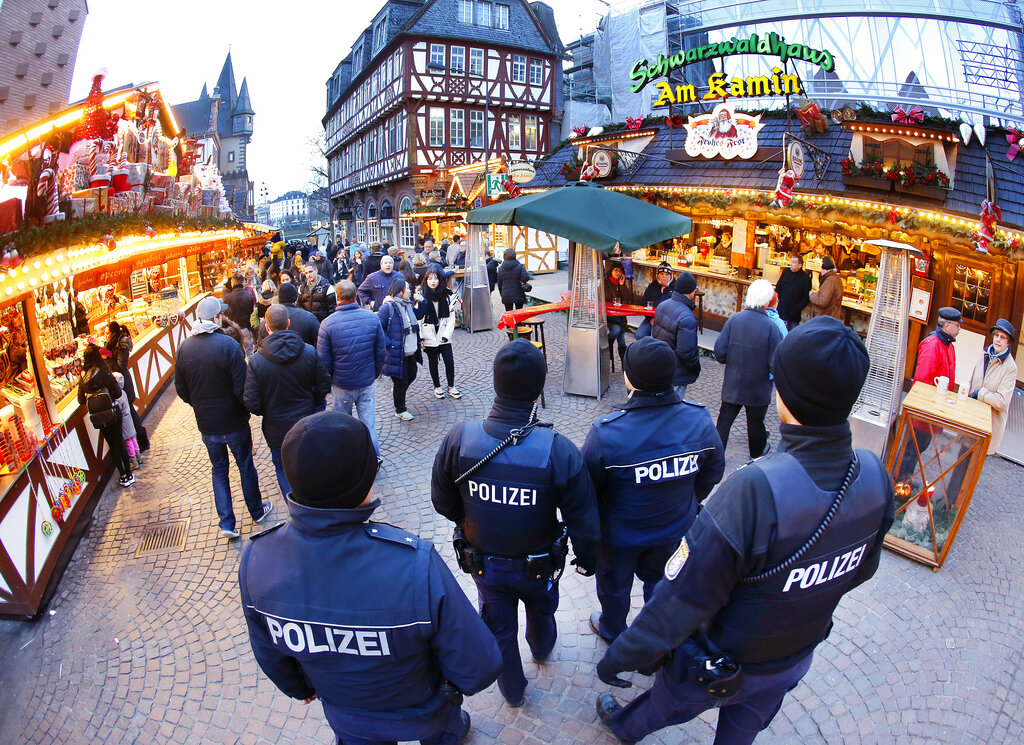
Due to a series of attacks in recent years, beefed-up security is a must. The 2016 attack in Berlin, in which an Islamist driver drove a truck into a crowd, and last year’s deadly attack at the Magdeburg Christmas market, both hit home hard. Just this year, there was a car attack in Munich in February and another car that crashed into a crowd in Mannheim in March.
In German public media outlet NDR, they write that there are exploding cost sin many cities, including the following:
Hanover
“For example, the security concept for the Christmas market in the old town [in Hanover] is expected to cost around €530,000 more than last year. This large sum is intended to implement various measures to ensure the safety of visitors. The money comes from the general budget of the state capital, the additional costs are not passed on to the stand fees. The city did not want to specify exactly which measures would be implemented – for security reasons,” wrote the newspaper.
Dresden
According to a separate report from NDR, Dresden has purchased 180 new car barriers, costing €1.9 million. The city is also renting shipping container to block access roads.
Göttingen
In Göttingen, €400,000 extra are now being spent to secure the Christmas market with traffic barriers and concrete blocks. This comes at a time when the city has a €100 million budget deficit. Buses that pass close by to the Christmas market are also being rerouted for the first time.
Wolfsburg
Wolfsburg plans to spend nearly a million euros on security measures, including €261,000 for crossing barriers. The city also will purchase retractable bollards and “high-security furniture” which will be installed over the coming years for €938,000.
Many of Germany’s famed Christmas markets, including the “Winterwelt Potsdamer Platz Berlin” and “Berliner Weihnachtszeit,” now have massive concrete barriers and even checkpoints at the entrances.
All of these serious security measures cost money, plus CCTV, security patrols, and additional security procedures.
On top of that, such security measures do nothing to add to the “festive spirit” that are supposed to define Christmas markets in Germany.
According to “Rzeczpospolita,” the German Ministry of the Interior acknowledges that security concerns are fully justified. It points to the large number of visitors, central locations, and open-air nature of the fairs as factors increasing the risk. But there is an ongoing debate as to who is ultimately responsible for bearing the cost.
Local authorities are calling on the federal states to shoulder some of this burden, arguing that combating terrorism is beyond the capabilities of municipalities.
Chancellor Friedrich Merz has stated that the federal government does not plan to provide additional financial support, pointing out that the state police are responsible for security. The Association of German Cities and Municipalities warns that if additional funding is not provided, organizers may be forced to pass on the costs to visitors.
Some markets have already decided to charge an admission fee, such as at the Gendarmenmarkt, where people will now have to pay €2 entrance to enter.
Meanwhile, Remix News just reported a few weeks ago that another Christmas market was cancelled altogether in Overath, North Rhine-Westphalia, due to a dispute over who should bear the growing costs of counter-terrorism security.