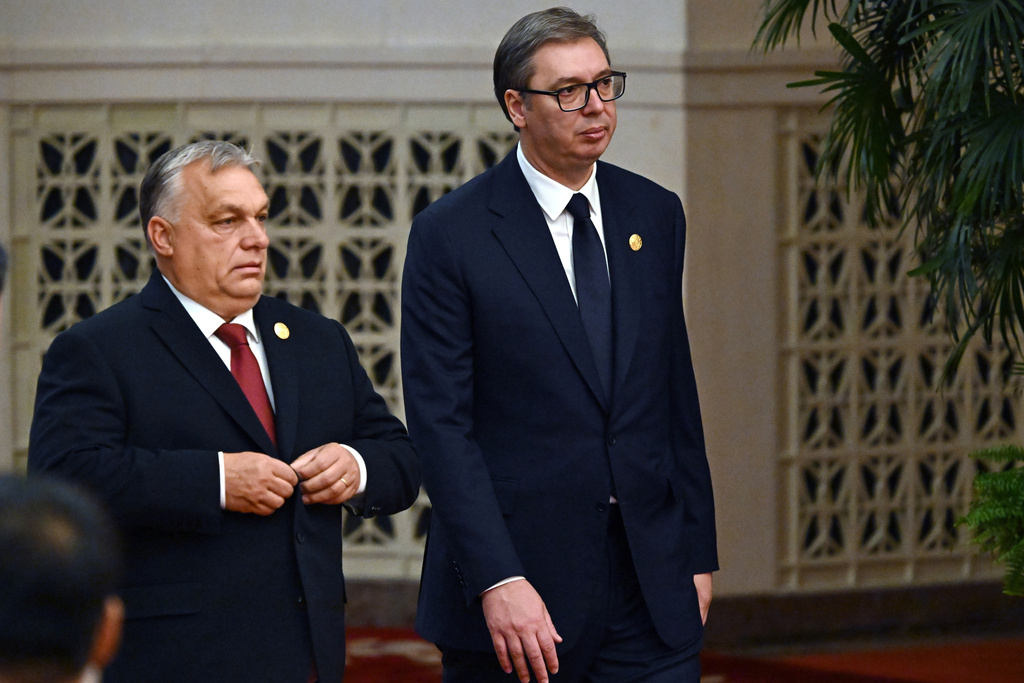
Serbia has been plunged into an unprecedented energy crisis in recent days, as the impact of American sanctions has paralyzed the country’s oil supply almost overnight, writes Hungarian analyst Dániel Deák in a recent post. Now, Hungarian Prime Minister Viktor Orbán is offering support to his Serbian ally, President Aleksandar Vučić.
“In the chaos of war, we can count on each other,” said Orbán before heading to the Serbian city of Subotica, which has a large Hungarian community, in order to commemorate Stephen Shepherd. According to Orbán, the joint commemoration goes beyond an emotional gesture. He said he believes that a true strategic alliance now exists between Hungary and Serbia.
Shipments via the Croatian pipeline were immediately halted after NIS, Serbia’s strategic oil company, became a target of U.S. sanctions. Banks responded by freezing the company’s finances, and the Pančevo refinery, the backbone of Serbia’s fuel supply, became virtually inoperable, according to Hungarian news outlet Mandiner.
To make matters worse, more than 300 NIS-owned gas stations are not accepting credit card payments because American card companies have blocked transactions with the company. Operators say there is no supply disruption yet, but no one can guarantee that the system will not collapse in the coming days.
The Hungarian prime minister emphasized that Serbia has found itself in a difficult situation due to its sanctions policy, and there is a risk that the country’s largest oil refinery will have to be shut down. This could cause serious supply problems, even fuel shortages.
According to Viktor Orbán, Central European cooperation today is not only about political diplomacy, but also about concrete economic and energy security steps. He said that Serbia is one of Hungary’s most important partners.
Analyst Dániel Deák emphasizes that everything that Serbia is experiencing now did not happen in the case of Hungary. This is a direct result of Orbán’s meeting with President Donald Trump in Washington on Nov. 7, with Orbán walking away with an exemption from American energy sanctions.
Unlike Serbia, there are no energy supply problems in Hungary; there are no disruptions in the payment system, and the fuel market has remained stable.
The Hungarian prime minister is personally visiting Serbia today to – as Deák puts it – try to help Hungary’s strategic ally. However, it remains unclear what concrete steps Orbán’s government will take to halt the crisis in Serbia.