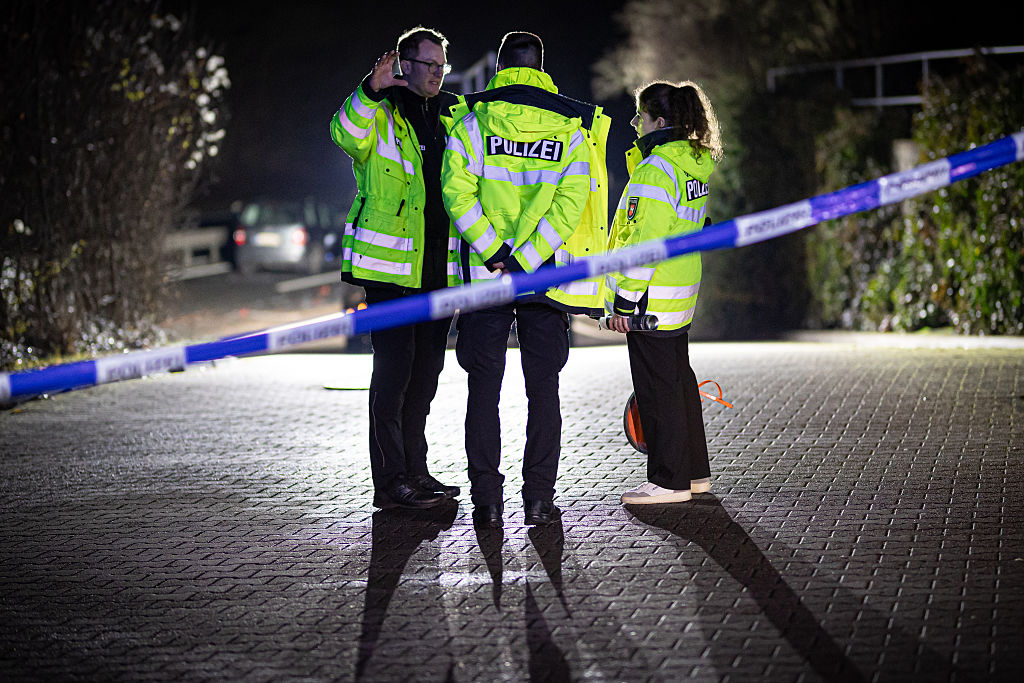
After a German citizen with a Turkish background was accused of murdering his wife in a brutal femicide in Ingolstadt, there is debate about the fact that police reported on the foreign background of the perpetrator. In fact, the city’s “integration officer” has even condemned the publication of the suspect’s background, saying it would prove divisive.
The murder made national headlines due to its brutality, which saw the man seriously injure his ex-partner with a kitchen knife in the street. The victim, a 45-year-old woman, was hospitalized and then died shortly after arriving.
Even more disturbing is the fact that the two sons tried to fight their father off and save their mother, but he kept stabbing the woman without being seriously hindered. The man had already been sentenced to prison in October, less than two months ago, for violating a restraining order.
In response to the murder, Upper Bavaria North Police headquarters sent a message on Saturday morning, mentioning the case involved a “49-year-old Turk,” which was reported by the local news outlet, the Donaukurier. Numerous media outlets repeated the information.
The publication of the man’s foreign background caught the attention of the city’s integration officer, Ingrid Gumplinger, who contacted the newspaper’s editorial team. She complained that calling the suspect a “Turk” is causing problems for the city’s Turkish community and making them feel stigmatized. She published a statement against the publication of this information, along with the city’s Equal Opportunities Commissioner Barbara Deimel, condemning the publication “on behalf of the city,” according to Welt newspaper.
In the statement, they noted that violence is a problem for all of society, regardless of the origin of any suspect.
“The origin of an offender must not lead to stigmatizing entire groups or fueling mistrust between communities,” reads the statement. They call for more efforts to prevent femicide.
There are also conflicting laws about the issue. In the Press Code, directive 12.1 warns that nationalities should only be mentioned if there is a “reasoned public interest” and there is no discriminatory motive behind it. However, as Welt notes, “In the case of serious crimes, a suspect’s biography may be relevant.”
However, at the same time, the Bavarian Ministry of the Interior also now requires police communications to mention the nationality of suspects as of Oct. 1, which is generally stated in all police reports.
The policy just recently changed in Bavaria, and follows the path of other German states, including recently North Rhine-Westphalia and Schleswig-Holstein, along with Saxony and Mecklenburg-Vorpommern, which have been publishing this information for a longer period of time.
Bavarian Interior Minister Joachim Herrmann (CSU) explained, saying there is often “discussion about the nationality of suspects on social media,“ and accusations that the nationality is “concealed.“ However, in his view, mentioning nationality is part of “honest information for the public.”
The Foreigners’ Advisory Council warned that it would encourage racism.
🇩🇪🔴The "Knappi Gang" of foreigners has been ruthlessly beating victims, including on video them film themselves, in the German city of Dortmund,
1 Syrian and 1 Eritrean were arrested by specialized SEK raid police. 3 Germans have also been arrested. However, the report from… pic.twitter.com/HqZVvKUaRf
— Remix News & Views (@RMXnews) December 8, 2025Notably, this information will now be reported even if the individual has German citizenship but a foreign background.
The German Police Union supported the move.
“Extensive and even open information prevents speculation,” state chairman Jürgen Köhnlein told BR. Nationality is a fact, “and facts belong in every serious police report.” He said that reporting comprehensive information helps gain public trust, which occurs by being transparent.
Of course, the police are also on the frontline of a crime wave largely fueled by mass immigration, as other leading police union officials have openly stated for years. So, there is little surprise that the police unions are backing such a move.