The European Parliament has voted on a safeguard clause to the EU’s trade agreement with Mercosur countries, but this is not enough to avert disaster for Europe’s food security, food safety, and agricultural future.
“The changes voted on in the European Parliament do not eliminate the fundamental threat to the food security of EU citizens, and the safeguard clause will not prevent the destabilization of the agricultural market. A sham solution was passed, intended to create the impression of agricultural protection and facilitate political acceptance of the entire agreement,” Jadwiga Wiśniewska, a PiS MEP, commented on the EP’s vote on safeguard clauses for the agreement with Mercosur countries in an interview with wPolityce.
“The safeguards approved do not eliminate the threats to small and medium-sized farms, which constitute the backbone of Polish agriculture. For them, these mechanisms will be completely insufficient,” she adds.
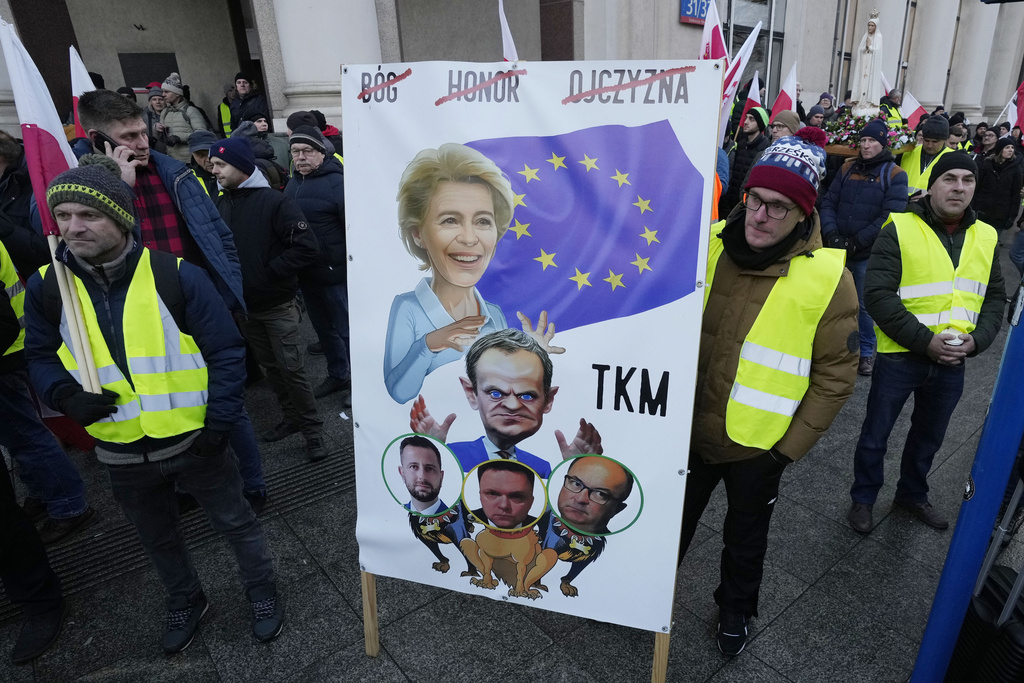
The EU parliament is reacting to mass protests and fierce opposition from farmers, European activists, and grassroots initiatives aimed at protecting Europe from being flooded with cheap and unsafe food from South America. With this in mind, the parliament adopted several amendments that are supposedly intended to “allow for a faster response” from the EU in the event of a drop in prices for products like beef and eggs due to imports from the South American bloc.
However, critics say this measure is designed to stamp out opposition and will offer no real safeguard to farmers and European consumers.
“It’s worth emphasizing that the European Commission itself admits that the agreement will harm agriculture, since it proposes a billion euros in compensation, even though this is a mere drop in the ocean of needs. For Poland, this means a real risk of a decline in domestic production and increased dependence on imports. The mechanism does not rule out a massive influx of cheaper products from Mercosur countries, manufactured to lower standards,” Wiśniewska adds.
Poland is sharply split on the issue, with the left voting for Mercosur, which will harm farmers and threaten European food security. Polish MEPs from the Civic Coalition (KO), Polish People’s Party (PSL), New Left (Nowa Lewica), and Poland 2050 party (Polska 2050) supported the measure. MEPs from the conservative end of Poland, Law and Justice (PiS) and Confederation, opposed it.
Countries are awaiting a safeguard clause for a final vote on the entire trade agreement with Mercosur. Approval requires a qualified majority among capitals (15 countries representing 65 percent of the EU’s population). A minority of at least four countries representing at least 35 percent of the EU’s population can block the vote.
European Commission President Ursula von der Leyen hopes to sign the agreement at the Mercosur summit in Brazil on Dec. 20. However, due to farmers’ protests, France wants to postpone work on the agreement with Mercosur until next year.
French MEP Jordan Bardella, leader of the National Rally party, posted on X regarding the vote: “Ursula von der Leyen and her majority in the European Parliament can congratulate themselves: Everything seems to indicate that they are indeed in the process of killing off European agriculture, which, not so long ago, was the pride of our continent and the strength of France.”
Macron is under extreme pressure after nearly the entire French parliament voted against the free trade deal, with only one MP voting for it in the entire chamber.
The deal could serve as a major blow to food quality, resulting in cheap meat and produce imports from South America, where standards are notably lax when it comes to pesticide and GMO use. Over the coming years, these products would find their way more and more often onto European shelves.
While the EU insists on the issue of climate protection and the Green Deal, this free trade deal will also turbocharge destructive agricultural practices in South America, where enforcement of environmental protection remains weak. Tens of millions of acres of rainforest have been destroyed to make way for cattle grazing and monocrop cultivation of soybeans and other cash crops, but with the lucrative EU market opened up, it could create a frenzy to destroy even more rainforest and convert it to agricultural use.
Opponents of the agreement point out that under the agreement, Germany will send its industrial products to South America, and in return, food from South American countries will flow to Europe. Unfortunately, this food will often be of poor quality, containing chemicals long banned in Europe.
The risks are enormous. Brazil alone allows the use of as many as 3,669 pesticides. With European markets open, Brazil will be able to send more and more of its food overseas. Europe’s emphasis on “eating local” to reduce carbon emissions associated with transportation will become a joke, as food from halfway around the world will often be cheaper than locally produced goods. European chemical companies will reap massive profits.