The decision by EU ambassadors on safeguard clauses for farmers in the European Union’s trade agreement with Mercosur, originally scheduled for Monday, has been postponed until January, but the EU may be planning to sign the Mercosur trade agreement, highly protested by farmers across the EU, with the South American bloc on Jan. 12, according to Do Rzeczy.
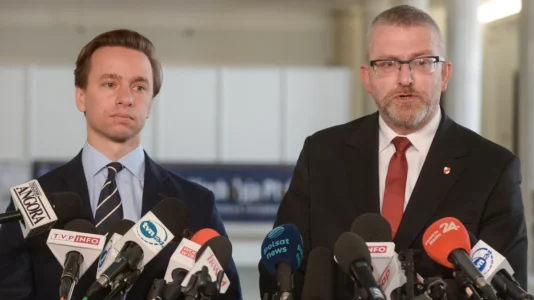
Anna Bryłka, MEP of the Confederation, told Do Rzeczy that “there is a lot of communication chaos regarding the agreement with Mercosur.”
“Firstly, on September 3rd, the European Commission (EC) initiated the ratification process, which means it announced that the agreement would be ratified in a mixed mode, dividing the agreement with Mercosur into two parts – the trade part and the partnership part. The point is that the agreement with Mercosur should, in principle, be voted on in its entirety, but since it was known that France would oppose it, the European Commission removed the trade part from the whole, so that it could be voted on by a qualified majority at the Council of the European Union. The agreement still needs to be approved with the participation of the European Parliament,” she explained.
Other Polish MEPs, including Ewa Zajączkowska-Hernik, are also raising the alarm. Zajączkowska-Hernik wrote on X that the deal is being rushed through, and that very important clauses are not included, including balancing regulations and standards between Europe and Mercosur.
“And now a very important piece of information for all our health – the package of clauses that is to go to the vote tomorrow does not include the extremely important element known as reciprocity, which would force Mercosur countries to meet the same standards as EU farmers, in terms of pesticide and antibiotic use! This agreement will directly harm consumer health!” she wrote.
WAŻNE wiadomości z Brukseli 🚨 Okazuje się, że wstrzymanie podpisania umowy UE z Mercosur było zwykłą ściemą Ursuli von der Leyen❗ Już na jutro na godzinę 14:30 do agendy posiedzenia ambasadorów UE wpisano kluczowe głosowanie ws. klauzul ochronnych❗
Proszę o podawanie dalej,… pic.twitter.com/vBifHHS1qz
— Ewa Zajączkowska-Hernik (@EwaZajaczkowska) December 21, 2025The other MEP, Bryłka, also noted that “in the meantime, knowing that the entire agri-food sector in the EU opposes it, the European Commission proposed on Oct. 8 the so-called regulation on safeguard clauses, or the so-called safeguards.”
“This regulation was recently voted on in the Council of the European Union and the European Parliament. The decision by EU ambassadors regarding safeguard clauses for farmers in the EU-Mercosur trade agreement, originally scheduled for today, has been postponed until January. However, the vote on safeguard clauses is completely independent of the trade agreement, as it follows its own path. These are two separate legislative paths,” she explained.
🇪🇺🔴The true face of the EU.
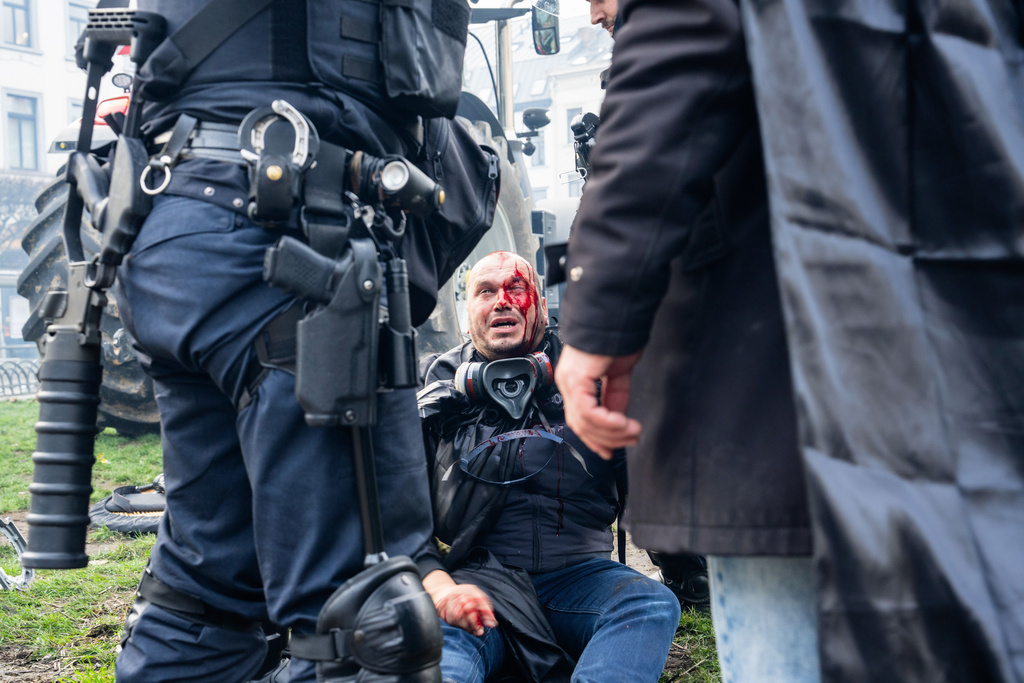
Protesting farmers from across the EU are hit with water cannons and tear gas, all while the elite inside the European Commission surround their HQ with barbed wire.
Rule of law has abandoned Brussels.
Notably, these farmers are protesting a… pic.twitter.com/scm7rTMF5O
— Remix News & Views (@RMXnews) December 18, 2025Anna Bryłka pointed out that “everything indicates that on Jan. 9 the Council of the European Union will vote on the proper agreement with Mercosur, so that after Jan. 12 Ursula von der Leyen can finally sign this agreement in South America.”
“So we are at a point where there has been no vote on the agreement and no final vote on safeguards,” she added.
The Confederation politician recalled that “Prime Minister Donald Tusk said on Friday that the agreement is already safe.”
“It’s not safe because no safeguard clauses will protect against mass imports from South America. The safeguard clauses, which the prime minister largely invokes, have been significantly weakened. This means that the conditions that must be met to even initiate an investigation, regarding disruptions in the agricultural market, are, in my opinion, virtually impossible to meet,” she said.
In addition, she stated: “Yes, they left in place the requirement that imports increase by 8 percent compared to the last three years. Just imagine if the European Commission came in and said these weren’t imports from Mercosur, but imports from Ukraine, so they couldn’t initiate an investigation. The application must be submitted by the EU industry, meaning an industry that represents 50 percent of the sector. This is impossible given the fragmentation of agriculture in the European Union,” she said.
Anna Bryłka stated that “the protection clauses are a smokescreen and a PR stunt. They are trying to convince farmers that they will be protected, that they have nothing to fear, and that they are safe.”
As she noted, “the actual trade agreement is part of a larger agreement that will only enter into force once it has been approved by all national parliaments.”
“Let me remind you that the agreement with Mercosur is the largest agreement in the history of the European Union, and the European Commission found a legal loophole to bypass a veto by one member state. We’re talking about France because it is the biggest opponent of the agreement with Mercosur,” she emphasized.
The Confederation’s MEP also noted that she believed the Polish government “made no effort to build a blocking minority.”
🇧🇪JUST IN: Police fire tear gas at protesting farmers in Brussels.
10,000 farmers are in Brussels to protest the South American Mercosur free trade agreement, which will destroy food security in Europe and lead to harmful pesticides in EU supermarkets. pic.twitter.com/WA1MVDfQOt
— Remix News & Views (@RMXnews) December 18, 2025She recalled that “Deputy Prime Minister and Foreign Minister Radosław Sikorski has stated that seeking a blocking minority on Mercosur is setting oneself up for failure.”
“If Poland approaches this with the attitude of building a blocking minority, it will not succeed, and I am convinced of that. However, the problem is that the Ministry of Agriculture, which is not responsible for trade, is largely making these pronouncements, as trade falls under the purview of the Ministry of Economy and Finance,” she pointed out.
Bryłka further noted that she hadn’t heard from the prime minister or the Ministry of Foreign Affairs that Poland was actively seeking a blocking minority. Although the EU commission currently has no qualified majority, she believes Italy will get on board.
“Italy does not yet have a position on this matter, but I believe that Italians will ultimately support this agreement,” she said.
When asked why the European Commission is pushing for the Mercosur agreement to come into force if it is harmful to agriculture, she replied that, first of all, there are countries for which this agreement will be beneficial.
“This is especially true for Germany, as its automotive and chemical sectors will benefit from the agreement. Italy is in a similar situation, as its northern industry also benefits from the Mercosur agreement,” she explained.
The Confederation’s MEP claims that the EU commission wants to move all production capacities to South America and turn this continent into an economic colony for Germany.