

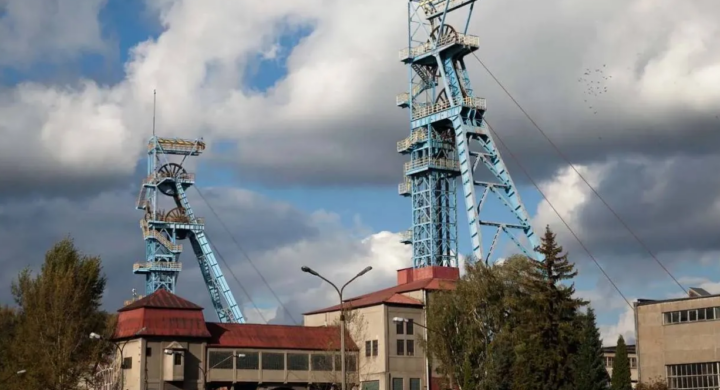
A protest at the privately owned Silesia coal mine in Czechowice-Dziedziedzice continued for a second day on Tuesday, with presidential ministers travelling to the site and descending underground to meet miners refusing to surface over fears of mass layoffs and exclusion from state protection measures.
As reported by wPolityce, a delegation from President Karol Nawrocki’s office travelled to the mine, where miners from Przedsiębiorstwo Górnicze Silesia have remained underground since early Monday morning. Kazimierz Grajcarek, spokesman for the protesters, said presidential ministers were meeting workers who had refused to leave the shaft.
The protest began at around 6 a.m. on Monday, when miners refused to resurface. Union officials said between 30 and 40 miners initially took part. They stressed that the action does not constitute a strike and that mining operations have continued, albeit with reduced productivity.
The miners are demanding that their company be included in the protective measures provided by the amended Mining Act, which was signed by President Karol Nawrocki on Dec. 15 and is due to enter into force at the beginning of next year. The amendment introduces benefits for workers affected by mine closures, including paid mining leave at 80 percent of salary and one-off severance payments of 170,000 zlotys (€40,200), exempt from personal income tax.
Those protections apply to employees of Polska Grupa Górnicza, Południowy Koncern Węglowy, Węglokoks Kraj, Jastrzębska Spółka Węglowa, and, in the future, Bogdanka, but not to the privately-owned mine at the heart of the protest.
Grajcarek said at a Tuesday morning briefing that ministers from the presidential chancellery had descended underground to join the protesting miners and would meet journalists after resurfacing.
“Then we’ll know how many people are left there, what’s happening to them,” Grajcarek said. “As unions, we have a problem because people want to protest, and we go to them and ask them not to protest, or maybe just a few people to do so, because we want the mine to keep working.” He emphasized that the protest was spontaneous.
According to the protesters’ spokesman, 16 miners remained underground overnight, while another five protested above ground at the processing plant. He said the union was providing food and supplies, and that the protesters had received medical care from their employer.
The Silesia mine accounts for about 3 percent of Poland’s thermal coal production and 2.3 percent of total hard coal output. At the end of November, the administrator of the restructuring estate notified unions of plans for mass layoffs affecting more than 750 employees.
Energy Minister Miłosz Motyka wrote on X that while the Silesia mine is a private company, the government is not indifferent to the situation of its employees. He said that, together with Deputy Energy Minister Marian Zmarzły, he was analysing possible forms of support, but added, “The company is currently undergoing restructuring proceedings, and the law does not allow for the provision of public aid to mining companies in such a situation. This is a formal blockade, not a government decision.”
At a separate mine in the region, two miners missing after an underground accident at the Pniówek coal mine in Pawłowice were found dead, company officials confirmed overnight. Adam Rozmus, vice-president of Jastrzębska Spółka Węglowa, said the men, aged 40 and 41, were pronounced dead by a doctor who reached them underground.
Polskie Radio reported that eight other miners working in the same area were able to reach the surface safely after contact was lost at a depth of around 830 metres.


