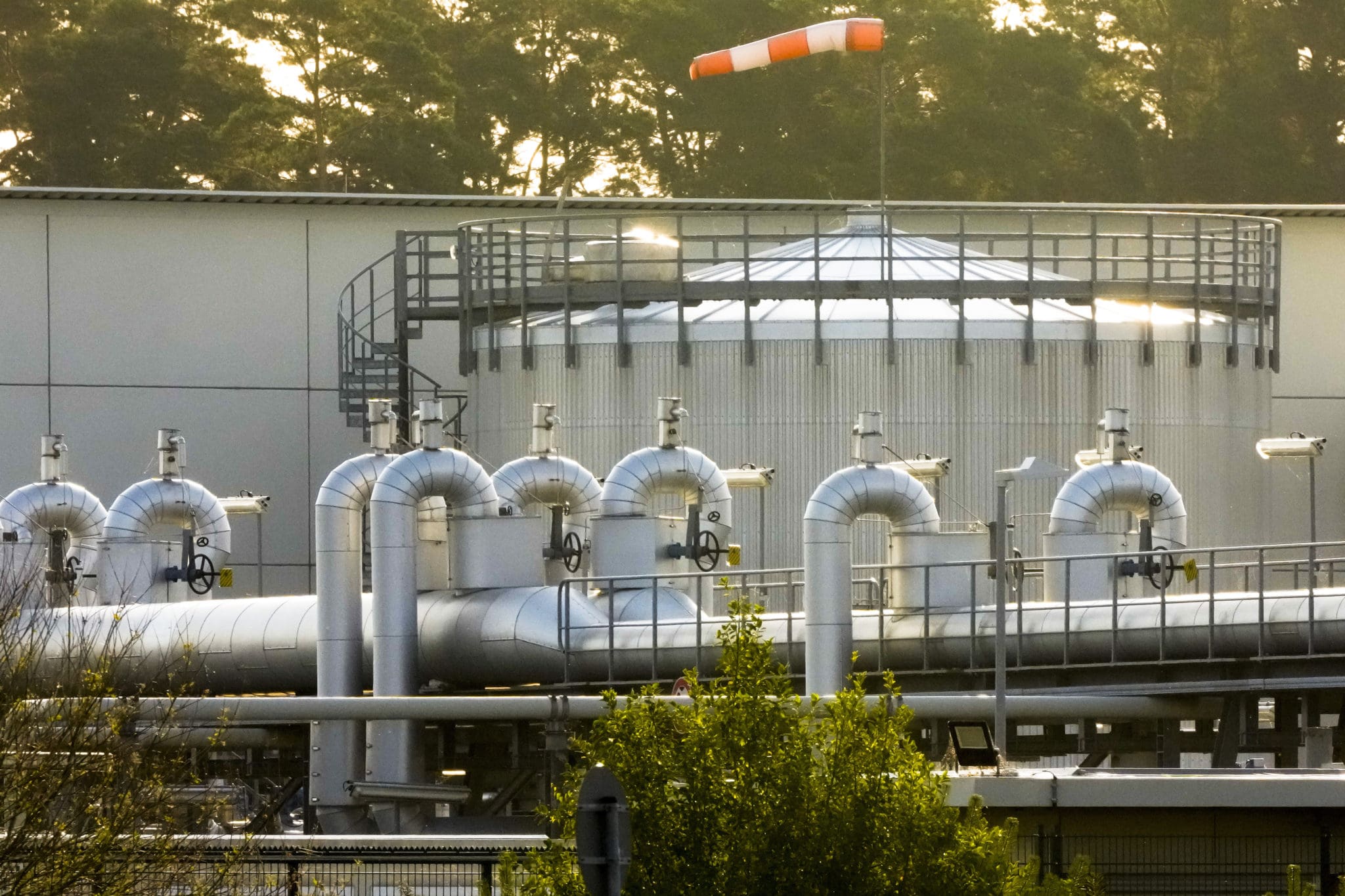
Russia’s pipeline gas exports to Europe will fall by 44 percent in 2025, to their lowest level since the mid-1970s, driven by the closure of the Ukrainian transit route and the European Union’s push to phase out imports of Russian fossil fuels, according to calculations published by Reuters on Tuesday and cited by the Portfolio news portal.
The European Union aims to completely stop buying Russian gas by the end of 2027 at the latest. Brussels wants to reduce its dependence on Russian energy and to divert revenues that are used to finance Moscow’s war in Ukraine.
Europe used to be Russia’s most important source of income from oil and gas sales. Exports through pipelines built in Soviet times in the 1960s and 1970s peaked in 2018-2019, with more than 175-180 billion cubic meters of gas flowing to the West each year.
This brought Gazprom and the Russian state tens of billions of dollars in revenue each year.
In 2025, however, Gazprom was only shipping about 18 billion cubic meters of natural gas to Europe, exclusively through the TurkStream undersea pipeline.
This is the lowest level since the 1970s. In 1975, the Soviet Union exported 19.3 billion cubic meters to Europe.
TurkStream remains the only Russian gas route to the European market after Ukraine did not extend its five-year transit contract with Moscow on January 1. In addition to Turkey, Serbia, Hungary and Slovakia also receive natural gas through this pipeline.
Russia also transports LNG to Europe via tanker and is currently the second-largest LNG supplier to the European Union after the United States.