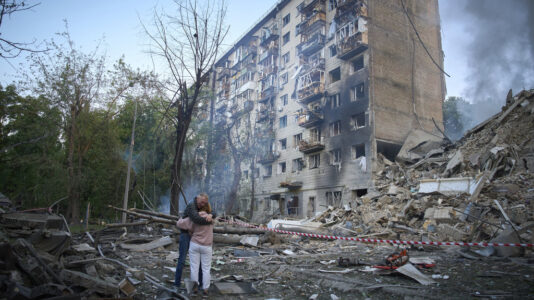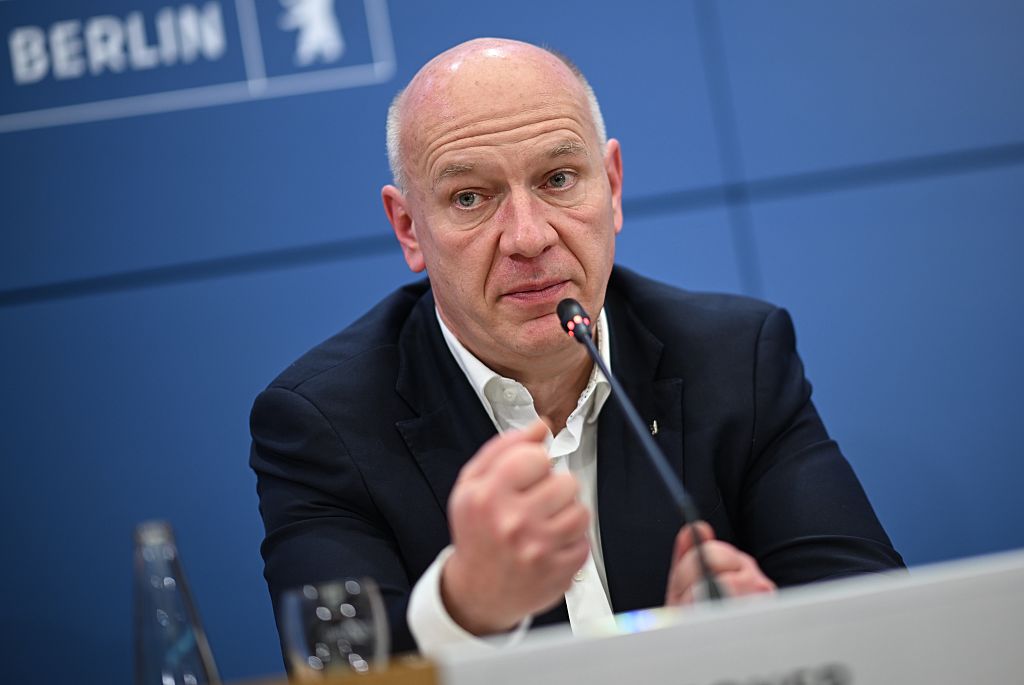
Following the terror attack on Berlin’s energy infrastructure, which police say has led to at least one elderly person dying, Mayor Kai Wegner is under intense pressure. Following revelations he was playing tennis on Saturday, there are calls from a number of opposition parties for him to resign.
“Yes, I was playing tennis on Saturday,” Wegner said on Wednesday evening on RBB. “Looking back, I should have said what I did on Saturday on Sunday.”
After he originally said he was working from his home office all day, newspapers like Bild are slamming him, alluding that he was not entirely honest. In fact, the chief editor from Bild, Peter Tiede, called him a “flat out liar,” in a video segment. Politicians like Alternative for Germany (AfD) leader Alice Weidel even posted an AI-generated image mocking his tennis match.
Am Samstag, in einem Tennis-Club irgendwo in Berlin… pic.twitter.com/g4dZk5hO4v
— Alice Weidel (@Alice_Weidel) January 7, 2026Of course, the optics look bad. Berliners were left out in the cold while Wegner played tennis.
However, put into context, it is clear that it was an hour of exercise, on a Saturday no less. Even leaders during a crisis situation may need lunch or exercise, and in some cases, that can actually make them better at their job.
So, resigning over a match of tennis, even if he was not entirely truthful about it, seems overblown. He is also a public figure, but if he went out for a run for an hour, would there be as much uproar? He is a human, after all, and even an attempt to fudge exactly what he was doing can be forgiven.
🇩🇪BREAKING: The left-wing terror attack on energy infrastructure in Berlin has "claimed a life" after a 83-year-old "woman was found lifeless in her apartment" with severe hypothermia.
A relative found the woman, and rescue workers tried to unsuccessfully resuscitate her.
Her… pic.twitter.com/6Je8qxUXYu
— Remix News & Views (@RMXnews) January 7, 2026Others will obviously see it differently, especially some of those in southwest Berlin who are already furious at his role in the crisis. And of course, politicians are also going to take their shots at him. That is politics, and they sense the PR moment for Wegner has left him extremely vulnerable.
The highlighting of the tennis match, though, shows how much of politics is driven by PR and “image” and not necessarily policy.
Indeed, there are other concrete policy areas where Wegner could be criticized. For one, there appeared to be a significant lack of preparedness from authorities to deal with the crisis, at least in the early hours.
Second, it is true that Wegner is not responsible for the fact that the left-wing group claiming responsibility for the attack, the Vulcangruppe (Volcano Group), has been able to attack Berlin’s energy infrastructure with impunity for 15 years. However, many of the most high-profile attacks happened under his term as mayor, including the massive attack on the Tesla plant in Grünheide. More certainly could have been done to stop this group, no doubt.
As a number of commentators have noted, left-wing terrorism is treated entirely differently than right-wing terrorism, and in turn, the authorities may have never been pressured to take these cases as seriously as if it had been a group of neo-Nazis running around cutting the power to Berlin hospitals and daycares.
🇩🇪"Why are there always left-wing attacks in Berlin?"
After a terror attack from the left-wing "Volcano Group" in Germany's Berlin, which left 45,000 households without power, there are questions about how far left-wing violence is legitimized by the media, state, and society… pic.twitter.com/ZtdSusqorW
— Remix News & Views (@RMXnews) January 7, 2026Finally, there are various policies from Wegner that I do not personally agree with, along with mayors from many of the major cities in the West, including London Mayor Sadiq Kahn or Paris Mayor Anne Hidalgo. However, it is very clear that the voting populations of these cities do. They vote for these policies.
Left-wing actions, and even terror, are deeply romanticized in cities like Berlin. There is a wink and a nod towards such actions, and in many cases, it is even glorified or actively supported by actual politicians, or at least activists in the political parties. Even Wegner, who is ostensibly a “conservative,” is not immune to this social reality.
This also feeds into the topic of mass migration. Wegner has spent a record amount of money on migrant accommodations in Berlin, amounting to nearly €1 billion last year. Once the blackout hit 45,000 households, he initially formulated that those affected would still need to pay €70 for a hotel room per night, a move that he backtracked on when it was met with outrage.
However, the affected wealthy districts in the southwest of Berlin, many of whom are more conservative than the average, did indeed vote for Wegner in large numbers. DId Wegner ever say he was going to substantially enact immigration restrictionist policies? No. So, this is, in a manner, what they were also voting for. Berlin has a fiscal problem, and even as budget cuts hit cultural, education, and transport sectors, money towards migrants goes up every year.
Again, you get what you vote for, so why should Wegner resign over a lack of accommodations available in an emergency?
We could also raise the fact that 2025 marked a major year in terms of escalating gang violence, another Wegner policy failure, as he is the “CDU guy” who is supposed to be “tough on crime.” By the end of 2025, public discourse in Berlin frequently referred to “almost daily gunfire” in connection with organized crime, clan rivalries, and drug trafficking in districts like Lichterfelde, Neukölln, and Kreuzberg. The Turkish Mafias are especially responsible for this incredible amount of gunfire in the capital. This uptick in high-profile street shootings led many officials to describe the current era as one of the most violent for the city in recent memory.
Again, this should not be a surprise. In fact, it is all very predictable.
Even if I would like to personally see Wegner out of office along with a number of Western politicians, society has an entirely different opinion about what they want. Berlin has elections later this year, where the populace will likely choose a left-wing mayor this time around. They certainly are not going to choose an immigration restrictionist, regardless of soaring crime, school and housing crises, or the many parallel societies that have arisen. In addition, action against left-wing terror groups is of very low priority overall. There will be no demonstrations against the Vulkangruppe, for instance, and no public mantras from Berliners about the “threat to democracy” the left-wing groups represent.
In fact, the Left Party has been polling second-highest in Berlin for the upcoming elections, which has the highest number of former or even current Antifa activists and apologists for outright left-wing violence.
The reality is that Western society in the cities is increasingly multicultural and liberal. Many of the residents, such as Turkish migrants, would vote for extremely conservative candidates like Erdoğan in their own home countries, but are choosing left-wing parties in Western nations, in large part due to their high social spending and support for more mass migration. Wegner, the supposed “conservative,” only won because he shifted towards the electorate, which means supporting immigration and going soft on left-wing causes as well. He needs coalition partners like the SPD, after all.
In other words, there are far bigger problems than a game of tennis, and there is little hope in the near term that anything will be done about them.