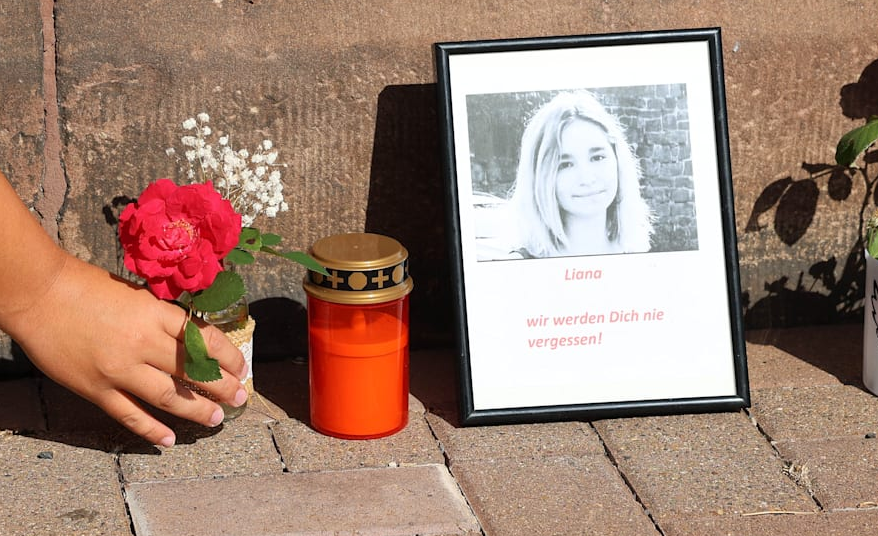
AfD co-leader Alice Weidel has denounced as a “scandal” the decision to pursue psychiatric treatment rather than prison for an Iraqi migrant who pushed a 16-year-old girl to her death in front of a freight train in northern Germany last August.
“The Iraqi who was subject to deportation at the time of the crime and who killed Liana by pushing her in front of a freight train will go unpunished: The public prosecutor’s office certifies him as ‘guilty but insane.’ No deterrent judgment, no imprisonment followed by deportation — instead, the taxpayer has to foot the bill for the perpetrator’s accommodation in a psychiatric hospital. This is a scandal!” Weidel wrote on X.
Der zum Zeitpunkt der Tat vollziehbar ausreisepflichtige Iraker, der Liana (16) tötete, indem er sie vor einen Güterzug stieß, geht straffrei aus: Die Staatsanwaltschaft attestiert ihm "Schuldunfähigkeit". Kein abschreckendes Urteil, keine Haft mit anschließender Abschiebung -…
— Alice Weidel (@Alice_Weidel) January 15, 2026The Göttingen public prosecutor’s office said it has filed a manslaughter case with the Göttingen Regional Court while seeking the suspect’s permanent placement in a secure psychiatric hospital.
As reported by NTV, prosecutors allege the 31-year-old Iraqi pushed the victim into the path of a freight train traveling at 100 km/h at the Friedland station on Aug. 11, 2025, while she waited on the platform and spoke on the phone to her grandfather in Ukraine. The teenager suffered fatal injuries, which prosecutors said the suspect “at least tacitly accepted.”
However, prosecutors said the man was deemed not criminally responsible at the time of the alleged killing because of a diagnosis of schizophrenia. As a result, the prosecutor’s office said it did not bring charges aimed at imprisonment, but instead applied for placement in a secure psychiatric facility. The man was provisionally arrested at the end of August and has been held since then in the Moringen secure psychiatric facility.
🇩🇪🚨 BREAKING: The Iraqi migrant who pushed 16-year-old Liana to her death in front of a freight train in Freidland will serve no prison time after he was determined to be suffering from ill mental health.
Instead, he will spend time at a psychiatric facility at taxpayers'… pic.twitter.com/2r2khIb9qh
— Remix News & Views (@RMXnews) January 15, 2026As Remix News reported at the time, the suspect was subject to an unenforced deportation order. The suspect had first entered the European Union through Lithuania on Aug. 25, 2021, and applied for asylum there, claiming he was homosexual and would face execution in Iraq. This has been a common method used by migrants from Middle Eastern countries to stay in Europe and thwart any deportation proceedings.
His asylum request was rejected twice, but he was not removed from Germany.
German authorities later submitted a Dublin request to return him to Lithuania in October 2022, but legal challenges delayed the transfer. The suspect claimed he had been raped at an asylum center in Kybartai, Lithuania, and warned of a “significant risk of retraumatization” if returned. However, no evidence of this event, including any formal accusations at the time or charges, was reported.
The Iraqi migrant had a prior conviction in November 2024 for approaching a woman, putting his arm around her, unzipping his pants, and exposing himself. He was fined 40 daily rates of €15 each, a fine that was below 90 daily rates, so it did not trigger a criminal record that might have affected his immigration status.
By March last year, an enforceable order to deport him to Lithuania was in place, and while he was serving a 20-day substitute prison sentence in Hanover for failing to pay a fine, immigration authorities applied for deportation detention. Hanover District Court rejected the request, however, ruling that the risk of absconding was not sufficiently justified.
After the teenager’s death, the case drew condemnation from senior politicians. Interior Minister Alexander Dobrindt called the killing a tragedy that exposed “the dysfunctionality of this system.”
“I don’t understand it either. And I’m angry, too,” Dobrindt told Welt newspaper. “These are precisely the points that, unfortunately, demonstrate the dysfunctionality of this system in such an incredibly tragic way.”
Dobrindt argued that Germany’s capacity is strained by high migration numbers, saying, “A country that is overwhelmed by an excessive number of refugees will simply no longer be able to demonstrate systems that function.” He added, “We have to establish functionality. And the excessive demands must be overcome. But unfortunately, that is still not the case at the moment.”