Seven MPs from the Dutch right-wing Party for Freedom (PVV) have broken away from the party following a dispute over strategy and leadership with its founder and leader, Geert Wilders.
At crisis talks held on Tuesday, the dissenting lawmakers demanded an immediate change of course, in particular a more constructive approach towards the incoming minority coalition. They argue that the parliamentary party has delivered too little for its voters and warn that Wilders’ dominance over the party structure threatens its long-term survival.
“Spreading insulting images on X about Islam is okay, but ultimately does not solve any of the electorate’s problems,” the document said. The dissidents argue that this approach is damaging the party’s continuity.
The fallout comes after the PVV lost 11 of its seats at the general election in October, only held after Wilders withdrew his party from the center-right coalition government at the time in protest over other parties’ refusal to adhere to his demands on asylum reform. Several lawmakers blame Wilders for the party’s underwhelming election performance, saying the “campaign came to a halt because the leader could not be bothered anymore.”
The party’s demise appears to have continued beyond the election, with recent opinion polls suggesting it would win just 17 seats if an election were held today, down from the 26 seats it achieved last fall.
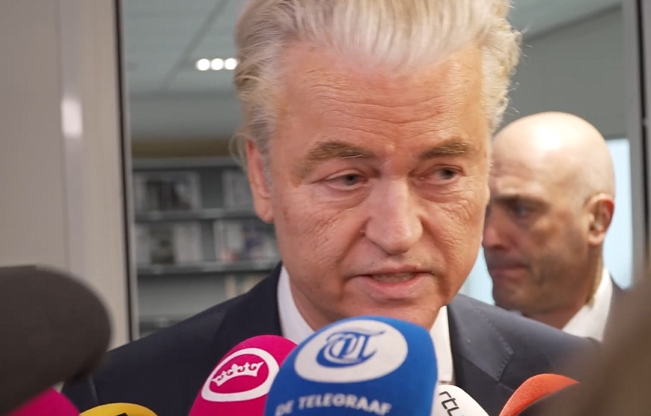
Wilders described the split as a “dark day” for the PVV. “I am going to be the leader for a long time to come,” he told reporters after the news broke on Tuesday afternoon. “This is a setback, but I have every confidence that we will rise above it.”
He said the party would remain committed to being a forceful opposition voice rather than cooperating with the new government.
Een zwarte dag voor de #PVV
Maar we gaan altijd door.
Voor Nederland
En de zon zal weer gaan schijnen.
— Geert Wilders (@geertwilderspvv) January 20, 2026He also confirmed to press that he was blindsided by the move. “We have lost seats, and I am also partly responsible for that, it is true. But the PVV always fights back. This will happen again. I didn’t see this coming at all, no. I knew nothing about this at all.”
The seven MPs will continue as a separate parliamentary group under the leadership of Gidi Markuszower, an MP since 2017 and a former close ally of Wilders. Markuszower said the new group would be prepared to work with the minority cabinet. The breakaway includes four of the top seven candidates on the PVV’s October list, among them several newly elected MPs.
The split comes as the liberal democratic party Democrats 66 (D66), the largest party in the incoming coalition, works on draft legislation that would require all political parties to operate formal membership systems. Since its founding, the PVV has had no members other than Wilders, giving him full control over the party.
Wilders said the MPs who left had pushed for cooperation with the minority coalition, something he had repeatedly rejected. He said the parliamentary group had twice unanimously agreed to pursue a hard opposition line. “And to start doing that differently now, that doesn’t seem right to me,” he said.
He also confirmed that the issue of turning the PVV into a membership party had been raised, but said such demands were made “with the knife to the throat.” He rejected suggestions of a leadership challenge, saying the majority of the group continued to back him.
PVV MP Dion Graus welcomed the split in comments to De Telegraaf, describing the departing MPs as “mutineers and rats.”
De Telegraaf reported that the dissidents had raised four demands during the tense parliamentary group meeting: greater cooperation in parliament to deliver “concrete results for our voters,” democratization of the party through memberships, a broader political profile, and an evaluation of the election defeat. On the campaign, they accused Wilders of being largely absent, canceling interviews and debates, partly because of security concerns.
Wilders has required 24/7 private security for decades for his longstanding criticism of Islam and the mass immigration policies of previous Dutch governments. This has led to several credible death threats, the issuing of fatwas, and a need for him and his family to live in a safehouse.
The dissidents also warned that without reform, the PVV risked being forced into change by legislation. “We must not allow ourselves to be defined by coercion,” the letter said, adding that failure to adapt could ultimately see the party barred from future elections.
They further criticized what they described as the PVV’s self-imposed isolation in parliament. With a minority government in place, they argued, cooperation on the right could yield tangible results. “The country needs solutions, not just criticism,” the document said.