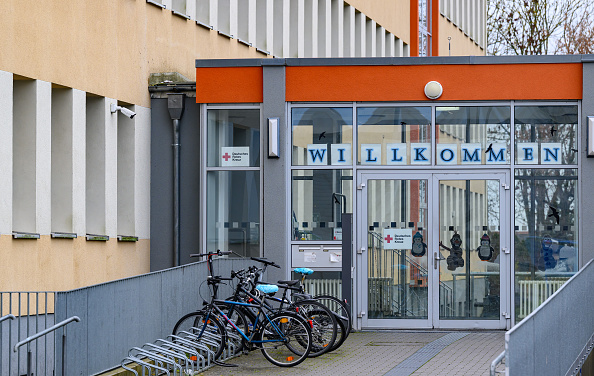
Hundreds of asylum seekers have disappeared from state-run reception centers in the German state of Rhineland-Palatinate within a year and a half, with authorities unable to account for their whereabouts, regional broadcaster SWR reported on Monday.
According to figures released by the Ministry of Integration in Mainz, a total of 923 people were registered as missing between July 1, 2024, and Dec. 31, 2025. During the same period, Rhineland-Palatinate admitted 10,120 asylum seekers to its reception centers, meaning approximately 9.1 percent were later classified as missing, some of whom reportedly have criminal backgrounds and are subject to deportation orders.
The data, compiled by the Supervisory and Service Directorate (ADD), cover all six of the state’s reception centers for asylum seekers. The highest number of missing residents was recorded in Trier, with 245 cases, followed by Speyer with 180, Hermeskeil with 173, Kusel with 150, Bitburg with 94, and the facility at Hahn Airport with 81.
The figures were made public after a political debate was triggered by disclosures relating to the reception center in Bitburg, where 31 residents were reported missing since August 2025. An employee of a private security firm sent emails containing this information to the ADD and all members of the state parliament. The ADD subsequently filed a criminal complaint against the employee, who has been suspended.
Residents of reception centers are officially classified as missing if they have not been present at the facility for more than three days, the broadcaster noted. According to the Ministry of Integration, asylum seekers may move freely only within a limited geographic area but are required to reside in the reception center while their asylum procedure is ongoing, a period that can last up to 18 months.
Thomas Linnertz, president of the ADD, told the state parliament’s integration committee that all 923 missing individuals no longer receive state benefits. Janosch Littig, State Secretary for Integration from the Greens, said daily presence checks are carried out in the facilities and that residents who cannot be located after three days are reported to the authorities and the police, as cited by Welt. He added that asylum procedures are halted or applications rejected once individuals are registered as missing.
Littig said the ministry would review procedures in the reception centers and consider possible improvements. He also suggested that the issue was likely not limited to Rhineland-Palatinate and that other federal states would be examined for similar cases.
The state in question receives around 4.8 percent of the internal redistribution quota imposed at the federal level, and thus, should the issue not be limited to Rhineland-Palatinate, far larger numbers of absconders could be likely in larger states such as North Rhine-Westphalia, which is allocated 21 percent of asylum seekers, Bavaria (15.7 percent), and Baden-Württemberg (13.1 percent).
Commenting on the scandal, Alternative for Germany (AfD) co-leader Alice Weidel wrote on X, “Around 1000 asylum seekers have ‘disappeared’ in Rhineland-Palatinate, including some with criminal records and those required to leave the country. Eleven years after the CDU opened the borders, chaotic conditions still prevail — to the detriment of the social system and public safety. Real migration turnaround now!”
The matter was discussed in the state parliament’s integration committee at the request of the CDU. CDU lawmaker Dirk Herber called for more effective control mechanisms to ensure authorities know where asylum seekers are when they leave reception facilities.
Under German law, asylum seekers are generally restricted to the district of their local immigration office, while those with tolerated stay status are typically limited to the federal state responsible for their case. As long as they are required to live in a reception center, they are not permitted to stay with family or friends elsewhere.