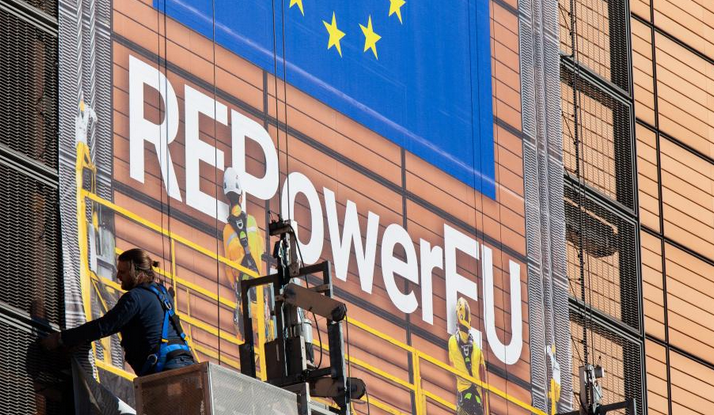
Hungary and Slovakia will launch a legal challenge at the Court of Justice of the European Union against the REPowerEU plan as soon as the decision is formally published.
Hungarian Foreign Minister Péter Szijjártó accused Brussels on Monday of using a legal workaround to force through measures that should require unanimous approval.
“Hungary will take legal action before the Court of Justice of the European Union as soon as the decision on REPowerEU is officially published. We will use every legal means to have it annulled,” Szijjártó said in a statement on social media.
He argued that the European Union was disguising what he described as a sanctions measure as a trade policy decision in order to bypass the unanimity requirement among member states.
“The REPowerEU plan is based on a legal trick, presenting a sanctions measure as a trade policy decision in order to avoid unanimity,” he said. “This goes completely against the EU’s own rules. The Treaties are clear: decisions on the energy mix are a national competence.”
🇭🇺 FM Szijjártó: Hungary will initiate proceedings at the European Court to annul the REPowerEU regulation, adopted through legal fraud, which aims to eliminate Russian energy imports.
🛢️ Speaking from Thessaloniki, Minister Szijjártó said banning Russian oil and gas purchases… pic.twitter.com/T6aaMNgkpU
— Zoltan Kovacs (@zoltanspox) January 26, 2026Szijjártó said Hungary opposed any move that would prevent it from importing Russian oil and gas, warning of a higher burden for Hungarian households, a move that could impact Hungary’s crucial parliamentary elections on April 12.
“Banning Hungary from buying oil and gas from Russia goes against our national interest and would significantly increase energy costs for Hungarian families,” he said.
The sentiment from Budapest was echoed in Bratislava, where Slovak Foreign Minister Juraj Blanar confirmed that his country will also join the legal challenge.
As cited by TASR, Blanar explained that Bratislava cannot accept solutions that fail to reflect the “real possibilities and specificities” of individual member states.
REPowerEU is the European Union’s flagship energy strategy launched after Russia’s invasion of Ukraine, with the stated aim of ending the bloc’s dependence on Russian fossil fuels while accelerating the transition to cleaner energy.
Under REPowerEU, member states are expected to reduce imports of Russian oil, gas, and coal, diversify their energy supplies by sourcing fuel from alternative countries, and significantly expand renewable energy capacity. The plan also calls for faster permitting for wind and solar projects, increased energy efficiency measures, joint gas purchasing at the European level, and investments in energy infrastructure such as LNG terminals, pipelines, electricity grids, and interconnections.
European member states are required to ban new Russian energy contracts by late 2025 and completely stop Russian imports by 2027.
To finance these goals, the EU has tied REPowerEU to its post-pandemic recovery funds, allowing member states to amend their national recovery and resilience plans to include new energy-related investments and reforms. In practice, this has meant that governments seeking access to EU funding are required to outline concrete steps to cut reliance on Russian energy, boost renewables, and reform energy markets. One of the problems for Hungary is that the European Commission continues to withhold critical national recovery funds in what Budapest claims is a political ploy to undermine the dissenting nationalist government.
Hungary is a landlocked country that relies heavily on Russian oil and gas and has long opposed EU energy sanctions, arguing that these demands infringe on national sovereignty over energy policy.