A proposed European Union ban on Russian oil and gas faces broad public opposition across the bloc and mounting legal resistance from member states, according to new survey data.
Research published by Hungary’s Századvég Foundation indicates that a relative majority of EU citizens oppose a full embargo on Russian energy imports. Across the European Union, 45 percent of respondents said they were against a complete ban, while support failed to reach a majority in most member states. In two-thirds of EU countries surveyed, at least a relative majority rejected the proposal. Only Poland, Lithuania, and Estonia recorded absolute majority support.
Opposition was strongest in Central and Southern Europe. In Slovenia, 68 percent of respondents opposed the embargo, followed by Greece at 65 percent. In Cyprus, Bulgaria, and Hungary, 62 percent of respondents rejected the measure, according to the survey.
Despite this, the European Commission has moved ahead with a regulation under its REPowerEU framework that would prohibit new contracts for Russian fossil fuels and impose a complete phase-out by 2027. The regulation was advanced using qualified majority voting, overcoming government opposition from Hungary and Slovakia.
📊 @Szazadveg: Europeans oppose Brussels’ Russian energy ban, survey finds
⚡ A proposed European Union ban on Russian oil and gas runs counter not only to EU law and member state sovereignty, but also to public opinion across the bloc, according to fresh research by Hungary’s… pic.twitter.com/9os7x7hMCD
— Zoltan Kovacs (@zoltanspox) January 29, 2026Critics argue that the Commission’s approach raises serious legal and constitutional questions. While the policy would have the effect of a sanction, opponents say it has been presented as a trade measure, allowing it to bypass the requirement for unanimous approval by all member states.
Energy policy and decisions on national energy mixes fall under member state competence under EU treaties, a point repeatedly emphasized by Hungarian Foreign Minister Péter Szijjártó, who announced on Monday that Budapest would seek to have the regulation annulled.
“Hungary will take legal action before the Court of Justice of the European Union as soon as the decision on REPowerEU is officially published. We will use every legal means to have it annulled,” he said.
“The REPowerEU plan is based on a legal trick, presenting a sanctions measure as a trade policy decision in order to avoid unanimity,” Szijjártó added. “This goes completely against the EU’s own rules. The Treaties are clear: decisions on the energy mix are a national competence.”
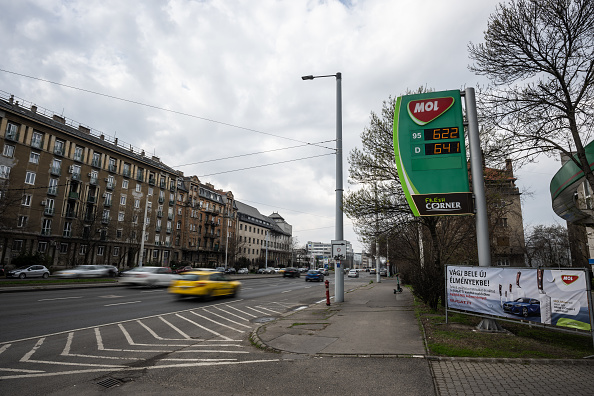
The Hungarian government has also warned of significant economic consequences if Russian supplies are cut off. Analysts cited by officials estimate that household utility costs could rise to three-and-a-half times current levels, while fuel prices could exceed 1,000 forints (€2.62) per liter.
Slovakia has announced it will join Hungary’s legal challenge. Slovak Foreign Minister Juraj Blanar said Bratislava could not accept solutions that fail to reflect the “real possibilities and specificities” of individual member states, according to comments cited by TASR.
Slovak Prime Minister Robert Fico went further in his criticism, describing the Commission’s plan as “energy suicide” and predicting that “when the military conflict ends, everyone will be breaking their legs, rushing to go to Russia to do business.”