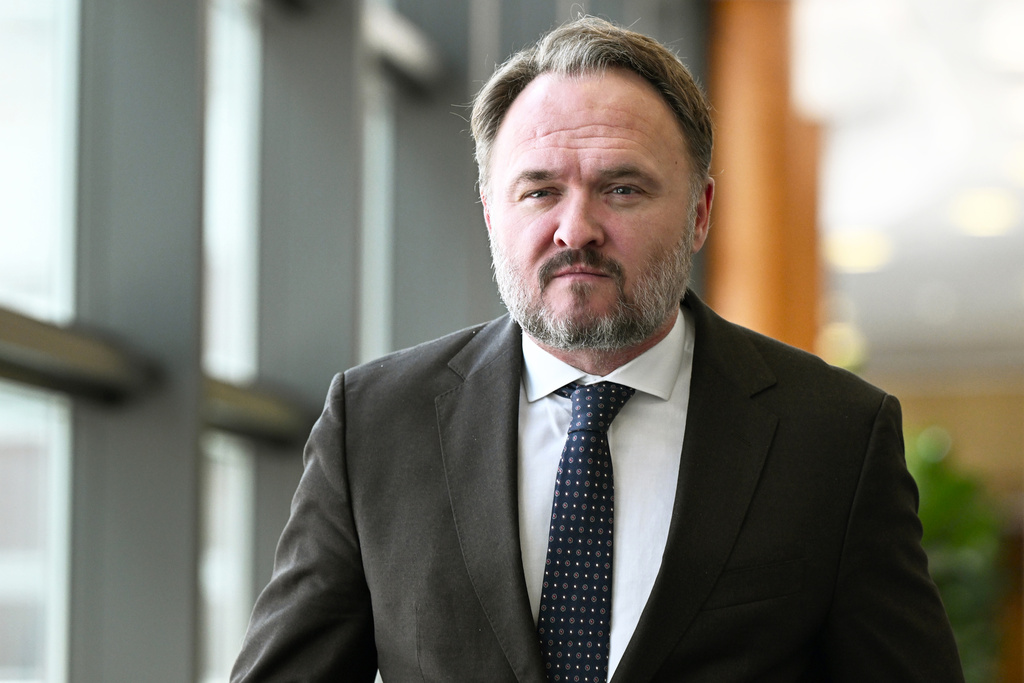
Dan Jorgensen, the European Commission’s energy commissioner, called last week’s European Union regulation banning Russian gas imports 100 percent legal on Monday, adding that the legislation prevents Russia from using energy as a “weapon” against EU member states.
“We said we will no longer indirectly finance (Vladimir) Putin’s war in Ukraine by buying gas from him,” the EU commissioner said at a press conference in Lisbon with Portuguese Energy Minister Maria da Graca Carvalho, as quoted by Hirado.
Jorgensen also emphasized that Hungary has the right to challenge the law in court, adding that Brussels is ready to “actively assist” those countries that are most sensitively affected by the regulation. He also stressed that it is extremely important that the energy systems of EU member states are interconnected.
The Council of the European Union last week adopted a regulation that will gradually ban imports of Russian pipeline gas and liquefied natural gas (LNG) into the EU. The regulation will ban imports of Russian pipeline gas and LNG into the EU. The ban will apply six weeks after the law enters into force, but existing contracts will be subject to a transitional period. The full ban will apply from early 2027 for LNG imports and from autumn 2027 for pipeline gas.
Jorgensen hailed the new law on social media as “a crucial step towards Europe’s independence.”
“Once and for all, we are putting an end to our dangerous dependency on Putin’s gas,” he posted.
Hungarian Foreign Minister Péter Szijjártó took to X to explain why it is suing Brussels over its REPowerEU regulation.
“Our case is based on three key arguments. First, energy imports can only be banned through sanctions, which require unanimity. This regulation was adopted under the guise of a trade policy measure. Second, the EU Treaties clearly state that each member state decides its choice of energy sources and suppliers. Third, the principle of energy solidarity requires the security of energy supply for all member states.
“This decision clearly violates that principle, certainly in the case of Hungary. Only more expensive and less reliable alternatives are available. Without Russian oil and gas, our energy security cannot be guaranteed, nor can low energy costs be maintained for Hungarian families,” he wrote.
Back in December 2025, Jorgensen had called out all EU countries for failing to stop the flow of oil, gas, and even nuclear fuel from Russia, committing to a new strategy to end Europe’s reliance on Putin for good.