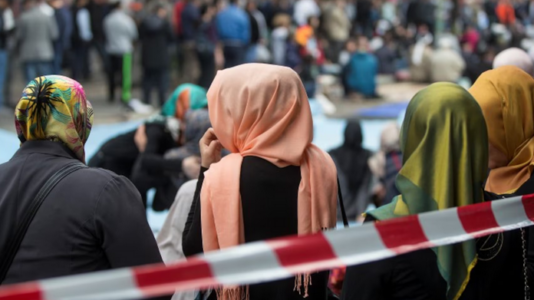

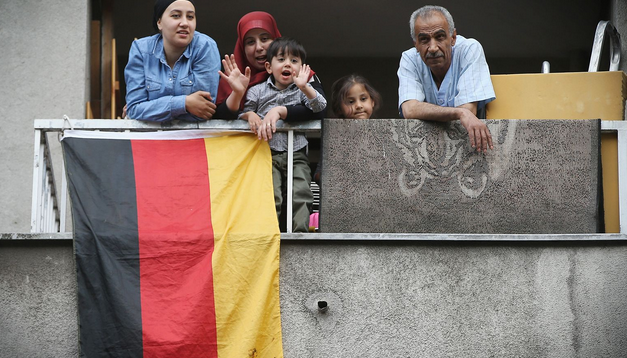
As many as 15.5 million people living in Germany now primarily use a language other than German at home, according to the latest figures published by Germany’s Federal Statistical Office (Destatis).
Based on the 2024 microcensus, 77 percent of people living in private households spoke only German at home. A further 17 percent used German alongside at least one other language, while 6 percent reported not speaking German at home at all.
In total, 15.5 million people communicated at home predominantly or exclusively in a language other than German. Turkish was the most common language after German, accounting for 14 percent of non-German home languages, followed by Russian at 12 percent and Arabic at 9 percent.
Of the 21.4 million residents defined as first or second-generation immigrants, only 22 percent spoke exclusively German at home. More than half, or 55 percent, used German alongside another language, but within that group, German was dominant in just 22 percent of households, while another language was predominant in 78 percent. Nearly a quarter, or 23 percent, reported not speaking German at home at all.
The survey only included those living in private residential housing, and thus, did not include the people living in asylum accommodation, meaning the figure will be considerably higher.
The shift in language patterns is increasingly reflected in German schools. Figures released in November last year by Bavaria’s Ministry of Education for the 2024–25 academic year show that native German speakers are now a minority in almost one in five regular school classes.
According to the ministry, 10,555 regular classes mainly consisted of pupils whose mother tongue is not German, while 257 regular classes had no native German speakers at all. Overall, students without a migration background were a minority in 11,110 regular classes, equivalent to 18.5 percent of all classes. In 320 regular classes, every student had a migration background.
AfD lawmaker Markus Walbrunn, who requested the figures, called the results a warning sign, saying pupils who do not speak German at home “will not only find it harder to follow the lessons themselves, but ultimately also jeopardize the educational success of their classmates due to the additional attention they require from teachers.”
He added, “Our children are becoming a minority in their own classrooms.”
Language challenges are also being felt in recruitment for public services. Last month, in Berlin, police authorities said a growing number of applicants are failing entrance examinations due to insufficient German language skills.
Police President Barbara Slowik Meisel told lawmakers that language deficiencies were the main reason many candidates failed computer-based entry tests.
“We have a very serious problem with German language skills, regardless of nationality,” she said, adding that many applicants struggle to meet basic requirements.
“I don’t want to criticize schools, but there is a problem with the educational levels young people are leaving school with,” she said, noting that around 80 percent of failed computer tests could be traced to language shortcomings.
The Berlin police have introduced their own language tutoring programs in response, but recruitment targets remain difficult to meet. Of 1,224 training positions available annually, only 936 were filled last year, according to Interior Senator Iris Spranger.
Language concerns extend beyond policing. According to earlier reporting, nearly half of foreign-trained doctors fail German medical language examinations in some regions. In Saxony, 112 of 200 Syrian doctors and 15 of 26 Ukrainian candidates failed language tests in 2023, with similarly high failure rates reported in Brandenburg, Bremen, Bavaria, Berlin, Hamburg, and other states.
Officials and educators say the situation reflects both migration-driven demographic changes and broader challenges affecting all students, including declining written language skills, digital distractions, and growing classroom diversity.