Despite a roaring economy, Poland’s rapidly shrinking population is the biggest challenge facing the country today, according to the German daily Welt.
The publication discusses an “unpleasant truth” that may affect the country’s future, despite its impressive economic results.
“Indeed, Poland amazes observers. While countries such as France and Germany are plagued by numerous crises, especially economic stagnation, Poland is forecast to experience an impressive 3.4 percent economic growth for the current year,” writes Welt.
Notably, Poland is a country that has pursued a remarkably strict immigration policy in comparison to other Western European nations. While that began changing under the previous conservative government and has continued to accelerate under Prime Minister Donald Tusk, the country is still remarkably homogenous. And yet, despite claims from the left that diversity is the only way to maintain a successful economy, by many measures, Poland seems ascendant while countries like Germany are struggling with economic crisis.
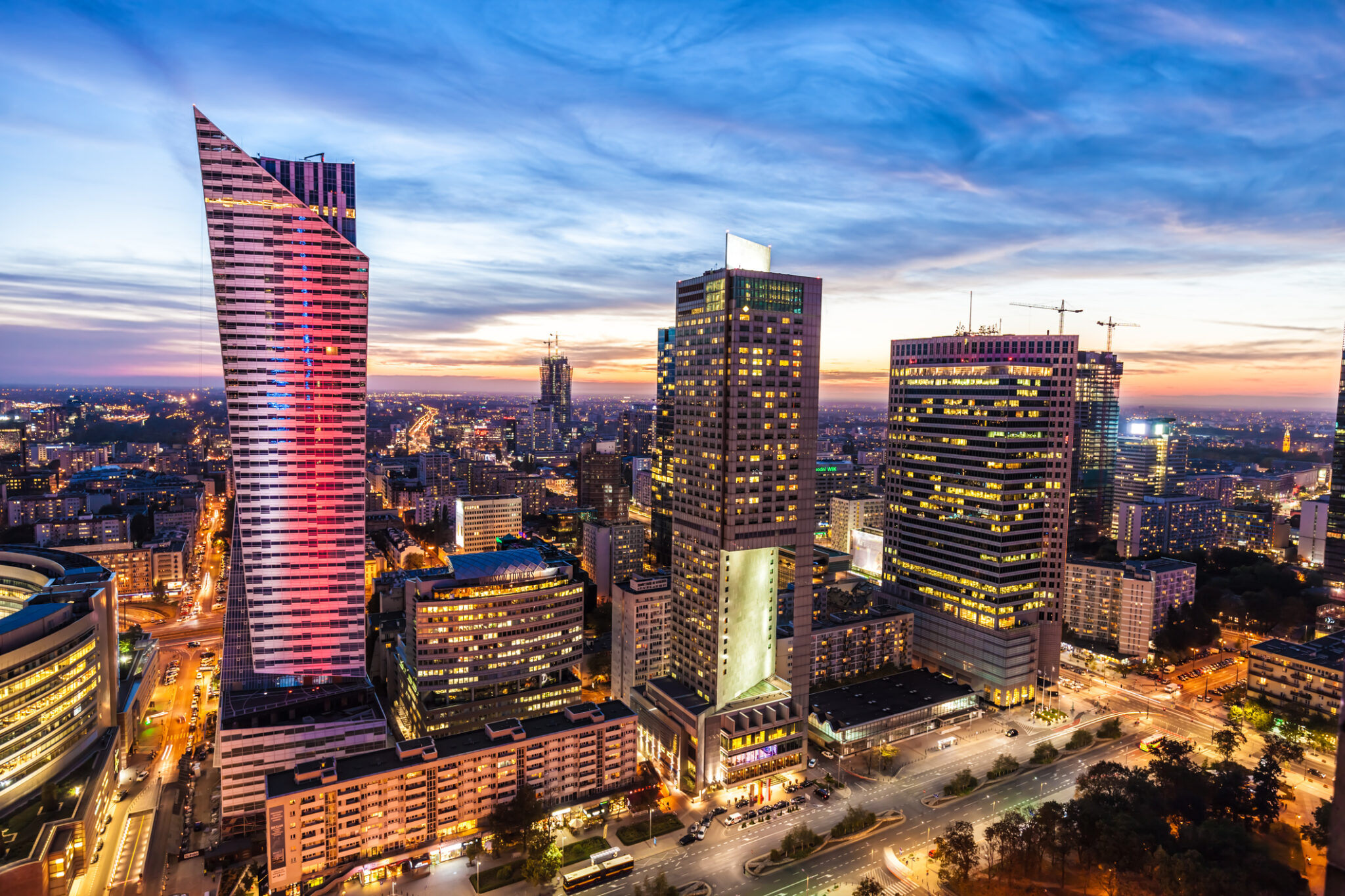
“In Warsaw, as a symbol of economic strength, one skyscraper after another is growing into the sky, new highways are being built, the first nuclear power plant of the country is being built, and a new central airport is to be built. The Polish administration is well digitized, the city centers are spruced up. Wages are rising, industrial and service jobs are being created,” writes Welt, while describing how the country continues to transform itself.
The article further notes that Poles are increasingly moving back to their country due to the “high quality of life.” Notably, many of the countries known to promote mass immigration simply do not offer the same standards that Poland offers now, even if Poles can earn higher wages elsewhere.
As Remix News reported last year, more Poles moved back to Poland than Poles moving to Germany for the first time last year.
Demographic crisis looms
However, author Philipp Fritz emphasizes that the demographic problem in Poland is particularly acute. All large European countries are grappling with population decline, but in Poland, this process is progressing at a faster rate.
“This is an unpleasant truth, one that experts and politicians are aware of, but which is not receiving the attention it deserves,” writes Welt.
Data from the Central Statistical Office shows that at the end of 2025, the Polish population was approximately 37.33 million, approximately 157,000 fewer than in the previous year. In 2025, approximately 238,000 live births were recorded, while the number of deaths was approximately 168,000 higher, representing a negative natural increase of -4.5 per 1,000 inhabitants. Poland has some of the lowest birth rates in Europ,e with no sign of improvement on the horizon.
The fertility rate has fallen to around 1.10, well below the replacement level of 2.1. Forecasts indicate that if current trends continue, Poland could have fewer than 30 million inhabitants in 2060, which would mean a significant reduction in its population potential within the European Union.
Rejecting Islamic immigration
Although Poland may be facing a difficult demographic situation, the country appears to be going the “Japan route.” That means limited migration and migration from culturally similar countries like Ukraine. That is not to say that there is not growing Third World migration, but the majority of it has been from other European countries — at least so far.
“We must ensure that migration meets our needs and that it involves well-qualified people who integrate well. Ukrainians are culturally close to Poland. Problems in Western Europe, in Germany for example, must give us pause. Migration from Islamic countries is therefore not desirable,“ says Michal Kot, a demographic expert.
Both he and his colleague Bartosz Marczuk, who work for the conservative think tank Instytut Sobieskiego, have written a book on the demographic development in Poland entitled “How to prevent the demographic catastrophe.” They advocate pro-family policies, restrictions on social media, and social programs that encourage family formation.
They also believe migration can play a positive role in the country’s future, but only in a limited capacity.
Marczuk emphasizes the word “controlled.” He said there are 1.5 to 2 million Ukrainians in Poland, and they are viewed very favorably, including a high employment rate compared to other migrant groups.