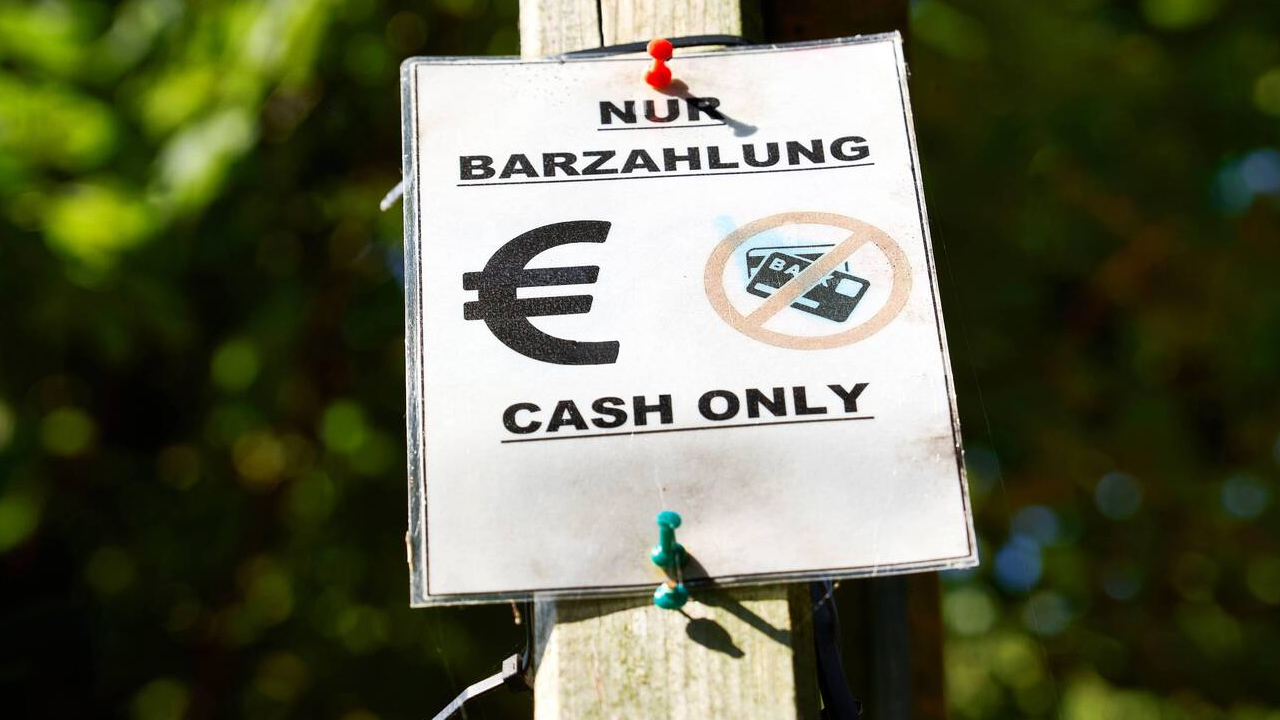
Berlin’s CDU-SPD administration is expected to approve a federal initiative to effectively outlaw cash-only businesses, as officials argue that tens of thousands of firms in the German capital still refuse to offer any form of digital payment.
The proposal, expected to be advanced through the Bundesrat — Germany’s upper parliamentary chamber comprising representatives appointed by the state governments — would require all businesses across Germany to provide customers with at least one electronic payment option alongside cash.
As reported by Junge Freiheit, around 80,300 businesses in Berlin currently operate on a cash-only basis, according to the Senate Department for Finance. Berlin’s Finance Senator Stefan Evers has argued that the scale of the practice undermines transparency and creates conditions in which tax avoidance can flourish. Estimates cited by policymakers suggest the German state may be losing billions of euros in revenue annually due to cash transactions that are impossible to track and often not declared to the authorities.
Typical cash-only businesses include barbershops, street vendors, and car washes. The practice is common among small businesses to avoid card transaction fees and reduce administrative costs, but it remains open to abuse from a tax perspective.
The initiative is backed by the state government of Mayor Kai Wegner, which is presenting the move as part of a broader effort to modernize the economy and align Germany with consumer expectations in increasingly cashless societies. Officials say mandatory digital payment options would improve convenience, strengthen competition between payment providers, and ensure a more consistent regulatory environment nationwide.
“We want greater customer friendliness, more tax revenue – and to reward everyone who has already been acting in accordance with the rules,” CDU state parliamentary group leader Dirk Stettner told Tagesspiegel.
The federal Grand Coalition, led by Chancellor Friedrich Merz, has already signaled its support for gradually requiring businesses to accept both cash and at least one digital method. However, concrete legislation has yet to be introduced to federal lawmakers in the Bundestag.
Dehoga, the leading trade association for the German hospitality industry, has warned that forcing businesses to accept digital payments could impose disproportionate costs on smaller operators working with tight margins. It pointed to transaction fees, especially for low-value purchases such as drinks or snacks, which businesses are often unable to pass on to customers.
Critics have also framed the proposal as an intrusion into entrepreneurial freedom, arguing that firms should retain the right to decide how they accept payment.
Supporters of the measure, however, contend that Germany risks falling behind other European economies if it does not accelerate its shift away from cash dependence. Tagesspiegel cites a Mastercard survey that revealed that 88 percent of Germans expect to be able to pay by card in stores. It also found that 40 percent of respondents have already left or avoided a store if it did not accept card payments.