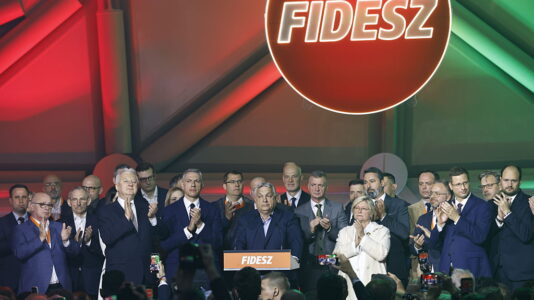

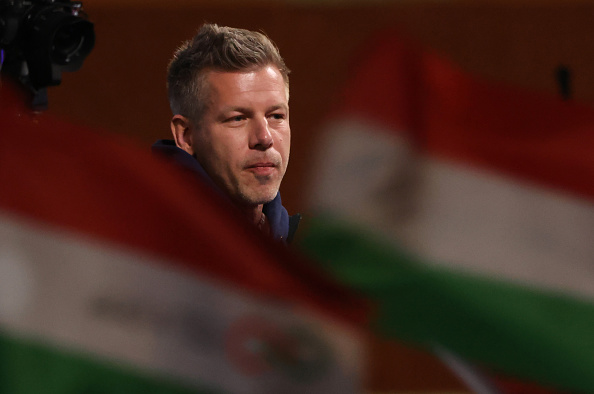
The election victory of Péter Magyar was, on its face, a political earthquake. After 16 years, Viktor Orbán was finally ousted — the perennial thorn in the side of the Brussels elite.
It will end one of Europe’s longest-standing political eras, but for all the symbolism of that moment, the harder reality is only now beginning to emerge: Magyar may have won power, but governing Hungary could prove an almost impossible balancing act.
The paradox at the heart of his victory is clear. Magyar ran on a broadly conservative platform — tough on migration, resistant to deeper involvement in Ukraine, and critical of aspects of EU overreach. Yet he was swept into office not by a purely conservative base, but by a fragmented coalition of voters united by a single objective: removing Orbán.
That coalition included centrists, liberals, and left-wing voters who, under normal circumstances, would not align behind a figure with Magyar’s political instincts or background as a former member of Fidesz. He became the vessel for opposition unity precisely because he was the “anyone but Orbán” candidate.
That is an effective electoral message to take power, but it makes for an incredibly fragile formula to keep everyone happy once you get it.
Nowhere is this tension more visible than in Magyar’s economic and foreign policy commitments. Hungary’s stagnant economic performance in recent years was a decisive factor in Orbán’s downfall. But that stagnation was not purely domestic. It was intertwined with Hungary’s fractious relationship with Brussels and Orbán’s commitment to sovereignty. For years, Orbán made the conscious decision to oppose Brussels’ overreach, knowing full well it may cost him electorally when the Eurocrats put the squeeze on funds owed to the country following his refusal to cooperate on migration and Ukraine.
Magyar has promised to unlock those funds quickly, signaling a reset in relations with the European Union. But that pledge comes with an unavoidable implication: Brussels does not release billions without conditions.
When European leaders speak of “welcoming Hungary back to Europe,” they are not referring to geography. They are referring to alignment — political, legal, and ideological. The expectation is clear: compliance with Brussels’ demands on migration policy, support for the €90 billion loan to Kyiv, and adherence to the institutional framework that Orbán frequently challenged.
This is the dilemma. Magyar cannot simultaneously deliver on his campaign promises of preserving sovereignty and secure the financial lifeline that voters expect him to restore. To unlock EU funds, he must engage with the system that Orbán resisted. Something has to give.
This dynamic is not unique to Hungary. In Poland, the fall of the Law and Justice government and the return of Donald Tusk was followed by a rapid normalization of relations with Brussels — and, crucially, the release of previously withheld funds. The pattern is clear. It is a quid pro quo.
Magyar now stands in the middle of an impossible balancing act. Voters will judge him quickly on growth, on wages, on whether life feels better. And that brings him back to Brussels.
There is a growing insistence among some commentators that this was not a victory for the left — that Magyar remains a conservative figure who is “Orbán without the corruption.” The political reality is often less accommodating.
There will likely be an attempt to bridge the gap — to project toughness domestically while negotiating pragmatically behind closed doors. That is the familiar choreography of European politics. But it is also a difficult illusion to sustain over time.
Orbán, for all the controversy surrounding him, maintained a consistent line: national sovereignty first, even at economic cost. Magyar has inherited the consequences of that stance — and the opportunity to reverse it. The question is whether he can do so without unraveling the coalition that put him in power.
Because in the end, his victory was not built on ideological clarity. It was built on opposition unity.
To those unsure of what to expect from Magyar, you only need to look at the political figures praising his electoral victory, from Alex Soros to Hillary Clinton, from Ursula von der Leyen to Barack Obama. Any notion that Magyar will play hardball and still take the warchest back from Brussels is for the birds.
Make no mistake, this is a win for the liberal elite who have finally throttled an adversary into submission. The man who, by the way, they claimed for years was akin to a dictator, an autocrat — the first autocrat in history to graciously accept defeat on the night of the election, congratulate his opponent, vow to serve his country from opposition, and promise a smooth transition of power.