A Dutch court has refused to release a Syrian asylum seeker accused of preparing a terrorist attack after his lawyer argued that discussions about obtaining firearms should not be viewed as suspicious because “acquiring a weapon is common practice for Syrians.”
The defense made the claim during a bail hearing for 34-year-old Mousa A., who was arrested in November at an asylum seekers’ center in Dronten following a warning from the Dutch intelligence service AIVD.
According to reporting by the Dutch newspaper AD, prosecutors allege the suspect had an extensive online presence used to exchange jihadist propaganda and discuss acquiring weapons. Investigators say he operated eight TikTok accounts, eight Facebook accounts, and 15 Gmail addresses, in addition to profiles on Instagram, Telegram, YouTube, and WhatsApp.
In several chats, the suspect allegedly used coded language when discussing firearms and ammunition. Messages referring to “300 beans, 4 melons, and the iron” were interpreted by investigators as references to a weapon, ammunition, and cartridges. Prosecutors say he later mentioned a silencer during discussions about a possible attack in Syria against a named supporter of the former Assad regime.
Authorities also cited chat messages in which the suspect was referred to as “the sheik,” suggesting he may have been regarded as a leader within an extremist network.
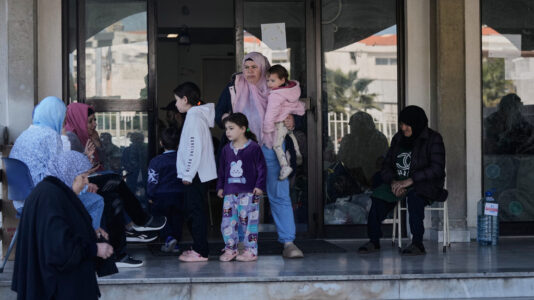
The suspect was arrested at the asylum seekers’ center after intelligence services warned prosecutors that he adhered to jihadist ideology and had been searching for a firearm. Regional broadcaster Omroep Flevoland reported at the time that the suspect had contacted unknown individuals through chat applications, asking whether they could supply him with a weapon and ammunition.
Public prosecutor Corjan Kroon said investigators considered the threat serious enough to justify immediate arrest rather than a prolonged surveillance operation.
When police detained him, the suspect allegedly attempted to stab an officer.
Prosecutors have acknowledged that the suspect did not possess a firearm at the time of his arrest and that no confirmed arrangement had yet been made for a weapon to be delivered. It also remains unclear whether he intended to carry out an attack alone or as part of a group.
The defense argued there was no concrete evidence that the man had begun preparing a terrorist attack. His lawyer told the court her client had been traumatized by the war in Syria and had expressed a desire to return to his home country. They noted that he has young children currently living in Turkey.
The suspect remained largely silent during the hearing but briefly denied the allegations. “I love Dutch people and also have friends with different faiths. Why would I commit an attack?” he told the court, adding that he had graduated from a university in Turkey and hoped to rebuild his life in the Netherlands.
Judges rejected the request to suspend pretrial detention, citing the extremist content found across the suspect’s accounts and the possibility he could flee if released.