
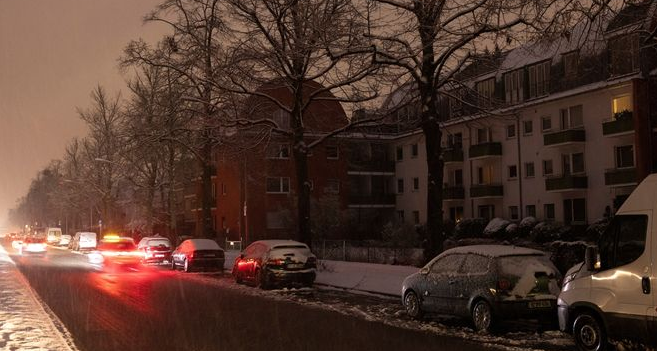
Berlin’s handling of the prolonged power outage in the southwest of the city has sparked an angry public debate over priorities, after residents were initially asked to pay €70 per night for hotel accommodation while nearby migrant centers were evacuated and rehoused at public expense.
The blackout, now in its third day, has left around 26,900 households and 1,220 businesses without electricity, heating, or hot water following an arson attack on a cable bridge for which the far-left Volcano Group claimed responsibility.
Entire neighborhoods in Steglitz-Zehlendorf and Zehlendorf remain affected.
As reported by Welt, under the Senate’s initial response, residents unable to use their homes were offered hotel rooms at a reduced rate under a campaign branded “Berlin Hotels for Berliners,” launched with VisitBerlin and around 200 partner hotels. The state waived the city tax, but affected residents were expected to cover the remaining cost themselves.
The offer triggered an immediate backlash. On social media, users questioned how pensioners, families with children, or people on welfare were supposed to afford several nights in a hotel. “Not every resident of Steglitz-Zehlendorf will be able to just pull seventy euros a night out of their pocket,” one user wrote, cited by the German newspaper, while others described the scheme as “a bad joke” and “fake solidarity.”
Flüchtlinge in Berlin wurden evakuiert, während krebskranke und alte Anwohner in der Kälte verbleiben. Das ist Deutschland unter einer CDU und SPD Regierung. https://t.co/yzVJbEygmk pic.twitter.com/GEWaYmBkF0
— spaceloop23 🗽 (@spaceloop23) January 5, 2026Anger intensified as stories emerged from the blackout zone. Nius reported speaking to a cancer patient who said he was sleeping in the hallway of his apartment building because it was the warmest place available.
“I sleep in the hallway tonight, because the hallway is the warmest part of our house. Unfortunately, in my flat I am hit from every side by the cold,” he told the interviewer.
At the same time, residents reported that a nearby refugee center had been evacuated at the start of the crisis. “The refugees there have now been relocated,” one neighbor said. “They are no longer here, they are in the heat,” another added.
There is no evidence of a formal policy giving migrants preferential treatment during the outage, but decisions to evacuate refugee centers while asking Berliners to cough up the majority of a hotel bill to be relocated themselves have raised questions about priorities.
According to figures confirmed to the German Press Agency in December last year, the city paid €883 million in 2024 to house refugees, up from €312 million in 2020. Large facilities such as Tegel and Tempelhof account for particularly high costs, with Tegel alone costing around €260 million last year.
Kurze Erinnerung, wofür in Berlin genügend Geld da ist. Die Kosten für die Unterbringung von Asylbewerbern sind in den vergangenen Jahren explodiert. pic.twitter.com/Zb9LtREz7b
— Björn Harms (@Spreeathen1) January 5, 2026City officials are now under pressure to justify the ever-rising cost to the German taxpayer to house migrants, when those funds could have been saved and used as a contingency fund for a crisis such as the one now enveloping southwest Berlin.
Berlin’s Senator for Economic Affairs and Energy, Franziska Giffey, defended the hotel initiative as an act of solidarity. “People from 35,000 households in the southwest of our city are in need, and with this special offer, the hotels are offering their rooms at cost price,” she said, praising the waiver of the overnight accommodation tax and thanking hotels for what she called a “fantastic initiative.”
Imagine the media response if a far-right terrorist group sabotaged the power grid in a wealthy area of Berlin and left 45,000 homes without power and heating in deep winter.
A leftist terrorist organisation did exactly that and it has barely been covered outside Germany. pic.twitter.com/ntbRoaYRFn
— Keith Woods (@KeithWoodsYT) January 6, 2026However, after days of pressure, the Senate reversed course. The Steglitz-Zehlendorf district office announced on Tuesday that hotel costs for affected residents will now be reimbursed in full. Residents who cannot use their apartments due to power, heating, or hot water outages can stay in hotels and reclaim the costs by submitting the hotel bill, proof of hardship, and proof of identity to the social services office. Emergency shelters remain available.
Tim Richter, deputy mayor of the Wannsee district and CDU chairman in Steglitz-Zehlendorf, welcomed the change. “I advocated for a swift solution for the residents of Steglitz-Zehlendorf, and I am very grateful to the Senate that we can now provide pragmatic and rapid assistance,” he said.
Some, however, will say that city officials have already revealed their true colors when it comes to their priorities, and vulnerable Berliners appear to be at the back of the line.
The outage is the latest in a series of attacks claimed by the far-left “Volcano Group,” which has repeatedly targeted power and data infrastructure in Berlin and Brandenburg. In September 2025, the group knocked out electricity to around 50,000 households in southeast Berlin, and in 2024, it caused a blackout near the Tesla factory in Grünheide.