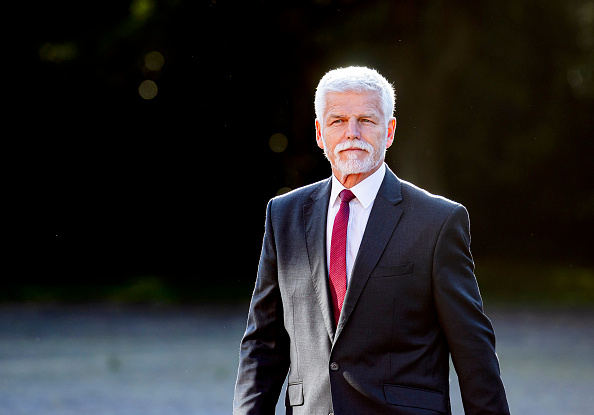
President Petr Pavel said he would not appoint ANO leader Andrej Babiš as prime minister unless Babiš publicly explains how he plans to resolve his conflict of interest linked to ownership of the Agrofert holding.
Speaking on Národní třída to Radiožurnál, Pavel said that if Babiš failed to present a satisfactory solution, appointing him would “create an illegal situation,” something he could not take part in. In that case, Pavel said it would be appropriate for ANO, as the winner of the election, to put forward another candidate for prime minister.
As reported by Echo24, Babiš said on Thursday that he would announce his solution immediately before the president appoints him, and that he would disclose it publicly if Pavel wished. ANO deputy chair Alena Schillerová said on Sunday that Babiš would take irreversible steps to address the conflict but would not sell Agrofert.
Agrofert is a huge Czech conglomerate involved in agriculture, chemicals, food production, and media. Czech and EU conflict-of-interest rules say a prime minister cannot control companies that receive state or EU subsidies because he would be in a position to influence decisions that financially benefit his own business.
Pavel said he would prefer clarity in advance. “I would like to believe what Alena Schillerová and Andrej Babiš say, but I also think we should be wiser by now and not buy a pig in a poke,” he said. He argued that transparency is necessary, noting that conflict-of-interest issues surrounded Babiš during his previous premiership between 2017 and 2021. Back then, Babiš put Agrofert into trust funds before taking office, but courts and EU audits later concluded he still effectively controlled it.
“Based on the Constitutional Court’s ruling, I am obliged to ask Andrej Babiš how he will resolve this conflict of interest so that we do not have to deal with legal disputes for the next four years,” he said.
Pavel said that Babiš outlined several possible solutions at their meeting on Oct. 5, including selling Agrofert, transferring ownership to a family member, or placing it in a fund. “I told him these options would eliminate the conflict of interest. Andrej Babiš now interprets this as agreement, but he did not tell me which option he would choose. Therefore, I cannot say whether I am satisfied with it or not,” Pavel said.
He added that Babiš should state publicly which option he intends to pursue, as there is no reason for secrecy. Pavel emphasised that he does not require Babiš to resolve the conflict before the appointment, only to disclose the chosen method so the public can assess it. “If Andrej Babiš were unable to satisfactorily resolve his conflict of interest, then by appointing him, I would be participating in the creation of an illegal situation. The public does not expect that from me, and the constitution certainly does not expect it,” Pavel said.
When asked whether this meant he would not appoint Babiš without a public statement, Pavel replied: “Yes, that’s right.” According to the president’s office, failure to eliminate the conflict could expose the Czech Republic to reduced or suspended EU subsidies, as well as prevent Agrofert companies from receiving state contracts or subsidy support.