

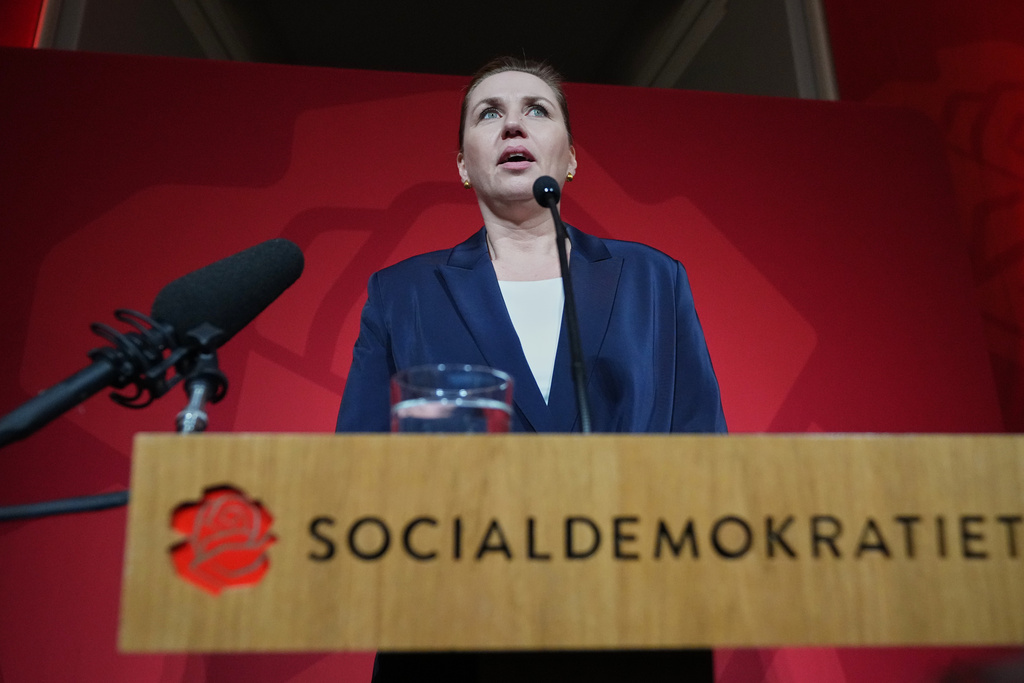
Denmark’s election has produced a hung parliament, with Prime Minister Mette Frederiksen’s Social Democrats emerging as the largest party but failing to secure a governing majority, while the Danish People’s Party surged to become a major force after more than tripling its seats on a radical remigration platform.
The Social Democrats won 21.9 percent of the vote and 38 seats, remaining the biggest party but down sharply from 50 seats in the previous parliament. Across the political spectrum, all three governing parties lost ground, including the Liberals, who dropped from 23 to 18 seats, and the Moderates, who fell from 16 to 14.
Neither traditional bloc secured the 90 seats required for a majority in the 179-seat parliament. The left-leaning “red bloc” reached 84 seats, while the center-right “blue bloc” secured 77.
The result sets the stage for difficult coalition negotiations, with no clear path to government without cross-bloc cooperation. Voter turnout was high at 83.7 percent.
The most notable result of the election came from the Danish People’s Party, which won 9.1 percent of the vote and 16 seats, up from just five in the last parliament. The party campaigned on one of the most hardline immigration platforms in Europe, centered on mass repatriation and a sweeping reversal of decades of immigration policy.
Its party leader, Morten Messerschmidt, told supporters on Tuesday, “We are making massive progress. The Danish People’s Party is back!”
In its manifesto, the party argued that Denmark must “remain Danish” and warned that immigration from the Middle East and North Africa had led to crime, parallel societies, and cultural change. It claimed such migration had brought “ghettoization, ethnic conflicts, radicalization, clan culture, honor-related crimes, social control, persecution of Jews and sexual minorities, infiltration of public authorities, Islamic censorship and gender segregation.”
The party proposed a wide-ranging “remigration” program to send back those “who should never have been here in the first place,” including a review of citizenships granted over the past two decades. The party also called for Denmark to withdraw from or amend international conventions that restrict deportations.
Despite her socialist background, Prime Minister Mette Frederiksen has herself adopted an unusually strict policy on immigration for a left-wing politician.
In her New Year’s address, Frederiksen signaled further tightening of migration, announcing plans for a deportation reform aimed at expelling more foreign nationals convicted of serious crimes.
She emphasized a distinction between integration and criminality, stating: “You can be Danish even if your favorite dish isn’t meatballs or mackerel sandwiches… But we should love each other.”
Her tone sharpened when addressing crime and cultural tensions. “To the people who have come here and are committing crimes: You shouldn’t be here. We don’t want your madness and culture of dominance. You are destroying the most beautiful country in the world, and you should not be allowed to do that.”
Despite the political focus on immigration, Denmark has already seen asylum numbers fall to historic lows. Fewer than 1,000 people were granted asylum in 2025, continuing a downward trend from the peak of more than 10,000 approvals during the 2015 migrant crisis.