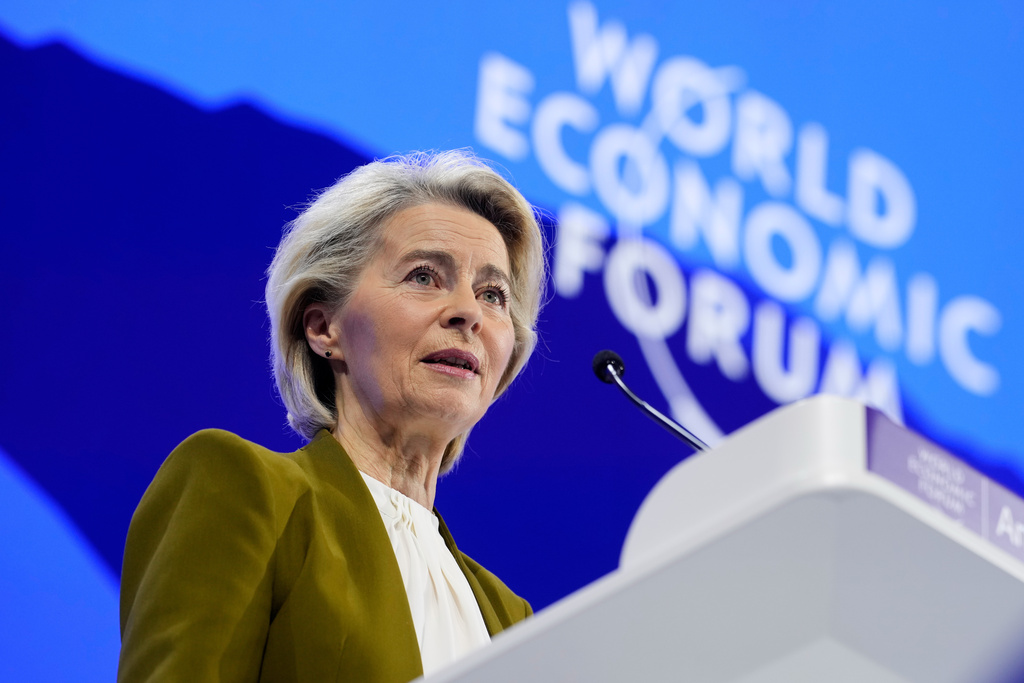
The World Economic Forum opened in Davos in a turbulent geopolitical environment, where EU Commission President Ursula von der Leyen spoke simultaneously about massive financial and military support for Ukraine as well as tensions around Greenland.
“We all want peace for Ukraine. We recognize President Trump’s role in pushing the peace process forward, and we will work closely with the United States. We all agree that Ukraine must therefore be in a position of strength to go to the negotiation table. This is why we Europeans have decided to provide Ukraine with a loan of €90 billion for 2026 and 2027,” she said.
The EU and its member states have given approximately €197 billion to Ukraine in total, all at a time when the Zelensky government has faced a massive corruption scandal, which led to multiple top ministers resigning and being arrested. In the case of Ukrainian oligarch and close Zelensky associate, Timur Mindich, he fled the country to Israel hours before his apartment was raided by anti-corruption NABU police, where they discovered his golden toilet and bundles of cash.
Germany has been the biggest contributor, with €62 billion by early 2024, but that number has already risen.
However, von der Leyen is appearing to gloss over the serious corruption in Ukraine, despite massive new debts, soaring bankruptcies, and a host of other social ills.
“With this support, we make sure that Ukraine can: bolster its defence on the battlefield; strengthen its defence capabilities for a peace agreement; and keep basic services running,” she said. “Above all, it reaffirms Europe’s unwavering commitment to the security, defence, and European future of Ukraine.”
Von der Leyen emphasized that the European Union must adapt to a rapidly changing world, especially in the field of security policy.
One of the central elements of his speech was Ukraine: he reminded that the war is now entering its fourth year and that it must end.
She added that the EU may still come after Russia’s frozen assets.
“In parallel, we decided to permanently immobilize the Russian assets and that we reserve the right to make use of them,” she said.
Von der Leyen also talked of defending the Arctic and said the EU shares American concerns about security, but that security can only be achieved together.
She also criticized the new tariffs proposed by the United States, especially among what she said were allies.
According to the chairman of the committee, Europe must develop its own security strategy, which will include an updated approach to the Arctic. At the heart of this is the basic principle that sovereign peoples can decide for themselves about their own future – be it Ukraine or Greenland.