

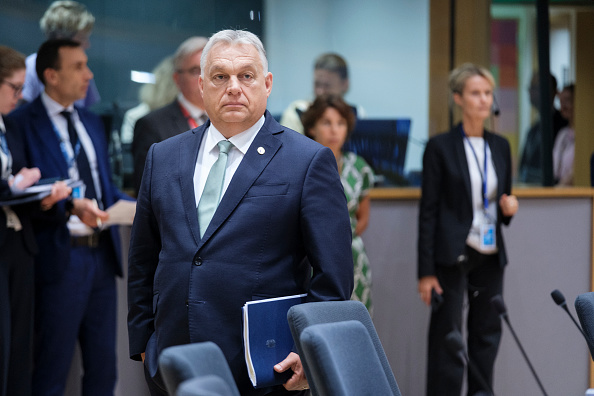
Hungarian Prime Minister Viktor Orbán has accused the European Commission of “astonishing” irresponsibility after receiving a letter from Commission President Ursula von der Leyen urging member states to provide additional financial support to Ukraine.
In a post on X, Orbán said the request came “at a time when it has become clear that a war mafia is siphoning off European taxpayers’ money,” claiming Brussels was asking for more cash rather than demanding oversight or suspending payments.
“This whole matter is a bit like trying to help an alcoholic by sending them another crate of vodka. Hungary has not lost its common sense,” he wrote.
I received a letter today from President @vonderleyen. She writes that Ukraine’s financing gap is significant and asks member states to send more money. It's astonishing. At a time when it has become clear that a war mafia is siphoning off European taxpayers’ money, instead of…
— Orbán Viktor (@PM_ViktorOrban) November 17, 2025In a separate video posted on Facebook, he added: “I’m trying to suppress my first reflexes to write a polite letter, because it’s quite shocking when it turns out that a war mafia in Ukraine is putting European people’s money away, God knows exactly where, and instead of ordering an audit or perhaps suspending further payments, the president of the Commission is suggesting that we send even more money.”
His remarks came shortly after the European Commission released details of proposed amendments to the EU’s 2026 budget, which include substantial new allocations for Kyiv. The Commission said €3.9 billion in grants and €7.2 billion in loans would be made available under the Ukraine Facility, alongside €2 billion for defense-related programs. Of that defense package, €1 billion is earmarked for capability development under the European Defence Fund, €621.3 million for the new European Defence Industry Programme — including its Ukraine Support Instrument — and €261.3 million for Military Mobility.
According to Hungarian newspaper Magyar Nemzet, which cited the Commission president’s letter, Brussels expects Ukraine to require at least €71 billion more even if the war ends by late 2026. The letter warns that Ukraine could run out of funds by the end of the first quarter of 2026 and reiterates that the EU is still exploring ways to use frozen Russian assets to support Kyiv. Belgium, which holds the largest share of those assets, continues to raise legal objections, and Moscow has repeatedly threatened retaliation that could inflict significant economic damage on EU member states.
Orbán’s intervention follows a corruption scandal in Ukraine that has dominated global headlines. Last week, Welt reported that a close associate of President Volodymyr Zelensky, Timur Mindich — often referred to as Zelensky’s “cash wallet” — had fled Ukraine shortly before a police raid. During searches conducted by the National Anti-Corruption Bureau (NABU), investigators reportedly found bundles of U.S. dollars still sealed with bank tags and a gold-plated toilet. The scandal has led to the suspension of Justice Minister Herman Halushchenko, and NABU and the Special Anti-Corruption Prosecutor’s Office have carried out raids at 70 locations linked to Energoatom, Ukraine’s state-owned nuclear energy company.
Welt described the affair as “the biggest corruption scandal in Ukraine since the start of the war,” reporting allegations of improper procurement, embezzlement, parallel management structures in state-owned companies, and undeclared accounting. The total suspected financial damage is estimated at around $100 million. The paper noted that corruption of this scale during wartime, when hundreds of thousands of Ukrainians have been killed or wounded, and millions more forced to flee, their homes destroyed, has provoked particular outrage within the country.
The revelations have fuelled skepticism among governments opposed to unconditional funding increases for Kyiv, with Orbán insisting the EU must demand audits and accountability before offering more money. His comments also come as several pro-Ukraine member states continue to push for opening EU accession negotiations with Kyiv, arguing that Ukraine meets the formal criteria to begin the process despite the ongoing conflict.