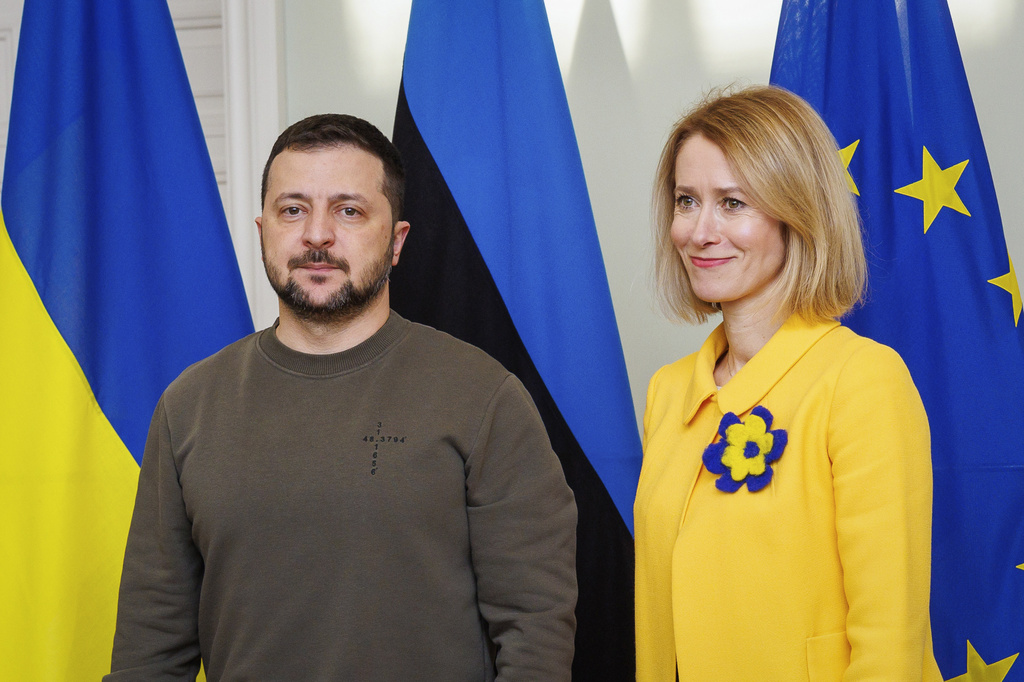
Russia will not win the war against Ukraine because its army is stalled, its economy is in steep decline, and its demographic situation is deteriorating, EU High Representative for Foreign Affairs and Security Policy Kaja Kallas said in a speech to EU ambassadors in Brussels on Monday.
The biggest threat posed by Moscow at the moment, stated Kallas, is that it can achieve more at the negotiating table or through information warfare than on the battlefield, reports Hirado.
“There can be no minimalist response to Russia’s maximalist demands,” Kallas said, stressing that if a peace agreement were to include a limit on the size of the Ukrainian army, it should also apply to Russia. She added that Moscow must pay compensation for the damage caused to Ukraine, there should be no amnesty for war crimes or aggression, and abducted Ukrainian children must be returned.
Currently, Russia has shown no indication that it is truly interested in ending the war, Kallas continued, citing the large-scale Russian attacks over the weekend, which again claimed civilian casualties in Ukraine and showed that Moscow seeks to widen the conflict.
According to Kallas, the two most significant crises in the world today – the situation in the Middle East and the Russian aggression against Ukraine – demonstrate the erosion of international law.
“When Russia, a permanent member of the UN Security Council, attacked its neighbor without consequences, it sent a message to the world that there is no accountability for violating the rules,” she said. Without restoring international law and accountability, according to the EU High Representative, further violations, instability and chaos could follow. She added that aside from Ukraine and the Middle East, conflicts in Africa, such as Sudan and the Democratic Republic of Congo, continue to drag on as well.
Kalls said that the current conflicts point to the emergence of a new world order, characterized by great power competition, coercive power politics, and military powers seeking to establish spheres of influence, while the international institutions and norms established over the past eight decades are weakening.
She then stressed that the international community must respond properly. Their success, she said, depends on two factors: whether the European Union can deliver on its own priorities and whether it can mobilise international support. The first priority, Kallas listed, is the defense of Europe, along with military, financial and political support for Ukraine; the latter, she emphasized, must be seen as an existential issue for the EU, before confirming that Brussels has already provided around €195 billion in support to Ukraine since 2022, and a further a further €90 billion loan package is being prepared.
Kallas highlighted that the EU has taken action against the so-called Russian “shadow fleet” and against foreign intervention and information manipulation operations, for example, in Moldova. The EU is also placing greater emphasis on the protection of the continent, with around 40 percent of the personnel and budget of the Common Security and Defence Policy (CSDP) now allocated to Europe.
According to Kallas, the EU is currently the largest international presence in Ukraine, thanks to the Union’s civilian and military missions. “Europe’s armaments have also accelerated, partly on a bilateral basis and partly by strengthening the European pillar within NATO,” she added.
The second priority is the stability of the EU’s neighbourhood. Enlargement, she said, was the European Union’s most successful foreign policy instrument, expanding the area of stability, peace and prosperity. Kallas stressed that the enlargement process should remain merit-based, but at the same time, the process should be accelerated in the current geopolitical situation.
The EU High Representative also noted that the crises developing in the Middle East and North Africa directly affect Europe, with the new war in Iran bringing uncertainty and instability. She added that Brussels is preparing a new initiative that would link Ukrainian military production with the military needs of Middle Eastern countries, especially in the field of counter-drones.
Kallas named strengthening global partnerships as a third priority to ensure European economic growth. He said that the EU’s free trade agreements, including those with Mercosur and India, connect nearly two billion consumers to the common market.