
European leaders have reacted overnight to the election defeat of Hungarian Prime Minister Viktor Orbán, with liberal figures celebrating a decisive shift toward Brussels while nationalist and sovereigntist voices warn the result leaves the bloc with “weaklings” in charge.
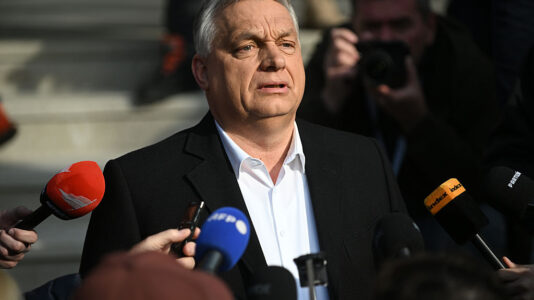
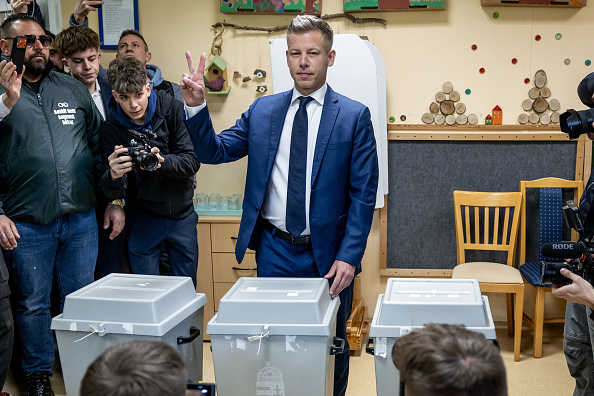
Orbán conceded defeat late on election night after early results showed a clear trajectory in favor of the opposition Tisza party led by Péter Magyar.
“I congratulate the winning party,” Orbán said, acknowledging that “the responsibility of governance was not given to us this time,” while vowing, “We will never, never, never give up!”
A bloc of liberal leaders moved quickly to welcome the result, framing it as a turning point for Hungary’s relationship with the European Union.
European Commission President Ursula von der Leyen wrote, “Hungary has chosen Europe. Europe has always chosen Hungary. A country returns to its European path. The Union grows stronger.”
Ukrainian President Volodymyr Zelensky congratulated Tisza on its “resounding victory,” adding, “It is important when a constructive approach prevails. Ukraine has always sought good-neighbourly relations with everyone in Europe, and we are ready to advance our cooperation with Hungary.”
French President Emmanuel Macron revealed he had already met with Péter Magyar and offered his congratulations. “France salutes a victory of democratic participation, of the Hungarian people’s attachment to the values of the European Union, and for Hungary in Europe. Together, let us advance a more sovereign Europe, for the security of our continent, our competitiveness, and our democracy.”
Hungary has chosen Europe.
Europe has always chosen Hungary.
A country reclaims its European path.
The Union grows stronger.
Magyarország Európát választotta.
Európa mindig Magyarországot választotta.
Egy ország visszatér az európai útjára.
Az Unió erősebbé válik.
— Ursula von der Leyen (@vonderleyen) April 12, 2026Spain’s Socialist Prime Minister Pedro Sánchez struck a similar tone, declaring, “Today, Europe wins and European values win. Congratulations to all Hungarian citizens on the historic elections. Looking forward to working together, Péter Magyar, for a better future for all Europeans.”
Germany’s conservative leader Friedrich Merz also welcomed the outcome, saying, “Hungary has decided. Congratulations on the won election, dear Péter Magyar. I look forward to the cooperation for a strong, secure, and above all united Europe.”
Dutch liberal politician Rob Jetten described the result as a democratic reset. “The Hungarian people have spoken. This marks a new step for Hungary and the EU, with hope for the restoration of democracy, the rule of law, and European cooperation.”
European Council President António Costa added, “Record turnout shows the democratic spirit of the Hungarian people. They have spoken—and their will is clear. I look forward to working closely with Péter Magyar to make Europe stronger and more prosperous.”
🇭🇺🔴BREAKING: Viktor Orbán: "I congratulate the winning party."
"The responsibility of governance was not given to us this time, although the election results are not yet complete, it's quite clear and understandable." pic.twitter.com/GRMfYbQtHu
— Remix News & Views (@RMXnews) April 12, 2026U.K. Prime Minister Keir Starmer called the result “an historic moment, not only for Hungary, but for European democracy,” adding he looked forward to cooperation “for the security and prosperity of both our countries.”
Reactions from Central European and center-right leaders were more measured, balancing acknowledgment of the result with praise for Orbán’s legacy.
Slovak President Peter Pellegrini said, “The people of Hungary decided in democratic elections on the composition of their parliament. I believe that relations between Slovakia and Hungary will maintain the excellent level they have had in recent years.”
Italian Prime Minister Giorgia Meloni congratulated Magyar while thanking Orbán for past cooperation, stating, “I thank my friend Viktor Orbán for the intense collaboration of these years, and I know that even from the opposition he will continue to serve his Nation.”
Across Europe’s nationalist and sovereigntist movements, the reaction was far more critical, with several figures warning that Orbán’s defeat could expose Hungary to the same challenges facing Western Europe.
Orban was de enige leider met ballen in de EU. Streng op migratie en anti-woke. Budapest is dankzij hem een oase van veiligheid vergeleken met A’dam, Brussel of Parijs. Nu zitten we met zwakkelingen als Jetten, Macron, Sanchez en Merz. Een trieste dag. Maar we blijven vechten! 💪
— Geert Wilders (@geertwilderspvv) April 12, 2026Dutch politician Geert Wilders said, “Orbán was the only leader with balls in the EU. Tough on migration and anti-woke. Budapest is, thanks to him, an oasis of safety compared to Amsterdam, Brussels, or Paris. Now we’re stuck with weaklings like Jetten, Macron, Sánchez, and Merz. A sad day. But we’ll keep fighting!”
Spain’s Vox leader Santiago Abascal warned. “Hungary was the only nation in Europe safe from Islamist invasion. The defeat of Viktor Orbán puts it in danger.”
France’s National Rally president Jordan Bardella praised Orbán’s record, saying, “Viktor Orbán is a great patriot, who will have completed during his term the economic catch-up of Hungary… and defended the borders of his country and of Europe against migratory flows.”
With Tisza projected to secure a two-thirds parliamentary majority, the result marks a dramatic political shift after years of Orbán’s dominance. While liberal leaders framed the outcome as Hungary “returning” to Europe’s mainstream, nationalist figures cast it as the loss of one of the bloc’s strongest advocates of sovereignty and strict migration controls.
Orbán, for his part, struck a defiant tone despite the loss, emphasizing that “2.5 million voters trusted us” and pledging continued political resistance as Hungary enters a new era under Magyar’s leadership.
The reality is that a two-thirds majority will enable Magyar’s Tisza party to pass constitutional amendments in the Hungarian parliament, effectively reversing much of the legislation passed by the outgoing Fidesz government related to sovereignty, cultural and gender issues, and legal reform.
On foreign policy, many expect Magyar to be far more amenable to Brussels’ desire for greater financial and military assistance to Ukraine, and he is likely to revoke Hungary’s veto on the stalled €90 billion loan earmarked for Kyiv.
Having said that, Orbán’s long-time ally in Slovakia, Robert Fico, vowed last month to keep his veto in place should his Hungarian counterpart lose power, which could see the ire of Brussels pivot toward Bratislava.