

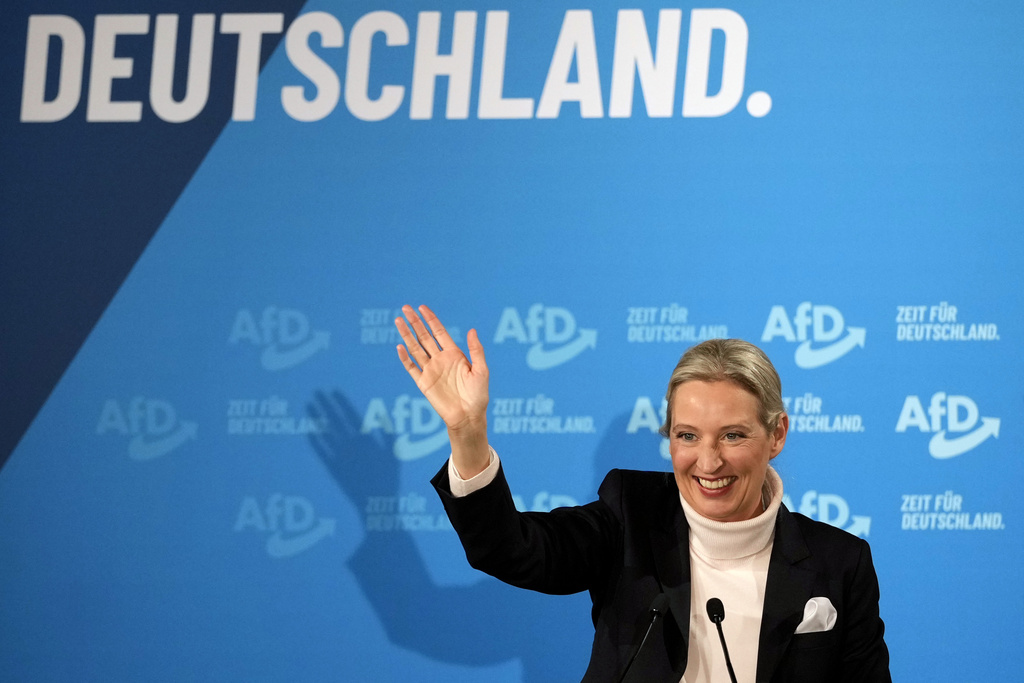
A new poll shows that for the first time, a majority of Germans do not completely rule out voting for the Alternative for Germany (AfD), marking a major milestone for the party.
While the media and the establishment have waged a non-stop campaign against the right-wing group, this campaign appears to have failed, at least so far. The Insa polling firm found that 49 percent of Germans rule out ever voting for the AfD, while the rest could, in theory, see themselves lending it their vote.
This, however, also needs to be put into context. The AfD party is still the worst party in terms of the pool of people willing to vote for it. In other words, even though the Green Party, for instance, polls much lower than the AfD, there are still more Germans who say they could imagine voting for that party than there are Germans who say they could imagine voting for the AfD.
“Only just under one in two people fundamentally rule out voting for the AfD. This is still the worst value of all parties in the ‘negative Sunday question,‘ but the best value ever measured in this category for the AfD,” Insa chief Hermann Binkert told Bild, as reported by Tagesspiegel.
Still, the result shows major progress for the AfD, and could further complicate efforts to ban the party.
The latest poll from Insa also found that the AfD remains the number one party in the country, if by a slim margin. The AfD is polling at 26 percent, with the CDU and CSU right behind at 25.5 percent. The SPD is at 15 percent.
The fact that the AfD is not only the number one party, but also increasingly making inroads with Germans, continues to be portrayed as a catastrophe for the establishment, which is desperate to stymie the party.
Notably, the AfD has reached its first-place polling position despite ban threats and mass surveillance on its party members. At the same time, a taxpayer-funded media empire fueled by billions of euros in mandatory payments from German households has relentlessly published propaganda aimed at the party.
So, why, despite all these measures, are Germans becoming more receptive to the possibility of voting for the AfD? There are many potential factors. However, many analysts point to some core realities: a deteriorating economy, exploding debt-fueled social spending on migrants, less and less affordable housing, and dangerous public spaces, trains, buses, and subways. These factors are potentially proving too much for a larger and larger share of the German public.
In addition, nearly weekly updates on deteriorating schools, including violence and insecurity, in large part due to mass immigration, are making many Germans second-guess the country’s turn towards open borders and its “welcoming” culture.
Issues like exploding costs due to anti-terror measures for beloved German Christmas markets, which are being shouldered by cash-strapped cities and municipalities, also further highlight the country’s failed security and immigration policy.
That means that despite billions in propaganda, Germans are inwardly becoming more receptive to the AfD’s core economic, security, and anti-immigration messages. The media and the German government can only do so much censoring and damage control.


