A Berlin court has rejected a legal bid to obtain files relating to former German Chancellor Angela Merkel from the archives of East Germany’s secret police, ruling that the request does not meet the strict legal conditions governing the release of such records.
The lawsuit was filed by Marcel Luthe, chairman of the Good Governance Union, who argued that he required access to documents mentioning Merkel for a research project examining her conduct during the final years of the German Democratic Republic.
As reported by the Berliner Zeitung, the Berlin Administrative Court dismissed the claim and ordered Luthe to cover approximately €20,000 in legal costs.
In delivering the oral reasoning for the ruling, presiding judge Jens Tegtmeier said the Stasi Records Act does not grant a general right to inspect files about any individual. Instead, the law allows disclosure only under limited circumstances, such as if the person concerned is proven to have collaborated with East Germany or if they were already a public figure at the time the documents were created. According to the court, neither condition applies in Merkel’s case.
The Stasi records themselves are a vast collection of documents created by the Ministry for State Security, the secret police of the former East German communist regime. Before the fall of the Berlin Wall in 1989, the Stasi built one of the most extensive domestic surveillance systems in the world, maintaining millions of files on citizens suspected of political dissent or contact with the West. The archives include informant reports, surveillance notes, photographs, correspondence, and other material gathered through the agency’s network of officers and unofficial collaborators.
After German reunification, these records were preserved and placed under special legal protection. Individuals have the right to view files compiled about them, but access to documents concerning third parties is tightly restricted in order to protect personal privacy.
Luthe did not claim that Merkel had been a Stasi informant, but argued that questions remained about her activities in the late East German period, which justified access to the records.
Among the issues raised in court was an incident in which prohibited Solidarity movement material was reportedly discovered by East German border authorities when Merkel returned from a trip to Poland. Luthe’s legal team argued that similar cases had often resulted in serious consequences, raising questions about why the young Merkel was not punished.
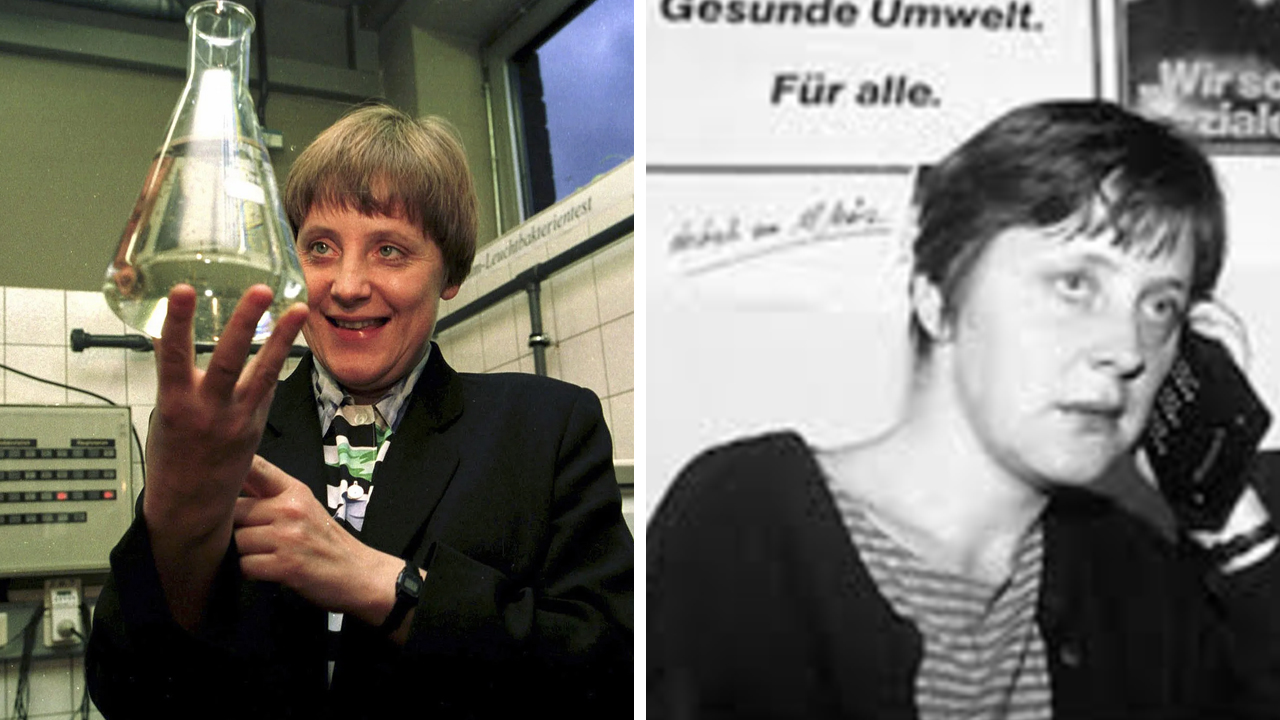
The lawsuit also highlighted Merkel’s role at the Central Institute for Physical Chemistry in East Germany, where she served as Free German Youth (FDJ) secretary, the official communist youth organization of the former East German state.
In addition, Luthe’s representatives argued that Merkel’s role as spokesperson for the reform-era Democratic Awakening party in 1990 could qualify her as a “person of contemporary history,” a legal category that allows broader access to archival material.
The court rejected these arguments, suggesting Merkel was, if anything, only a “minor” political figure at that time and that disclosing her surveillance documents would not be justified. He also said there was no concrete evidence that Merkel had benefited from the Stasi or held a sufficiently prominent public role before German reunification.
During the hearing, Luthe’s legal team argued that historians should be allowed to examine the archives precisely because the existence and contents of relevant documents remain unknown. They described the situation as a “black box,” saying meaningful research was impossible without first identifying what records exist.
Die Entscheidung des Verwaltungsgerichts ist nach dem Verlauf der mündlichen Verhandlung mehr als überraschend, zumal auch die Beklagte im Termin einräumen musste, dass Frau Merkel auch schon zu DDR-Zeiten Person der Zeitgeschichte war.
Aber in einem Verfahren, in dem der… pic.twitter.com/4YPYLFRe9B
— Marcel Luthe – Good Governance (@GGLuthe) March 13, 2026Following the ruling, Luthe said he intends to continue the legal fight and pursue the matter through higher courts, including Germany’s Constitutional Court, if necessary.
In a statement following the ruling, Luthe said, “The decision of the administrative court is more than surprising in light of the course of the oral hearing, especially since the defendant also had to concede during the hearing that Ms. Merkel was already a figure of contemporary history even during GDR times.
“But in a proceeding in which the presiding judge was replaced twice — most recently two days before the hearing — there can indeed be surprises as well,” he added.