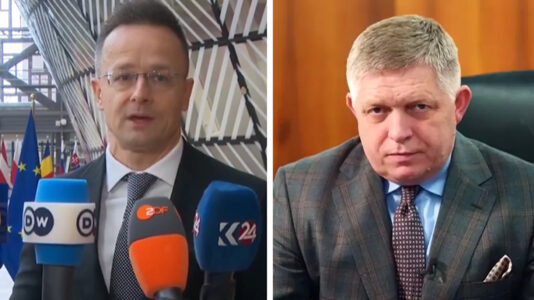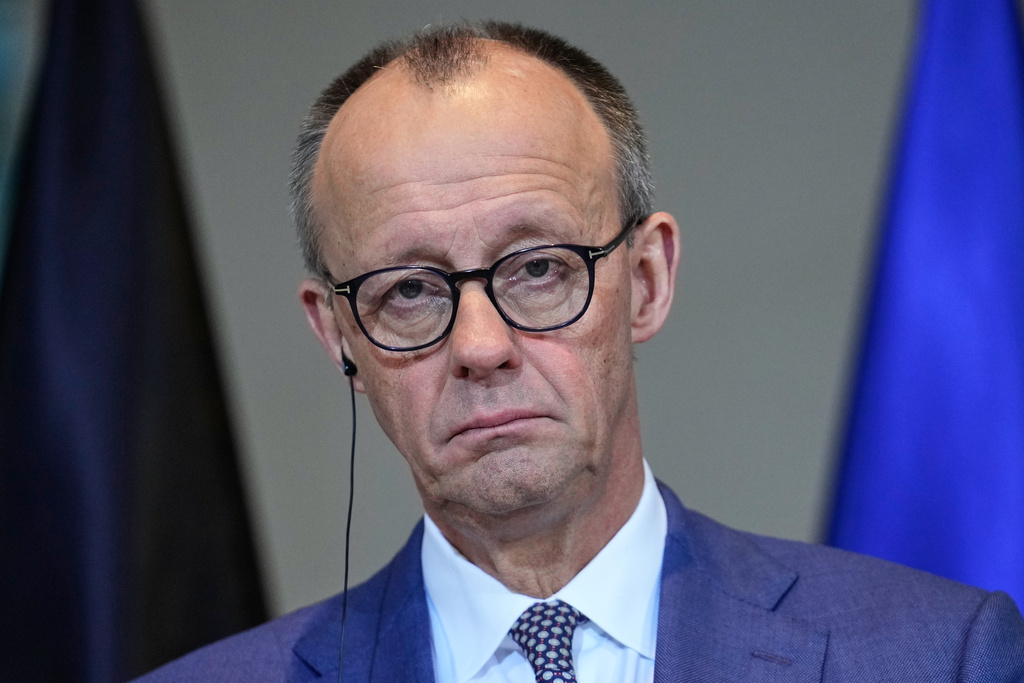
In the digital age, even a wooden fairy tale character can trigger a police investigation, at least in Germany. A pensioner from Heilbronn is currently finding himself in the crosshairs of the law after a social media comment regarding Federal Chancellor Friedrich Merz and Baden-Württemberg Prime Minister Winfried Kretschmann in which he allegedly referred to them as “Pinocchio.” The eyebrow-raising move has already led one constitutional lawyer to describe the investigation as “hysterical madness.”
Last October, Chancellor Merz and Prime Minister Kretschmann visited Heilbronn for the groundbreaking ceremony of the Innovation Park Artificial Intelligence (IPAI). To ensure security, the Heilbronn police posted on Facebook about a temporary local flight ban.
Underneath that post, the local pensioner left a brief remark, writing, “Pinocchio is coming to HN,” followed by a long-nose emoji.
The man who wrote the “Pinocchio” comment said he viewed it as a harmless jab, but the authorities did not see the humor. Three months later, he received a letter from the criminal police informing him that he was under investigation for a suspected insult under Section 188 of the Criminal Code.
The pensioner’s reaction was one of complete disbelief:
“It’s a joke and completely disproportionate. When I told friends and acquaintances about the letter, everyone thought I was trying to make a joke,” he said.
After a request from Nius news outlet, police also revealed that 30 comments were under investigation, with many of them referring to Merz as being untrustworthy.
“The Baron of Lies was traveling with Kretsche” read one comment. Another read: “Nobody needs the liar here.” Another stated: “Is Munchausen coming with the cannonball?“ The last comment refers to the story of Baron von Münchhausen, who is portrayed as the “baron of lies.”
Politicians, with the help of law firms running artificial intelligence searches, are often filing these complaints directly and earning money every time they win a case. However, this investigation was not actually launched by Merz. The Heilbronn police headquarters reportedly has a dedicated social media team that monitors comments for potential criminal content.
Police spokesman Andreas Blind explained the protocol: “If we come across criminal behavior in individual cases as part of the social media monitoring of our channels, this will be reported or submitted to the public prosecutor’s office for review.”
The police then refer the matter to a public prosecutor who can determine whether an investigation is justified.
The suspect has since commented on the allegations in a statement to local paper
Heilbronner Stimme:
“The comment ’Pinocchio comes to Heilbronn’ does not constitute a deliberate insult to a specific person.“ He stated that no name was mentioned. He added it was “an ambiguous, symbolic and satirical expression of opinion in a political context“ that is protected by freedom of expression. He requested authorities “to lift the investigation,” in response.
The pensioner is hardly the first person to compare Merz to the famous puppet created by Carlo Collodi in 1883. The chancellor has faced similar criticisms, with other politicians directly referring to the Pinocchio character.
Notably, Franziska Brantner, of the Greens, accused Merz of breaking promises regarding electricity tax reductions, warning him not to become a “Pinocchio Chancellor.”
Meanwhile, Stephan Brandner of the AfD called Merz “Pinocchio Fritze” regarding debt brake debates and even shared a photo montage of Merz with a long nose.
Merz famously said during his campaign for chancellor that the debt brake would not be lifted. However, almost immediately after his victory, he completely backtracked on his promise and took on hundreds of billions of new debt. The move was seen as a major betrayal of his campaign promises.
Legal experts weigh in
Legal experts suggest the pensioner likely has little to fear and some are deeply critical of the move.
“This is hysterical madness,” said constitutional lawyer Prof. Volker Boehme-Neßler in an interview with Apollo News.
Dr. Moritz Ott, a lawyer from Berlin, argues that calling a politician “Pinocchio” is a matter of free speech, according to German newspaper Stimme.
“Of course you can call Friedrich Merz, for example, Pinocchio,” Ott told Stimme. “This falls within the area of expression of opinion and is covered by Article 5 of the Basic Law.”
Because “Pinocchio” is a literary figure rather than a traditional swear word, Ott argues it doesn’t constitute a formal insult to honor. Instead, it serves as a critique of political consistency.
“For me, this Pinocchio post is in no way punishable. A Federal Chancellor has to endure something like that,” he stated.
Dr. Michael Rath-Glawatz shares this sentiment, noting that the term functions as a subjective assessment rather than a false claim of fact:
“I consider the term ‘Pinocchio’ to be a value judgment, not an (untrue) statement of fact. People who are in public life have to accept being criticized, even disparagingly. I don’t see any defamation,” he said.
Germany’s worrying assault on free speech
While the investigation may be a headache for the Heilbronn local, legal precedent suggests that in the arena of political debate, even a “long-nosed” comparison is protected by the right to an opinion. Still, the fact that any investigation was launched may illustrate the cooling effect such investigations are meant to have on free speech. In other cases, police have raided people’s homes over what many would consider to be insults that fall into the realm of justified criticism and free speech.
The case has even garnered international attention.
“It isn’t just Holocaust denial that spurs police crackdowns in Germany. This criminal investigation (against a retiree over the term “Pinocchio”) feels like a case of lèse-majesté. Most Germans I’ve talked to don’t want their laws applied this way. But vague, broad prohibitions on speech invariably produce edge-case abuses and chilling effects. When you’re regulating speech at scale, on platforms based in America (whose American users, especially, deserve First Amendment protection), this creates problems worth solving,” wrote U.S. Under Secretary of State Sarah B. Rogers on X.
It isn’t just Holocaust denial that spurs police crackdowns in Germany. This criminal investigation (against a retiree over the term “Pinocchio”) feels like a case of lèse-majesté.
Most Germans I’ve talked to don’t want their laws applied this way. But vague, broad… https://t.co/qq0R1b2AZm
— Under Secretary of State Sarah B. Rogers (@UnderSecPD) February 23, 2026One of the most famous past cases involved a 64-year-old pensioner, who retweeted a meme of Green Economy Minister Robert Habeck, in which Habeck was described as an “idiot.” Bavarian police raided the man’s house and arrested him. The crime has even been recorded as a “politically motivated right-wing crime.”
🇩🇪🚨German police raided the house of this pensioner, pictured with his daughter Alexandra, for calling Green Economics Minister Robert Habeck an "idiot."
Habeck personally filed the criminal complaint against Stefan Niehoff.
Welt reports that Habeck has a team of lawyers that… pic.twitter.com/b0zyNe7GCa
— Remix News & Views (@RMXnews) November 16, 2024In another remarkable case, a civil engineer was imprisoned for 30 days after he failed to properly appeal a fine he received for insulting a prominent Social Democrat (SPD) politician.
The incident began when a civil engineer living in Lower Saxony sent an angry email to Mecklenburg-Vorpommern state Prime Minister Manuela Schwesig of the far-left Social Democrats (SPD).
In the email, which he sent to the state chancellery, he called her a “storyteller” and accused her of talking “stupid stuff.” He also told her she should start working in construction instead of politics and wrote: “You don’t need to sell people stupid things.” The letter was sent in May 2022 and criticized what he believed to be her pro-Russian stance towards the war in Ukraine that had just broken out.
Other cases have also raised eyebrows, with some individuals even convicted for comments that appeared to criticize the performance of a candidate.
German law does not allow for free-wheeling free speech. For example, Germans are not allowed to direct insults at individuals, such as calling them a “fat pig.” However, legal experts have expressed alarm over the fact that police are raiding houses over such comments. In some cases, the comments are much milder or do not constitute an “insult” as described by the law in any manner, such as referring to Annalena Baerbock as the “worst foreign minister ever.“
As Remix News reported, freedom of expression in Germany is being increasingly constrained, with 74 percent of citizens believing people are holding back their opinions out of fear of repercussions, according to a survey by Insa.