

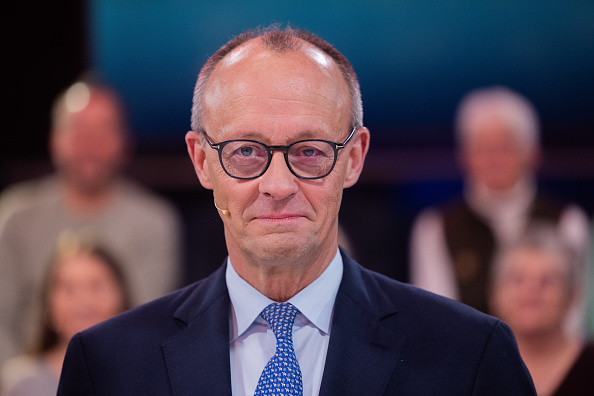
German Chancellor Friedrich Merz has been among the most legally aggressive politicians in modern German history when confronted with personal criticism, having filed hundreds of criminal complaints for defamation and insult, according to files obtained by Welt am Sonntag.
Some of these complaints – including online comments calling him a “little Nazi” or a “filthy drunk” – even resulted in police house searches for German citizens investigated under the draconian defamation law, for which the offense of insulting politicians was added back in 2021.
The documents include criminal complaints, investigation files, and correspondence from the law firm Brockmeier, Faulhaber, Rudolph, which represented Merz in the cases. Merz’s parliamentary office confirmed the broad outlines of these activities, noting that he pursued criminal proceedings during the previous legislative period and donated all damages and fines “to social causes in the Hochsauerland district.”
The scale of the effort surprised many within the CDU/CSU. “After the house search at the home of the guy who called Habeck a ‘moron,’ we found it unacceptable that Merz would do something like that,” one party figure told the German newspaper, referencing a case in which a pensioner was hounded by the authorities for an online post criticizing then-Economics Minister and Greens leader Robert Habeck. Another warned the tactic “will surely backfire on us.”
Central to Merz’s legal strategy was the agency So Done, which scoured the internet for insults on behalf of clients, filed complaints, and pursued civil claims – financing itself by taking half of any damages awarded. It reportedly promoted itself as a project against online hate, but in reality ran a productive campaign on behalf of powerful, wealthy politicians targeting ordinary citizens who dared to criticize them.
So Done counted prominent figures as supporters, including NRW Minister-President Hendrik Wüst, former Economics Minister Robert Habeck, and Bundestag President Julia Klöckner. Merz is said to have since discontinued the relationship with the agency.
The investigative files reviewed by Welt show how the system escalated. In one case, police conducted a house search after an online user called Merz a “filthy drunk.” A court later ruled the search unlawful. Another case involved an elderly, disabled woman who used a wheelchair and lived on state benefits. She had posted “little Nazi” on social media. Although she confessed immediately when police arrived, officers confiscated her mobile phone – her only means of communication with carers, doctors, and pharmacies – a measure described by her lawyer as unnecessary and potentially dangerous.
The cases raise concerns among defense lawyers about the broader role of law enforcement. Konstantin Grubwinkler, representing the man in the “filthy drunk” case, said the underlying issue was not Merz’s decision to file complaints but the state’s response. “The problem is the complete overreaction of the justice system,” he said. If police searches are deemed proportionate in such cases, he warned, “the principle of proportionality effectively ceases to exist, and there is unlawful arbitrariness.”
A similar dynamic appeared in a case involving a tweet from September 2023 stating: “Assholes are people whose verbal output is indistinguishable from their anal output. #Merz #Merzbohren.” Although Merz himself did not file a complaint, the case was picked up by “Hessen gegen Hetze,” a project under the authority of the Hessian interior ministry, and referred to the Federal Criminal Police Office (BKA). Investigators classified the matter as politically motivated extremism.
Welt reported that one police note in the file described the need to “prioritize” the over-one-year-old tweet “in time for the federal elections.” Lawyers defending accused citizens reported dozens of such investigations.
Attorney Jannik Rienhoff said he has represented around 10 people in roughly 30 cases, with only one resulting in a penalty order; many have already been dropped. However, the hounding of citizens for comments posted online raises serious questions about the freedom of speech and the ability of the electorate to lament politicians, who should expect larger exposure to criticism for the role they play in public life. “It shouldn’t be the job of the BKA to scour the internet for potential insults that politicians aren’t even aware of,” he said.
Although a spokesperson for the federal government said Merz did not file a complaint “in any” of the more than 170 contacts police and prosecutors made with him over alleged insults, a February 2025 document shows that he personally signed at least one complaint ahead of the federal election.
The Merz files form part of a broader trend: the rapid expansion of criminal proceedings for political insults under Section 188 of the Criminal Code, revised in 2021 to allow prosecution even without a complaint from the offended politician. Former Economics Minister Robert Habeck is said to have filed at least 800 complaints. In June this year, police staged a nationwide operation targeting individuals suspected of insulting politicians or spreading “hate and incitement” online, conducting morning raids and seizing electronic devices from 170 people. NRW Interior Minister Herbert Reul praised the action, saying: “Digital arsonists must not be able to hide behind their cell phones or computers.”
In one of the most striking incidents, a civil engineer in Lower Saxony served 30 days in prison after failing to properly formalize an appeal against a €3,000 fine for insulting Mecklenburg-Vorpommern Minister-President Manuela Schwesig. His angry 2022 email called her a “storyteller,” accused her of talking “stupid stuff,” and suggested she should “start working in construction instead of politics.”
Schwesig filed the complaint herself; after the man’s misfiled appeal and later failure to report for the custodial sanction, police arrested him at his workplace. He lost his job upon release.
International scrutiny intensified in February when CBS’s 60 Minutes aired footage of German police raids targeting alleged hate-speech offenders. Elon Musk reacted: “Thank the Lord that America has freedom of speech.” U.S. Vice President JD Vance called Europe’s approach “Orwellian” and warned that criminalizing speech risks straining transatlantic relations.