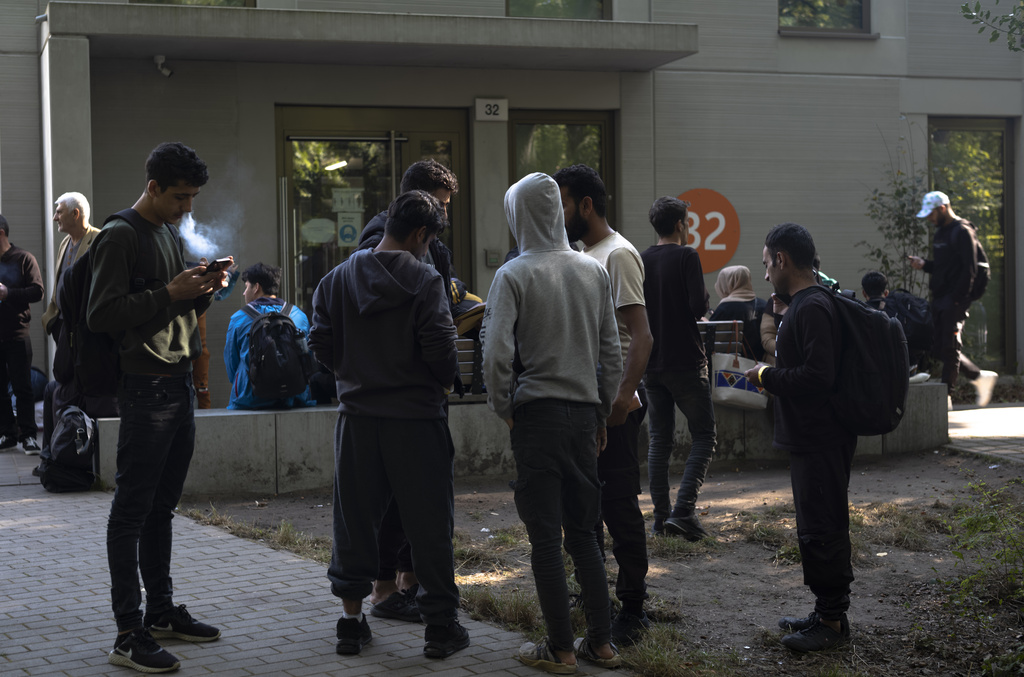
Housing migrants in Berlin has cost taxpayers dearly, and new data confirms this. Figures confirmed to the German Press Agency (dpa) by sources within the Senate, and cited by Die Welt, indicate that in 2024, the city paid €883 million for providing migrant accommodations, up from €312 million in 2020.
At the same time, Berlin is implementing major budget cuts due to budget shortfalls, with the city taking on more and more debt.
Large-scale accommodations such as Tegel and Tempelhof have even higher costs, with Tegel alone accounting for approximately €260 million of total costs in 2024.
Annual expenditures for the accommodation, care, and integration of refugees in Berlin nearly doubled between 2022 and 2025, reaching €2.24 billion. At one point, a state of emergency to secure emergency loans for financing was even considered.
According to the CDU/CSU-SPD coalition in charge, the costs can be covered by the state budget, with as much as €870 million per year earmarked in the 2026/2027 biennial budget as a reserve for potential additional funding needs.
What is also important to note is that Berlin is implementing major budget cuts across various sectors, including culture, education, and transport, to tackle a €3 billion shortfall. These cuts are a affecting universities and cultural institutions with reduced grants (around €130m cut from culture), and public services like cycling initiatives.
WATCH: 🇩🇪🇪🇺 Mass immigration is fueling the West's housing crisis.
Here's how it's happening in Germany.
In a powerful speech in the German Bundestag, @AfD politician Carolin Bachmann slams the ruling government for allowing 2 million migrants into the country while families… pic.twitter.com/DMEqiV316S
— Remix News & Views (@RMXnews) February 15, 2024There are also questions about where cuts will land in the future, as Berlin takes on more and more debt. Once again, the promise of mass immigration proving an economic bounty is often falling far from the truth, and polling shows that at the national level, Germans are turning sharply against both legal and illegal immigration.
In one bit of good news, the number of refugees arriving in Berlin fell for the first time in 2024. Just over 21,000 refugees were taken in that year, around a third fewer than in 2023, and the downward trend has continued this year, with some 11,700 refugees arriving up to and including October.
As of mid-November, 36,851 people were living in accommodations run by the State Office for Refugee Affairs (LAF). They are housed in various emergency shelters, container housing, dormitories, rented hotels, hostels, and former office buildings. The governing coalition recently has also agreed not to create any additional accommodation facilities for the time being.
Just last June, Remix News reported that Berlin’s state government has approved the construction of a new container village to house more than 1,000 asylum seekers.
At the start of 2025, cities such as Berlin and Hamburg were also in the spotlight for prioritizing luxury housing for migrants while German citizens face a worsening housing crisis, rising homelessness, and exclusion from newly built accommodations.