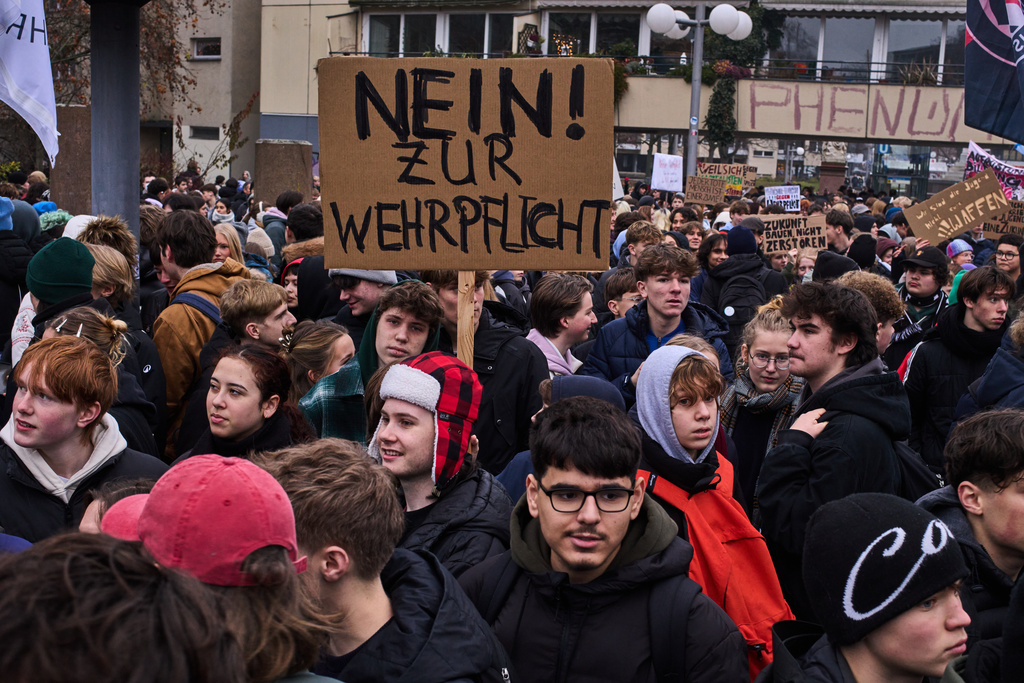
After Germany’s lower house of parliament passed the military service law on Friday, thousands of students have demonstrated in several cities against the new law, with some boycotting classes, Handelsblatt reported.
The new, “needs-based” military program is a voluntary recruitment program for both men and women. Young men must then complete a mandatory questionnaire, which is voluntary for women, and are later assessed for suitability for service. The goal is not to immediately call up, but to create a database based on which the Bundeswehr can call up interested candidates for further aptitude tests, writes Index.
German Defense Minister Boris Pistorius announced that 40,000 young people have received mandatory military service questionnaires. The plan aims to increase the size of the German armed forces to around 255,000-270,000 by 2035. By the end of this year, the ministry aims to recruit around 20,000 new soldiers.
Pistorius also noted that Germany’s infrastructure would need to be expanded to accommodate the increased number of people in the barracks. Those that have been closed will need to be reopened, and new ones will need to be built.
“The current geopolitical situation is extremely tense and unpredictable, and Germany’s security environment is more complex than ever,” he said.
In Germany, CDU/CSU politicians are calling for even more decisive action, stating that if voluntary recruitment fails, compulsory military service could be on the agenda. The CDU women’s wing is even proposing that questionnaire registration be extended to women.
Sixteen-year-old Justin told Handelsblatt: “We don’t want conscription, that’s why we’re here today. There are people who have other aspirations and dream jobs. If they’re drafted, that dream will be ruined for them.”
One banner at a protest in Saxony read: “Too young for elections, but old enough for war,” and “For a future without compulsory service.”
Meanwhile, German Chancellor Merz is pushing for Germany to rebuild its economy, status, and defense — a message he took to the Gulf States.
“For our security and prosperity, we need new strategic partners. We are reducing dependencies, minimizing risks, and creating new opportunities. That is why I traveled to the Gulf today: to Saudi Arabia, Qatar, and the United Arab Emirates,” he posted on X.
“Make Germany an investment location again,” he wrote in another post, announcing a new commissioner for investments and an initiative via Germany Trade and Invest.