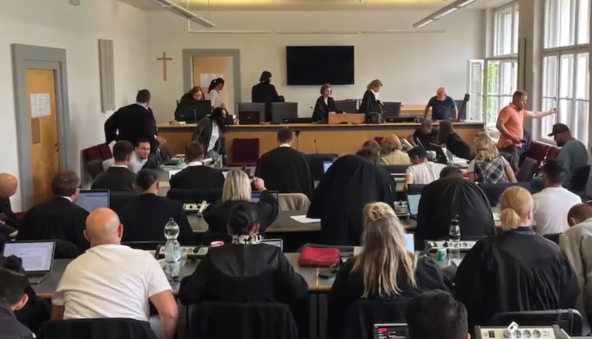
Several migrants have been jailed for a brutal iron bar attack in Germany that left two brothers fighting for their lives, but the victims say the sentences were far too lenient.
The Regensburg Regional Court on Friday sentenced five men to prison terms ranging from five to seven years over the November 2023 assault in Hemau, near Regensburg. Prosecutors had argued the attack amounted to attempted murder, but judges instead convicted the main perpetrators of aggravated assault, concluding they had stopped short of intending to kill.
In total, 11 men stood trial. Focus reported that the men were primarily from Bulgaria, and most were part of an extended family network. Five were convicted of aggravated assault, with two receiving lighter sentences under juvenile law because they were minors at the time of the crime. Three others received lesser penalties for failing to render assistance to the victims, while two defendants were acquitted. Another participant had previously been sentenced in a separate proceeding.
Prosecutors had demanded sentences of up to 11 years. Because time spent in pre-trial detention and extradition custody is credited, some defendants may serve significantly less additional time in prison, and compensation may even be due in cases where custody exceeded final sentences.
The attack stemmed from a dispute connected to the workplace of one of the defendants and later escalated at a Jet gas station in Hemau. There, members of the group attacked Alexander R. with iron bars, repeatedly striking his head. When his younger brother Johann rushed to help, he too was violently assaulted.
Both men suffered life-threatening injuries. Johann R. sustained a skull base fracture and brain hemorrhage and continues to struggle with speech problems, extreme light sensitivity, persistent headaches, fatigue, and numbness affecting one side of his body. Alexander R. also suffered severe head wounds, fractured ribs, and a bruised lung, and continues to suffer from chronic pain and psychological trauma. Both required hospitalization and remain under medical and psychological care to this day.
Following the verdict, the victims expressed shock and anger. Johann R. said, “When the defendants heard the verdict, they laughed mockingly. Their relatives also openly showed their joy and even threatened us.”
“I don’t want to offend anyone at all, but I think our justice system in Germany is too weak. People who come to us from other countries can commit the most serious crimes and receive ridiculously lenient sentences. But if you live in Germany and are German, then you get life imprisonment for a violent crime like this.”
“I can well understand why the defendants in our trial are laughing at this verdict and the whole system,” Johann added.
Johann isn’t the first person to speak out about leniency in Germany’s criminal justice system when it comes to migrants. Earlier this month, Alternative for Germany (AfD) co-leader Alice Weidel slammed the system after the Iraqi killer, who pushed a 16-year-old Ukrainian girl in front of an oncoming freight train, avoided jail.
“The public prosecutor’s office certifies him as ‘guilty but insane.’ No deterrent judgment, no imprisonment followed by deportation — instead, the taxpayer has to foot the bill for the perpetrator’s accommodation in a psychiatric hospital. This is a scandal!” she wrote on X.
In December last year, a 29-year-old Afghan migrant was sentenced to six years in prison for stabbing a 27-year-old teacher at random on the street. However, despite stabbing his victim four times in the back and twice in the thigh, the fact that the Afghan stopped stabbing her once she screamed was enough to convince the court in Stuttgart to drop the attempted murder charge, affording him a far more lenient sentence.
In the same month, a 29-year-old Moroccan man who pulled a knife and threatened people at the Weimar Christmas market was released from custody as police chiefs considered his charges to be insufficient to justify pre-trial detention, allowing him freedom to roam before any court hearing.
In October, the Afghan asylum seeker who fatally stabbed a two-year-old boy and a 41-year-old man who tried to intervene during a daycare outing in Aschaffenburg was declared not criminally responsible for his actions and was confined to a psychiatric hospital.
Such leniency isn’t just afforded to migrants in Germany. Last week, a Dutchwoman who survived a violent attempted rape in Amsterdam in May 2024 left a courtroom in tears and anger after judges refused to convict her attacker of attempted murder or manslaughter, despite evidence that she was strangled for several minutes and repeatedly threatened with death.
“This country is sick. Seriously sick,” remarked Geert Wilders, leader of the right-wing Party for Freedom (PVV), in response.