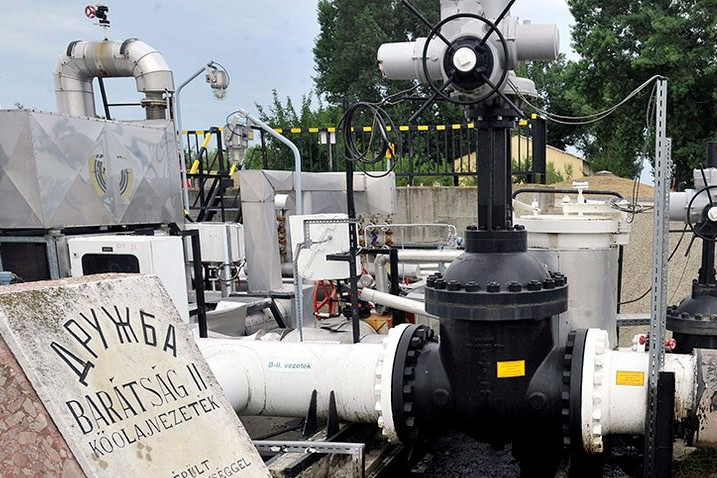
Yesterday morning, Hungary’s foreign minister, Péter Szijjártó, lashed out at Ukraine for its decision to yet again attack the Druzhba (“Friendship”) pipeline transporting Russian oil to both Hungary and Slovakia.
Calling the move “outrageous and unacceptable,” he reiterated that the war in Ukraine is not Hungary’s war, bemoaning that “for 3.5 years Brussels and Kyiv have tried to drag Hungary into the war in Ukraine.”
Szijjártó also reminded that the imported electricity to Ukraine from Hungary “plays a vital role in powering your country.”
Ukrainian Foreign Minister Andrii Sybiha replied, reminding Hungary’s top diplomat of the party behind the war, Russia, which he said Hungary has chosen to continue to be close to and rely upon for its energy needs.
“Peter, it is Russia, not Ukraine, who began this war and refuses to end it. Hungary has been told for years that Moscow is an unreliable partner. Despite this, Hungary has made every effort to maintain its reliance on Russia. Even after the full-scale war began. You can now send your complaints—and threats—to your friends in Moscow.”
The Hungarian foreign minister expressed his displeasure with being told to complain to Putin, insisting that Sybiha had “missed the facts.”
Szijjártó then reiterated that Hungary has relied on this pipeline for decades, Hungary has suffered repeated shutdowns of supply due to Ukrainian attacks, and that Hungary’s “interest” to remain reliant on Russian oil is Hungary’s top priority.
He also again noted that Ukraine imports electricity from Hungary.
In the meantime, while Russia has said it is working on repairing the damage, Hungary’s MOL has publicly stated that “overall regional supply of oil remains guaranteed,” according to Reuters.