Hungary’s National Assembly has adopted a multi-point package of tax-cutting measures for businesses, passing the proposal with 167 votes in favor and none against or abstaining.
The plan, developed jointly by the government and the Hungarian Chamber of Commerce and Industry, aims to ease the burden on sole traders and small, medium, and large enterprises through changes to VAT rules, expense allowances, social security contributions, and reporting thresholds.
As reported by Magyar Nemzet, the package introduces a tiered rise in the individual VAT exemption threshold, which will increase to HUF 24 million (€62,480) by 2028. The threshold will first rise to HUF 20 million on Jan. 1, 2026, then to HUF 22 million in 2027, and finally to HUF 24 million in 2028. Flat-rate entrepreneurs — essentially self-employed individuals who choose a simplified tax system where their taxable income is calculated using a fixed, automatic expense deduction instead of documenting their real costs — will also benefit from an increasing general expense deduction, rising to 45 percent in 2026 and 50 percent in 2027.
The government says the plan will reduce the minimum social contribution base for full-time sole traders by abolishing the 112.5 percent multiplier currently used to calculate the social contribution tax base. Officials say this will reduce the tax burden for around 140,000 entrepreneurs. The small business tax scheme will be widened to allow an additional 4,000 to 5,000 entrepreneurs to enter the more favorable regime. Retail tax brackets will be shifted upward, which officials say will improve conditions for around 350,000 businesses.
The proposal will also see excise fuel tax increases postponed for six months, with the possibility of further delay. The corporation tax threshold will rise sharply from HUF 5 million (c. €13,000) to HUF 20 million (€52,000), and the simplified reporting limit for micro-enterprises will increase from HUF 150 million (c. €390,000) to HUF 180 million (€470,000).
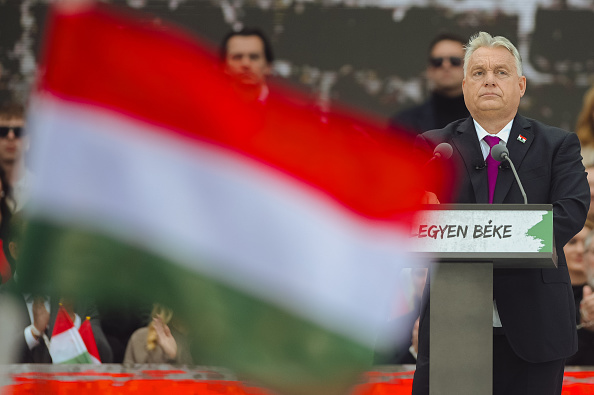
“While Brussels pushes a war economy, Hungary keeps its focus where it belongs: on national interests, not on funding a conflict that isn’t ours,” Orbán said. “Today, we announced an 11-point action plan to strengthen Hungarian entrepreneurs. Our commitment is to peace, stability, and an economy that benefits our people.”
Business groups broadly praised the package, particularly the rising VAT-exemption threshold and the administrative reductions affecting around 80,000 sole traders.
The move is no doubt also aimed at winning over businesses ahead of April’s election, widely considered to be Orbán’s toughest electoral test during his time in office. Budget deficit reduction targets have taken a back seat — being raised to 5 percent for this year — as announcements of tax cuts and higher government spending have been timed to coincide with the upcoming vote.