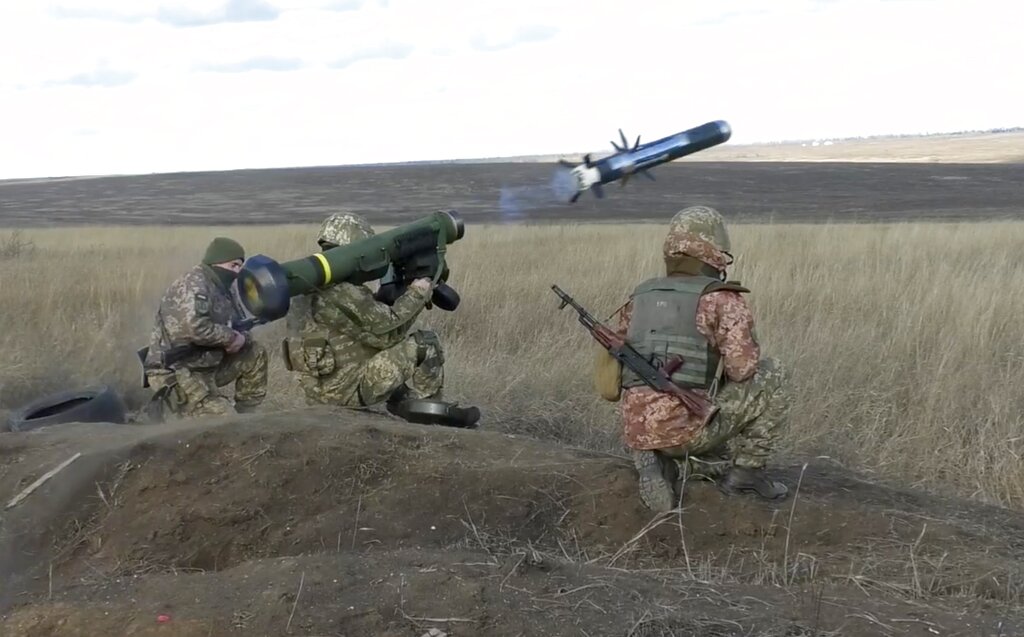
The U.S. State Department has announced the sale of 2,506 missiles, as well as 253 launchers equipped with sights to Poland, according to a statement out of the Pentagon’s Defense Security Cooperation Agency (DSCA).
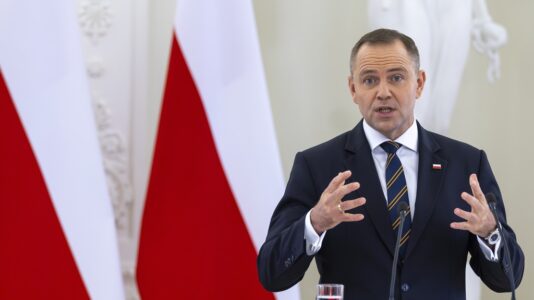
Deputy Prime Minister and Minister of National Defense Władysława Kosiniaka-Kamysza wrote on X: “Javelins for Poland. The US Department of State has approved the sale of 253 launchers and over 2,500 missiles to Poland, along with the necessary training and spare parts.”
“Javelin is an anti-tank guided missile used by the Territorial Defense Forces,” he added.
Kolejne Javeliny dla Wojska Polskiego! Departament Stanu USA🇺🇲 udzielił zgody na sprzedaż Polsce 253 wyrzutni i ponad 2,5 tysiąca pocisków, wraz z niezbędnym szkoleniem i zapasem części zamiennych. Javelin to przeciwpancerny pocisk kierowany będący na uzbrojeniu @terytorialsi… pic.twitter.com/cJs1icT19i
— Władysław Kosiniak-Kamysz (@KosiniakKamysz) September 18, 2025This is just the latest in a long line of military equipment purchases by Poland from the USA.
In late August, Washington also approved the sale of logistics and support services for Polish F-35s, Do Rzeczy reminds. General Electric Aerospace will be responsible for implementing the contract, which is estimated to be worth $1.85 billion. This is a key element in Poland’s preparations for the full deployment of modern, fifth-generation combat aircraft.
Under a contract signed in 2020, Poland is to receive 32 F-35A fighters, along with a training package and spare engines, worth a total of over $4.5 billion. These aircraft, alongside the F-16, are to become the main pillar of Polish military aviation, significantly enhancing the country’s defense capabilities and its position within NATO.
With the recent Russian drone incursions into NATO airspace, specifically over Poland, fueling concerns of the war in Ukraine escalating, Poland and NATO in general are anxious to beef up their defenses. Other countries have also announced their commitment to helping defend Polish airspace and NATO’s eastern front.
French President Macron has already announced his country is sending three Rafale fighter jets to help defend Polish airspace and NATO’s eastern flank.
Germany is stepping up support as well, with four Luftwaffe Eurofighter Typhoon fighters will be deployed to Poland. One of the most modern multi-role aircraft in the world, the Typhoon, can reach speeds exceeding Mach 2 (approximately 2,450 km/h) and maintain supersonic speed without the use of afterburners. They are equipped with radar, an IRST optronic sensor, and missile self-defense systems, and can carry a wide arsenal of weapons, Do Rzeczy lists.
Last weekend, Spanish Prime Minister Pedro Sanchez also announced that his country would send its air force to protect Polish skies. “Putin will not intimidate us. Our assets will remain on the eastern flank as long as necessary,” he wrote in a statement.
Denmark, France, the United Kingdom, the Czech Republic, and other member states will also be involved in the operation.
“The purpose of sending Russian drones to Poland was not only to test NATO’s ability to react, but also to present Europe with a strategic dilemma: support Ukraine or defend the Alliance’s eastern flank,” argues German political scientist Herfried Muenkler in an interview with the weekly Die Zeit.
In addition to testing Poland’s and NATO’s ability to react, the expert believes Putin sought to pressure the Alliance to quickly commit all its forces to securing the entire eastern flank and relocate all available air defense systems there.
Meanwhile, NATO Secretary General Mark Rutte has underlined that the drone incursions were the largest-scale violation in recent years and are becoming increasingly frequent.
Today we announce the launch of “Eastern Sentry” to bolster our posture even further along our eastern flank.
This military activity will involve a range of assets from Allies.
Eastern Sentry will make clear that #NATO is always ready to defend. pic.twitter.com/fcdjdnHX5w
— Mark Rutte (@SecGenNATO) September 12, 2025“Regardless of whether Russia acts intentionally or not, it violated NATO airspace. The Alliance will respond in solidarity,” Rutte emphasized, reports Do Rzeczy. In line with this, NATO’s Eastern Sentry operation will not be extended.
Supreme Allied Commander Europe, General Alexus Grynkewich, says Eastern Sentry will now cover the entire eastern flank – from the Arctic, through the Baltic, to the Black Sea and the Mediterranean. The primary objective will be integrated air defense, utilizing both land and air assets.
Eastern Sentry is expected to last as long as necessary to deter Russia and protect NATO allies.
In other news, Italy has decided against sending any fighter jets to Poland.
Defense Minister Guido Crosetto had been in favor but is reported to have caved to pressure from Deputy Prime Minister Matteo Salvini, who seeks more open dialogue with Russia. Prime Minister Giorgia Meloni and Foreign Minister Antonio Tajani went along with Salvini, looking to avoid a conflict with the third-largest party in government, reports Decode39.
Assuring Italy’s continued support to NATO in other ways, Crosetto stated: “We are already among NATO’s top contributors. We will provide availability to extend the deployment of the Samp/T already stationed on the Eastern front and to extend the deployment of the Caew radar aircraft already operating in the area.”