- The following article was originally written in Polish by Maria Kądzielska for Do Rzeczy.
The Syrians had high hopes for the rebel alliance that overthrew the Bashar al-Assad regime last December. Unfortunately, the events of recent months have dramatically verified these expectations. “Our families survived seven years of war, and did not survive a few months of their rule,” comments a Pole of Syrian origin.
The country, under the rule of Ahmed al-Sharaa, a former jihadist also known as Abu Mohammad al-Jaulani, is increasing chaos. Christians are murdered in broad daylight, and the specter of religious purge threatens minorities who have inhabited Syria for centuries. In recent weeks, there have been many attacks on the Christian residents of the region.
Currently, the Syrian minority in Poland is in mourning. Many Syrians who emigrated to Poland years ago and started families here look at the situation in their former homeland with horror and disbelief.
“Christians, mainly Orthodox but also Catholics, die for their faith. Al-Sharaa soldiers enter apartments and houses, murder people in broad daylight,” explains a Polish lawyer, whose father emigrated from Syria many years ago, in an interview for DoRzeczy.pl.
“Last month we lost five members of our family. My dad’s brother was murdered after he managed to get his wife and children out to a safe place. He wanted to return to their apartment for a few personal belongings,” adds my interlocutor, who prefers to remain anonymous.
On Dec. 8, 2024, a coalition of rebel groups led by Hayyat Tahrir al-Sham (HTS) seized power in Damascus, overthrowing the dictatorship of Assad after more than 13 years of war. The interim president of the new Syria was Ahmed al-Sharaa, formerly known as Abu Mohammad al-Jaulani, the emir of the HTS, an organization originating from the former Syrian Al-Qaeda, known as Al-Nusra.
Al-Sharaa quickly tried to give himself a more moderate image of a “Syrian nationalist.” He assured tolerance for religious minorities and an inclusive government, hoping, among other things, to lift Western sanctions. The reality of the following months has brutally gone against these declarations.
The new authorities do not control the whole country; the northeast is still ruled by the Kurds from the SDF, and part of the north is controlled by Turkey. However, where the HTS administration goes, a strict order based on strict Sharia law is introduced. In the still multi-ethnic regions, anxiety is growing. Many HTS activists with a dubious reputation, compromised by numerous war crimes, entered the transitional administration. This raises fears that the promised protection for Christians, Alawites, Druze or Kurds will remain only on paper.
Already in the first months after the seizure of power, there was a series of bloody religious purges. In March 2025, a wave of violence against the Alawites was unleashed in the coastal provinces of Latakia and Tartus. The clashes claimed more than 1,400 victims, mainly civilians. Armed gangs plundered Alawite villages, murdering residents and kidnapping women for ransom.
In the spring and summer of 2025, the Druzi also became victims of purges. In April, at least 10 civilians of this group were killed in sectarian clashes in the city of Suwayda. Even bloodier events occurred in early July, when armed Sunni Bedouin militias, supported by government troops, entered several villages in the province of Suwayda under the banner of “holy war” against the “unfaithful” Druze. According to Syrian activists, more than 1,000 people were killed. Among the victims was, among others, Evangelical pastor Khaled Mezher with his family, a clergyman with Druze roots. The attackers also burned the Greek Catholic church of St. Michael in the village of Sura and razed to the ground dozens of houses belonging to Christian families in the region.
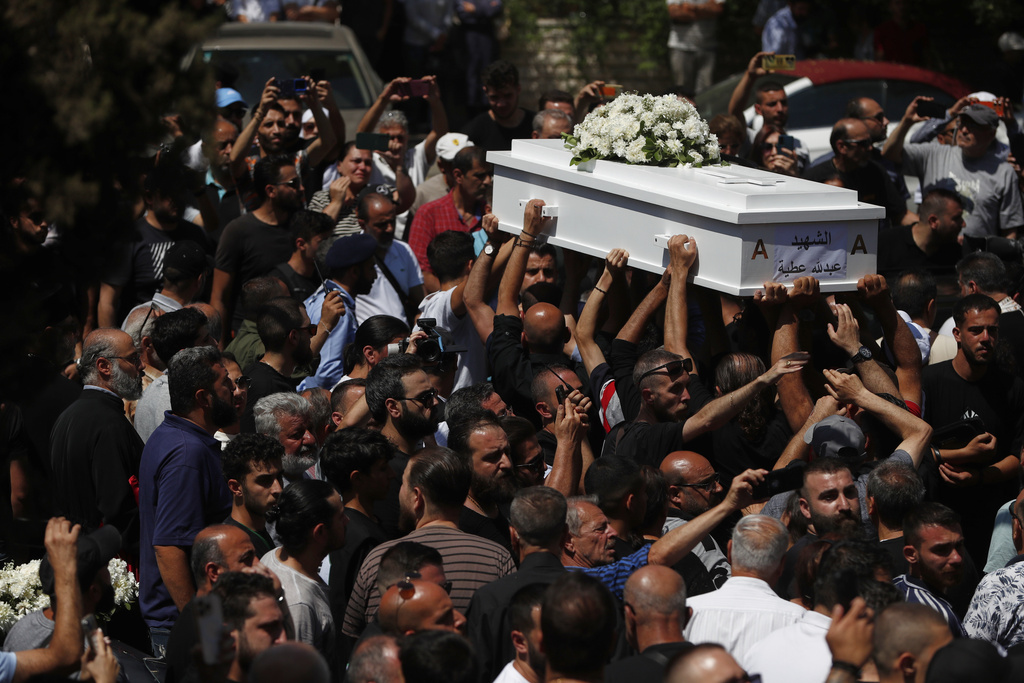
The violence has also not bypassed Christians, who are among the most vulnerable groups in post-war Syria. The turning point was the bomb attack on June 22, 2025, in the heart of the capital. During Sunday’s liturgy in the Greek Orthodox church of Mar Elias in Damascus, a suicide bomber detonated an explosive charge among the assembled faithful. At least 25 people were killed and more than 60 injured. It was the bloodiest attack on Syrian Christians in many years. The newly formed extremist group Saraya Ansar al-Sunnah claimed responsibility for the attack. The attack tragically confirmed that despite the formal end of the civil war, the followers of Christ are still not safe and have become the target of a new wave of fanaticism.
The explosion in the church of Mar Elias shook the Christian community of the country. Orthodox Patriarch John X condemned the attack as an “attack on every Syrian and the foundation of the nation” and stated that “the government bears full responsibility” for this tragedy, as the authorities did not provide the promised protection to the faithful.
Only one minister from the government visited the site of the massacre: Minister of Social Affairs and Labor Hind Kabawat, the only Christian in the cabinet and serving since just this year. No other official, including Al-Sharaa himself, appeared to show support for the victims.
In response to this indifference, hundreds of Christians took to the streets of Damascus a few days later, chanting under the churches: “Christ is risen! Lift up the crosses: We are not afraid of your threats!” With this desperate manifestation of unity and faith, the community has shown that it is impossible to intimidate, although it feels abandoned.
Christian fears are intensified not only by acts of violence, but also by systemic changes introduced by the new authorities.
Ahmed al-Sharaa and his entourage are pushing the Idlib government model developed by the HTS throughout the country. This means the gradual Islamization of the law and public space. Even in Christian schools, compulsory Islamic religion lessons are imposed, and principals must have Sharia diplomas. The “morality police” has appeared in state institutions and on the streets: it confiscates alcohol, closes stores with stimulants, and monitors women’s clothes.
Radical preachers publicly call on “infidels” to convert to Islam through their speakers. Such changes hit all non-Sunni communities, marginalize them and perpetuate the atmosphere of intolerance.
Christian clergy warn that this is a blow to the centuries-old legacy of the coexistence of faiths in Syria. More and more families are considering emigration as the only way out. “If I ask Syrian Christians today what they want, they all answer: to leave the country. They are afraid for the future of their children,” admits one of the bishops.
For the average Syrian, the realities of everyday life today are extremely difficult. The war has devastated the infrastructure: Entire city districts are in ruins, the power grid and water supply are barely functioning, and the economy has collapsed.
Syria’s GDP has shrunk by 83 percent compared to pre-war levels. The World Bank estimates the current value of the economy at only $21 billion. The material damage is enormous. The UN estimates the cost of rebuilding the country at more than $250 billion: an amount that many times exceeds the capabilities of the Syrian budget.
Meanwhile, international sanctions and regime isolation make the inflow of investments minimal. The bulk of the burden is borne by UN aid agencies and charities trying to patch up the most urgent needs.
The living conditions of the population are among the worst in the world. More than 90 percent of Syrians live below the poverty line, and about 12.9 million, out of just over 17 million remaining residents in the country, suffer from food insecurity. There are constant shortages of electricity and fuel: iIn many regions, electricity is only available for a few hours a day, and families have nothing to heat their homes in winter. Inflation is galloping: the prices of food and basic goods are out of control.
Syria has pushed millions of refugees out. More than 5.4 million Syrians are abroad as refugees, mainly in neighboring countries: Turkey (about 3.4 million), Lebanon (over 800 thousand), Jordan (about 660 thousand), as well as in Iraq and Egypt.
The weight of this diaspora is heavily burdened by the host countries: In Lebanon or Jordan, camps for Syrians have been in existence for a decade, and social tensions are growing. Some refugees risk a dangerous journey across the Mediterranean Sea, seeking asylum in the European Union.
“It is important not to generalize immigrants. So as not to put them all in one bag. Syrian Christians are a small minority in Poland,” explains the lawyer.
“They are well-educated and hardworking people, they easily assimilate with Poles and often form common families. Often, these people do not want to leave Syria at all, but they do it for the safety of their loved ones. Maybe if they know that they are welcome here, more people will be saved,” he adds.
Before the war, Christians made up about 10 percent of the Syrian population, over 1.5 million people. Today, there are maybe 300,000 of them left – less than 2 percent. The decade-long war and ISIS terror led to the mass emigration of this community. The fall of Assad did not stop this trend; on the contrary, since the end of 2024, the exodus has gained strength again. Many families flee abroad, not seeing a future in the country. Those who stay feel vulnerable and abandoned.
The international community has responded to the increasing violence against minorities. On July 10, 2025, the European Parliament called for urgent protection of Christians and other threatened groups in Syria, condemning the attack on the church of Mar Elias. The resolution stated that the new authorities did not guarantee security, and their administration was filled by former HTS fighters with a dark past. An independent investigation into the massacres and the punishment of the perpetrators was called upon, threatening sanctions against the perpetrators of persecution.
NGOs are also sounding the alarm. The European Centre for Law and Justice (ECLJ) warned in a document provided by the UN that with the coming to power of Al-Sharaa, there is an “accelerated disappearance of religious pluralism.” The new regime, according to the ECLJ, is imposing an Idlib-style government that is Islamist and only tolerant of minorities on the surface. The organization called on the international community to investigate cases of pogroms and impose sanctions on the perpetrators.
Eight months after the overthrow of the dictatorship, Syria continues to choke on violence and division. Instead of the expected peace and revival, the country is plunged into more attacks, and Christian families are plunged into mourning.
The fate of Christians, one of Syria’s oldest communities, has become a test for the new governments For now, the result of this test is gloomy. If the current trend continues, Syria may soon become an almost unified religious state, from which the minorities that have co-created its history for two thousand years will disappear.