Milorad Dodik, who was stripped of his office by the Bosnian Election Commission in August, has officially resigned as president of the Republika Srpska.
The official gazette of the Republika Srpska published on Friday an amendment to the Law on Internal Affairs, which was signed not by Milorad Dodik, but by his deputy, Davor Pranjic. The signing of laws falls within the authority of the President of the Republika Srpska, so it turned out that the vice president had taken over this authority.
The Bosnian-Herzegovinian Election Commission decided to remove Dodik from office in early August. The decision was made after the Bosnian Court of Appeals upheld the first-instance verdict in a second-instance ruling, sentencing the Bosnian Serb president to one year in prison and banning him from office for six years.
Since under Bosnian law, prison sentences can be replaced by a fine, Dodik paid the imposed fine of 36,500 convertible marks (€18,600), but had said he would not resign from his presidency. The election commission, nevertheless, called a presidential election for Nov. 23 in the Serb-majority part of Bosnia and Herzegovina,
Remix News reported at the time that Dodik had been defiant. “I am not going anywhere, there’s no surrender,” he had stated, announcing a referendum to determine whether Bosnian Serbs agree with the electoral commission’s decision and whether they should accept the disregard for the constitution of the Republika Srpska.
“The will of the people will prevail, no one can break the political will of a people. I will listen to the people, because I received my mandate from the people,” he had said at the time.
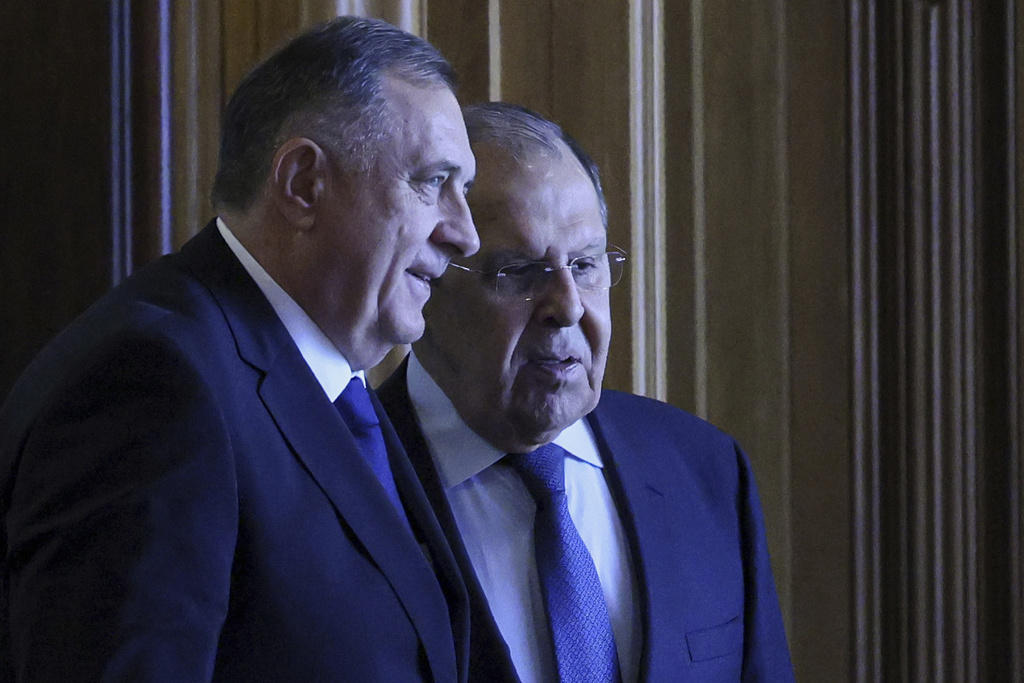
Dodik has long argued that Bosnia and Herzegovina have been actively discriminating against Serbs, which led him to systematically pull out of federal institutions and legal frameworks of Bosnia and Herzegovina. The Serb leader has also been pushing for the Serb-dominated Srpska to join Serbia and has been openly friendly with Russia, a long-time ally of Serbs. He most recently drew the ire of the EU after he visited Moscow for talks with Russian Foreign Minister Sergey Lavrov at Zinaida Morozova’s Mansion, the “reception house” for Russia’s foreign ministry.
He was also accused of refusing to take into account the decisions of the international high representative, Christian Schmidt, a German politician currently holding the position. Dodik signed a law rejecting his institution and powers. Dodik has now been sentenced for going against the orders of the international peace-keeping envoy and suspending rulings by the country’s constitutional court.
Earlier in the year, when the first instance ruling was handed down, Hungarian PM Viktor Orbán had defended the leader.
“The political witch hunt against President Milorad Dodik is a sad example of the weaponization of the legal system aimed at a democratically elected leader. If we want to safeguard stability in the Western Balkans, this is not the way forward!”
In the autumn of 2023, Hungary had stepped in to take over German investments in the Republika Srpska, as Berlin sought to distance itself from Dodik’s pushing for closer ties to both Moscow and Belgrade.
At the time, Germany was said to be pursuing four infrastructure projects worth a total of €105 million. At the end of 2022, Hungary’s EXIM bank had already loaned Dodik €110 million.