
The Romanian government’s second tax package envisages a 20 percent reduction in the number of employees in local public administration.
In an interview with B1TV covered by Mandiner, Development Minister Attila Cseke explained that the 20 percent staff reduction in both central and local public administration included in the government program would be worked out in consultations with local governments.
Cseke emphasized that he supports the system because it does not affect local governments equally. That is, where they have been operating efficiently, the reduction will not necessarily result in layoffs, while in less efficient places operating at full capacity, reorganization will be necessary, as filled positions will also have to be eliminated.
The reduction would be implemented based on Emergency Government Decree 63/2010, which regulates the number of positions that can be filled depending on the type of settlement.
The minister added that the second package of cost-cutting measures is expected to be adopted by Parliament later this month.
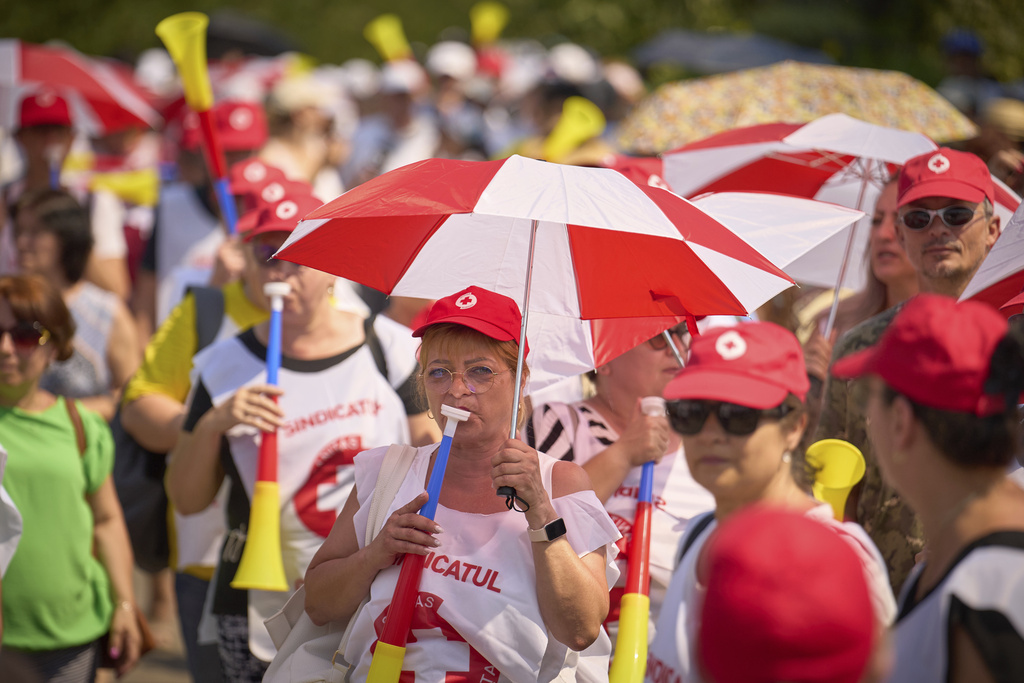
Government austerity measures in Romania have not been going over well. Teachers are demonstrating in anger over the cuts aimed at tackling the budget deficit, the largest in the EU. The cabinet has implemented tax increases, cut public sector salaries, slashed some allowances, increased class sizes, and merged schools, among other measures.
The protesters believe the government has misled them with decisions that contradict its promises.
“It is unacceptable that they are increasing the number of hours, merging classes, and forcing our colleagues to look for work far from their homes, in another county. This should have been thought through in advance, ” said a union leader.
The demonstrations are taking place throughout the country, including in cities with a Hungarian population, and not only teachers, but also healthcare workers, parliamentary employees, pension fund and tax office employees have taken to the streets.
So far, austerity measures have affected broad segments of the population: The VAT rate will increase from 19 percent to 21 percent. The reduced VAT rate on food, books, medicines, and drinking water will increase from 5 percent and 9 percent to a uniform 11 percent. Higher pensions will also be subject to health insurance contributions.
Géza Sebestyén, head of the MCC Economic Policy Workshop, told Hír TV that Romania has spent more on everything than was realistically possible, both at the state level and at the population level.
“The point has now come when they have to start repaying the loans they have taken out so far. In other words, they have been living on credit beyond their means. From now on, they will have to live even worse than their means in the coming period.”