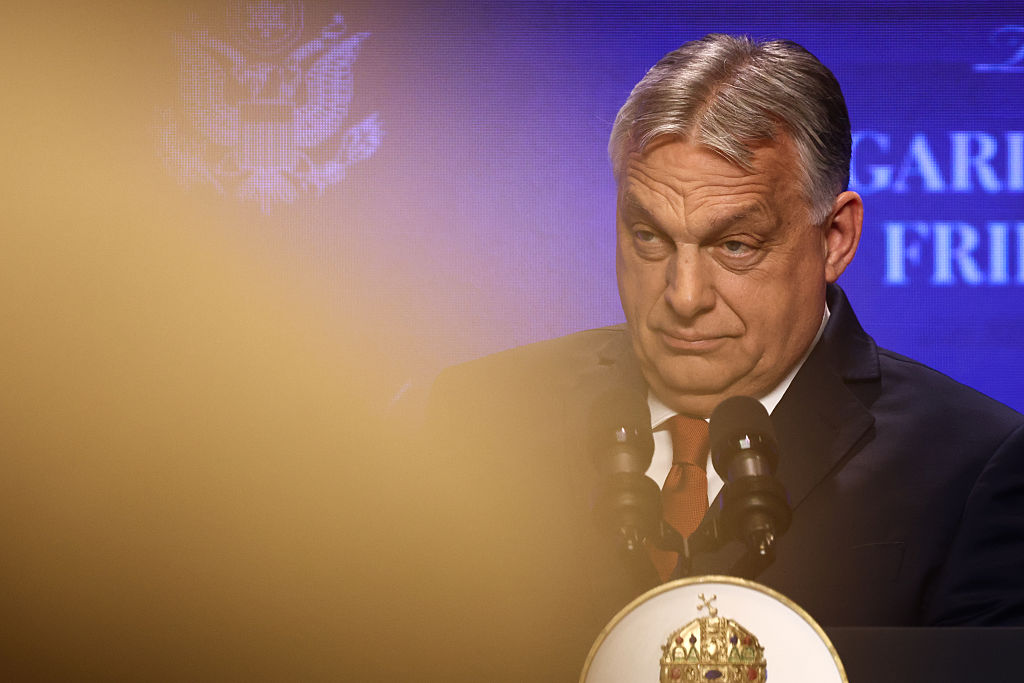
Political scientist Yevhen Magda, director of the Kyiv-based Institute of World Politics, believes Viktor Orbán is still well positioned to win national elections. Although he does not sympathize with Orbán, he acknowledged in his analysis of the Hungarian elections that the prime minister’s campaign is going well and is “on schedule,” reported Mandiner.
Orbán, he notes, is supported by three of the world’s most influential centers: Beijing, Moscow, and Washington. His friendship with Donald Trump and the role of Chinese investments have also contributed to the Hungarian government becoming more independent from Brussels, the political analyst noted, which is good for Hungarian interests.
“No one can be sure of the outcome, and Péter Magyar’s victory should not be taken for granted,” Magda said. “That’s why I say that despite all the dislike for him, Orbán is still a good political strategist,” he noted, adding that Fidesz’s campaign had led many to question Péter Magyar’s suitability to be a successful and independent leader.
“Those who say that Péter Magyar will definitely win on April 12, I would still ask you not to trust them,” Yevhen warned.
Tibor Fischer, a British writer and novelist of Hungarian origin, also explained in his column published in The Telegraph why, contrary to popular belief, Prime Minister Viktor Orbán is still popular among voters.
Asking the question: “Could Sunday’s Hungarian general election end Viktor Orbán’s 16-year term as prime minister?” Fischer writes: “Of course it could. Hungary’s a democracy, although many of those now cheering on Péter Magyar’s Tisza Party have steadfastly maintained that Hungary gave up on democracy a long time ago. German Greens mostly. The Germans have a long tradition of intervening in other European countries, maybe it’s time they quit the habit.”
On Orbán being labeled “authoritarian,” the author believes this is overly simplistic and ignores anything actually going on on the ground in Hungary. “Success is precisely why Orbán’s so hated by the international Left,” he says.
Noting Orbán’s long tenure as a successful politician, noting that if he loses he will still be the “GOAT,” Fischer says: “Sixteen years in office means you’ve probably done something to annoy or disappoint many voters,” adding that his detractors “obstinately insist, flat-earther style, that his success is down to foul play.”
On one poll indicating a huge win this Sunday by the opposition party, Tisza, led by Péter Magyar, he says this poll was created by a former Socialist who had been in government with the Communist Party. All in all, he sees little in Magyar’s messaging: “Péter Magyar’s campaign is entirely ‘I’m not Viktor Orbán,'” he writes.