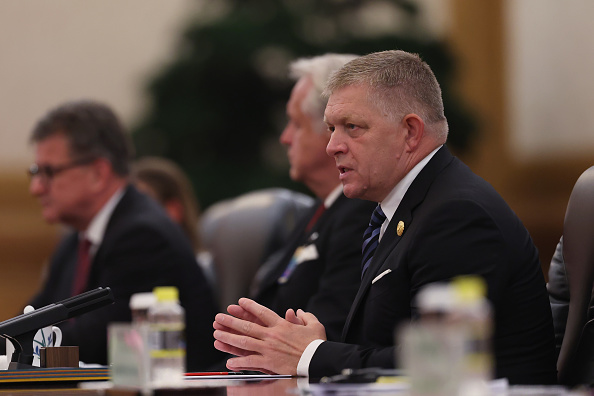
Slovak Prime Minister Robert Fico has again denounced the European Union’s handling of the war in Ukraine, declaring that Slovakia’s goal is not Russia’s defeat but peace between “Slavs killing each other.”
Speaking during a televised discussion marking the 81st anniversary of the Battle of the Dukla Pass, Fico said that “the war could have ended three months after it started,” accusing Western powers of prolonging the conflict to fight Russia indirectly.
“War is no solution. If the EU had spent as much energy on peace as it does on supporting the war in Ukraine, the war could have ended long ago. I will never be a wartime prime minister,” Fico said, insisting that if Slovaks wanted such a leader, “they should elect someone else.”
The prime minister added that he would “never allow Slovakia to be dragged into any war adventure,” citing “no moral, historical, or legal reasons” for the country to become involved in the conflict.
“It is not our war,” he said. “It is a regional conflict with historical roots. Why should Slovakia talk about war now?”
Fico also dismissed recent EU discussions on creating an anti-drone defense wall along the bloc’s eastern flank. “Let the experts talk about it. What can a prime minister who has never fired a gun say about drone protection? That is an expert question,” he remarked.
He also confirmed that a new round of talks between the Slovak and Ukrainian governments would take place in Michalovce on Oct. 17.
Marking the wartime commemoration, Fico warned against what he described as historical amnesia, saying that Europe was “forbidding” celebrations of the end of World War II and dismantling Red Army monuments. “We have to talk about what the hell is happening today,” he said, condemning leaders who “speak so lightly about war” and “talk about defeating Russia” without recalling “the terrible suffering” of past generations.
Fico’s comments are in sharp contrast to those made last week by Polish Prime Minister Donald Tusk, who told the Warsaw Security Forum that the Ukraine war is “our war.” Tusk described it as “central to Europe’s security and values,” warning that “if we lose this war, the consequences will affect not only our generation but also the next generations in Poland, all of Europe, in the United States, everywhere in the world.”
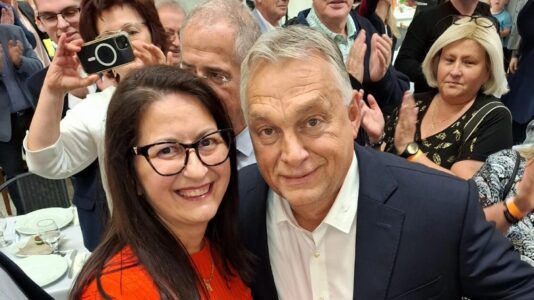
Hungarian Prime Minister Viktor Orbán swiftly rebuked Tusk, posting on X: “Dear Donald Tusk, you may think that you are at war with Russia, but Hungary is not. Neither is the European Union. You are playing a dangerous game with the lives and security of millions of Europeans.”
The divide highlights the deep fracture running through Central Europe’s response to the conflict. Orbán and Fico, both critical of EU sanctions and weapons deliveries, have positioned themselves as advocates for an immediate ceasefire and negotiations with Moscow.
They have also acquired a new ally over the weekend in Prague after Andrej Babiš’s ANO movement won national elections, leaving Tusk isolated within the Visegrád Group.
Babiš has pledged to withdraw from a Czech-led initiative to procure artillery shells for Ukraine and declared that Kyiv is “not ready” for EU membership. “We have to end the war first,” Babiš told a Ukrainian journalist. “Of course, we can cooperate with Ukraine. But you are not ready for the EU.”